Organ-on-a-Chip Technology: Revolutionizing Aging Research
Discover how organ-on-a-chip microdevices are transforming aging research by modeling human tissue aging in the lab, enabling faster drug discovery for longevity.
Table of Contents
DISCLAIMER
This article is for informational purposes only and does not constitute medical advice. The statements in this article have not been evaluated by the FDA. The information presented is based on published research and should not be used as a substitute for professional medical guidance. Consult your physician before starting any supplement or health protocol.
The study of human aging has long been constrained by a fundamental challenge: the organisms most commonly used in aging research, from yeast and worms to mice and rats, differ significantly from humans in their biology, lifespan, and disease patterns. Drugs that extend lifespan in mice frequently fail to show similar effects in human trials, partly because mouse aging does not perfectly replicate human aging at the tissue and organ level.
Organ-on-a-chip technology, also known as microphysiological systems, is emerging as a powerful bridge between animal models and human clinical testing. These microengineered devices contain living human cells organized in tissue-like architectures, maintained in physiologically relevant conditions, and connected by microfluidic channels that mimic blood flow. They offer the unprecedented ability to study human tissue aging in controlled laboratory conditions (Ingber, 2022; PMID: 33658057).
What Are Organs-on-Chips?
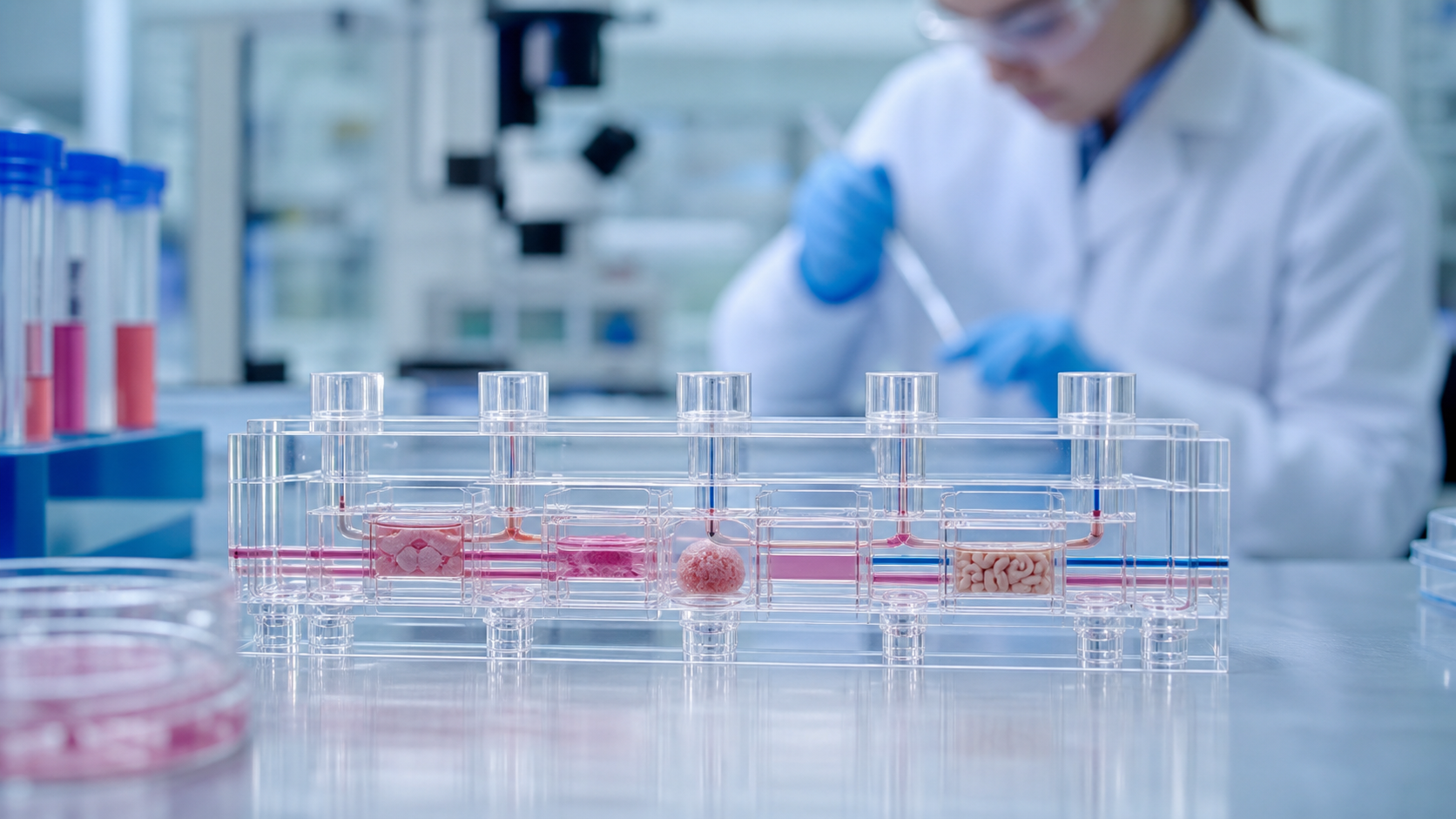
An organ-on-a-chip is a microfluidic device, typically the size of a USB drive, containing chambers lined with living human cells that replicate the key functional units of organs. These devices recreate the tissue-tissue interfaces, mechanical forces, and fluid flows that cells experience in the body.
The fundamental design involves a flexible polymer chip containing microchannels, human cells cultured within these channels in configurations that mimic tissue architecture, microfluidic flow systems that deliver nutrients and remove waste (simulating blood flow), and mechanical elements that can replicate breathing motions, peristalsis, or cardiac contractions.
The first organ-on-a-chip, a lung-on-a-chip developed by Donald Ingber at the Wyss Institute at Harvard, recreated the air-blood barrier of the human lung, complete with breathing motions and air flowing over one side while blood-like fluid flowed over the other.
Applications in Aging Research
Modeling Age-Related Tissue Changes
Organ-on-chip platforms can model aging in several ways (Sosa-Hernandez et al., 2020; PMID: 33069803). Cells from donors of different ages can be used to compare young and aged tissue function on the same chip platform. Cells can be subjected to accelerated aging protocols, including oxidative stress, replicative senescence, or exposure to aging-associated factors. Senescent cells can be incorporated into chips to study their effects on surrounding tissue. And time-lapse studies can track progressive functional decline over weeks to months of culture.
Heart-on-a-chip devices have been used to study age-related changes in cardiac contractility, stiffness, and response to stress. These models can demonstrate how the aging heart becomes stiffer (diastolic dysfunction), develops irregular beating patterns, and responds differently to pharmacological stimulation.
Brain-on-a-chip platforms model the blood-brain barrier and neuronal networks, enabling study of how barrier integrity changes with age and how neurodegenerative processes develop in human neural tissue.
Liver-on-a-chip devices can model age-related changes in drug metabolism, a critical consideration for pharmaceutical development in elderly populations.
Kidney-on-a-chip platforms can study age-related changes in filtration, reabsorption, and susceptibility to drug-induced nephrotoxicity.
Drug Testing for Longevity
One of the most exciting applications is the testing of potential longevity drugs on human tissue models (Bhatia & Ingber, 2020; PMID: 32471017). Traditional drug development for aging is extraordinarily slow because aging takes decades. Organ-on-chip models can potentially compress this timeline by providing rapid readouts of drug effects on human tissue function.
Senolytic drugs can be tested on chips containing senescent cells mixed with healthy cells, allowing researchers to assess both efficacy (do they clear senescent cells?) and safety (do they harm healthy cells?) in a human tissue context.
NAD+ precursors, rapamycin analogs, and other longevity compounds can be evaluated for their effects on tissue-specific aging markers, mitochondrial function, and cellular stress responses.
Multi-organ chips that connect different organ models can assess how a drug metabolized by the liver affects the heart, brain, or kidney, providing integrated pharmacokinetic and pharmacodynamic data.
Personalized Aging Medicine
Patient-derived cells can be used to create personalized organ-on-chip models, potentially enabling clinicians to test how specific interventions would affect an individual’s tissues before administering them. This approach could be particularly valuable for elderly patients who may metabolize drugs differently and be more susceptible to adverse effects.
Advantages Over Traditional Models
Organ-on-a-chip technology offers several advantages for aging research. It uses human cells, eliminating the species-translation problem. It recreates tissue architecture and mechanical forces, providing more physiologically relevant conditions than standard cell culture. It allows controlled experimentation impossible in living humans. It reduces reliance on animal models, addressing ethical concerns. It enables higher throughput than animal studies. And it can incorporate patient-specific cells for personalized insights.
Current Limitations
Despite their promise, organ-on-chip models have important limitations. They do not fully replicate the complexity of whole organs, capturing only key functional units. Immune system interactions are difficult to model, though immune cells can be added. The chips cannot replicate systemic endocrine signaling. Long-term aging studies (months to years) remain challenging due to culture limitations. And standardization and reproducibility across laboratories are still being established.
The Future of Aging Research on Chips
The field is advancing rapidly. Multi-organ “body-on-a-chip” platforms that connect 10 or more organ models are being developed, potentially enabling the study of systemic aging processes. AI integration is being used to analyze the complex data generated by these platforms. And regulatory agencies including the FDA have expressed support for organ-on-chip data in drug approval processes, which could accelerate the development of longevity therapeutics.
Frequently Asked Questions
Can organ-on-chip technology replace animal testing for aging drugs? Not entirely, at least not yet. Organ-on-chip models can complement animal studies by providing human-specific data and can potentially reduce the number of animals needed. The FDA has signaled openness to accepting organ-on-chip data as supporting evidence in drug applications. However, the technology does not yet replicate the full complexity of whole-organism aging, including immune system interactions, endocrine signaling, and behavioral aspects. A hybrid approach combining organ-on-chip models with targeted animal studies and clinical trials is likely the near-term future.
How accurate are organ-on-chip models of aging? Current organ-on-chip models can faithfully replicate many key features of tissue aging, including changes in contractile function (heart), barrier integrity (lung, brain), metabolic capacity (liver), and cellular senescence. However, they capture only selected aspects of organ aging and do not replicate the full complexity of in vivo aging. Their accuracy continues to improve as chip design, cell sourcing, and culture conditions are refined.
When will organ-on-chip technology impact longevity drug development? Organ-on-chip technology is already being used in drug development, though primarily for toxicity screening rather than specifically for longevity drugs. Several pharmaceutical companies and academic laboratories are actively developing aging-specific chip models. The impact on longevity drug development is expected to grow significantly over the next 3-5 years as the technology matures and gains broader regulatory acceptance.
Sources
Stay Updated on Longevity Science
Weekly research digests. No spam, unsubscribe anytime.
Related Articles
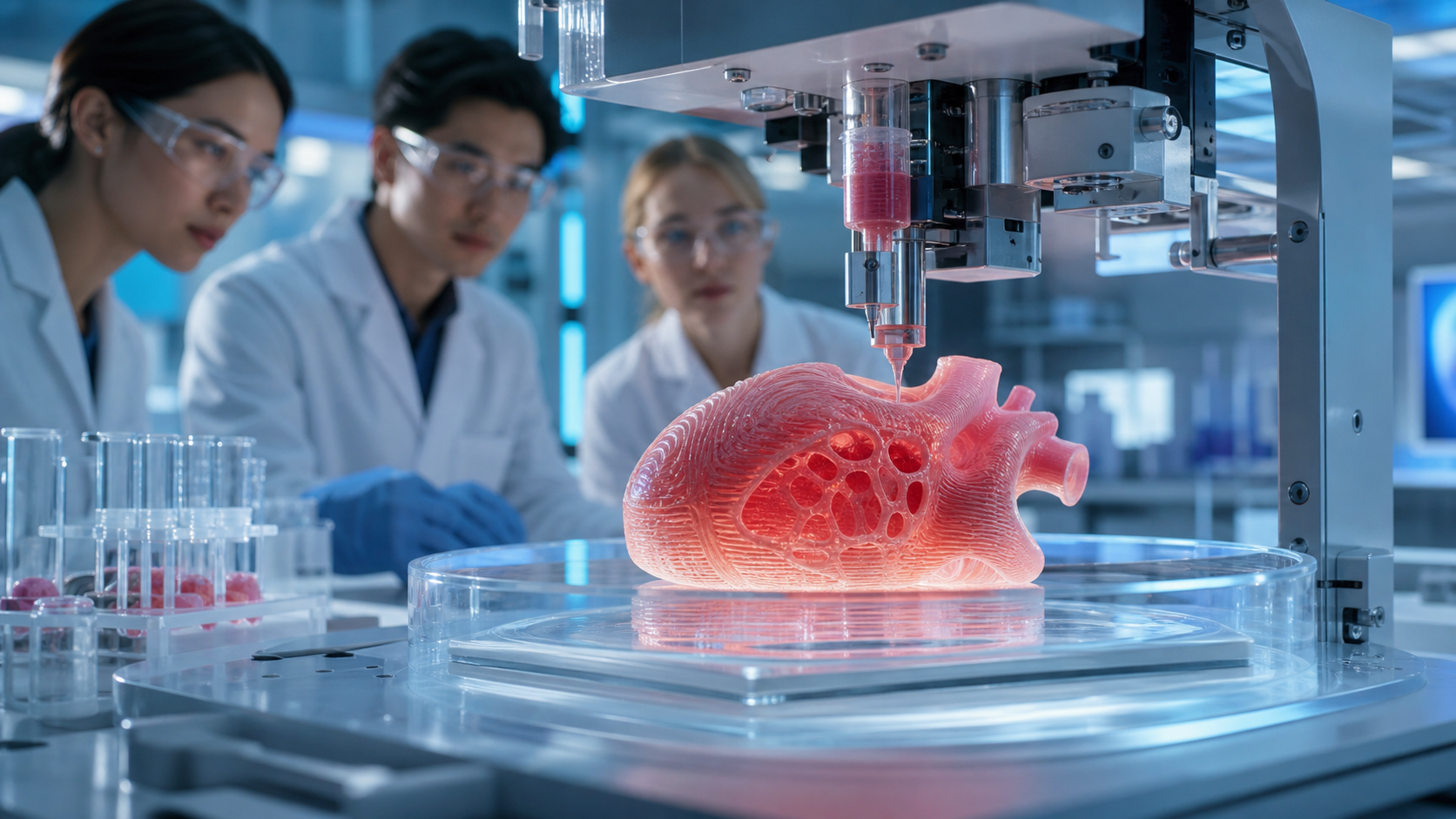
3D Bioprinting for Aging: Can We Print Replacement Organs and Tissues?
Explore how 3D bioprinting may address age-related organ failure by creating functional replacement tissues. Review current capabilities and future prospects.
12 min read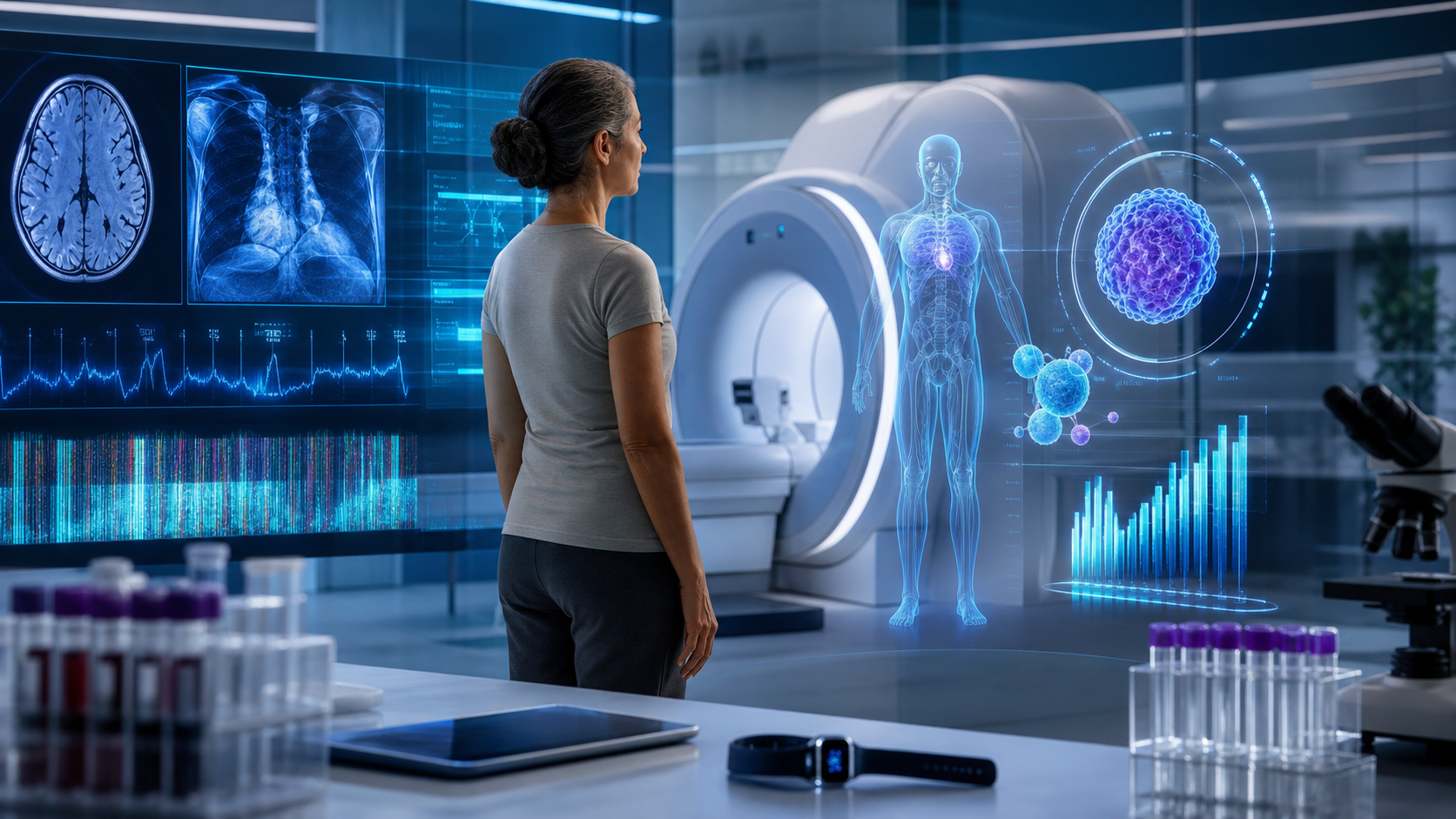
AI Diagnostics for Aging: Detecting Early Signs of Biological Decline
Learn how AI-powered diagnostic tools detect early aging markers from medical images, blood tests, and wearable data to enable proactive longevity interventions.
12 min read
AI Drug Discovery for Longevity: What Research Is Coming
How artificial intelligence is accelerating longevity drug discovery, from target identification to clinical trial design, and what it means for aging research.
13 min read