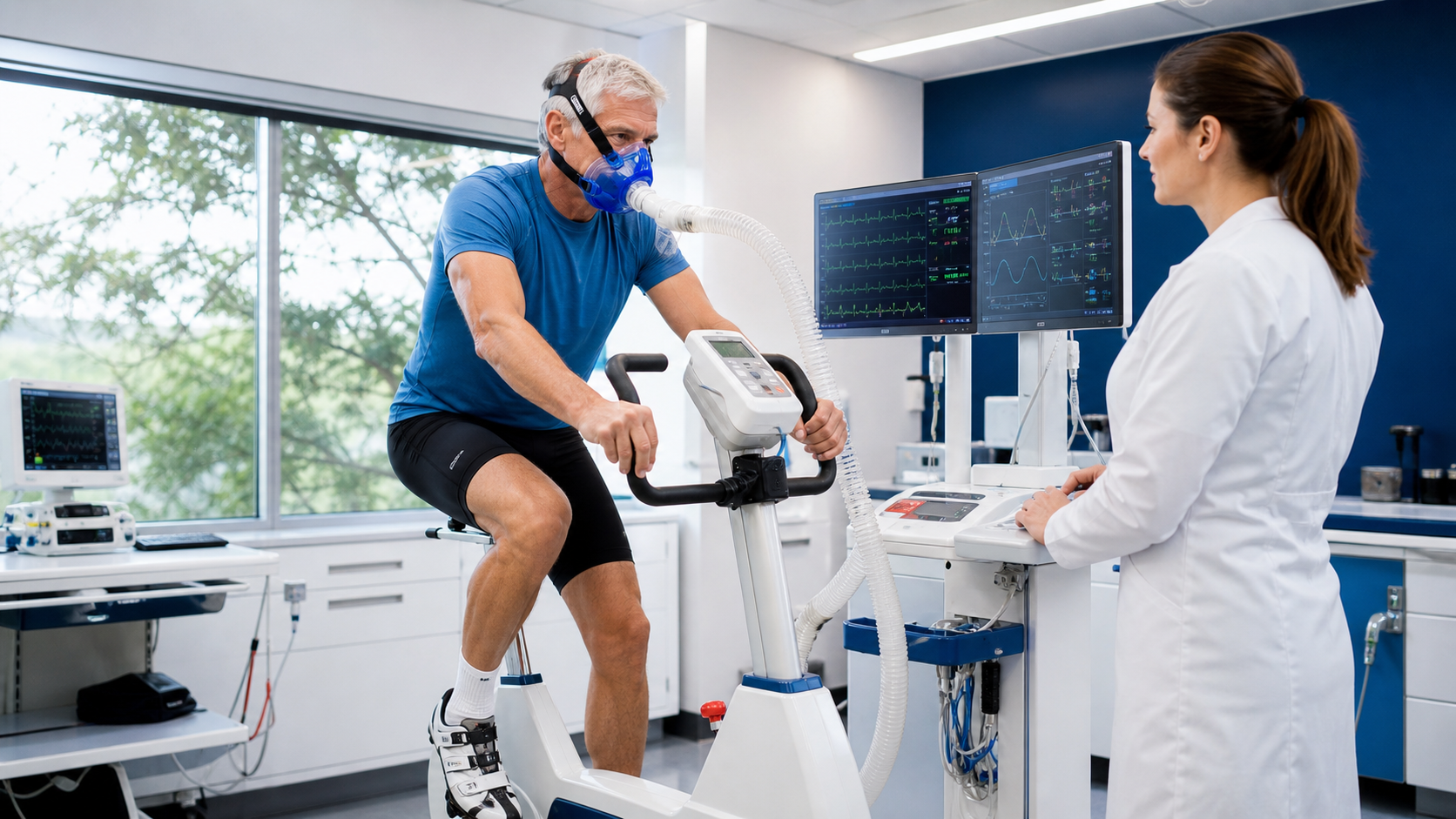
VO2 Max Trainability and Longevity: How Much Can Fitness Improve?
VO2 max is strongly associated with health outcomes, but trainability varies. Learn how aerobic fitness can improve and what longevity studies really mean.
Table of Contents
DISCLAIMER
This article is for informational purposes only and does not constitute medical advice. The statements in this article have not been evaluated by the FDA. The information presented is based on published research and should not be used as a substitute for professional medical guidance. Consult your physician before starting any supplement or health protocol.
VO2 max trainability and longevity are often compressed into one slogan: raise the number and live longer. The real science is more useful. Cardiorespiratory fitness is one of the strongest functional predictors of health outcomes, and it can improve across the lifespan, but individual response varies and association is not destiny.
VO2 max estimates the highest rate at which the body can take in, transport, and use oxygen during intense exercise. It reflects a chain involving lungs, heart, blood, blood vessels, mitochondria, and working muscle.
Why Fitness Tracks With Longevity
In a major meta-analysis, Kodama and colleagues found that higher cardiorespiratory fitness was associated with lower all-cause and cardiovascular mortality. The American Heart Association later argued that fitness should be treated as a clinical vital sign because it integrates information that resting measurements can miss.
These findings are observational. People with higher fitness may also have better health, greater mobility, more resources, or fewer illnesses that limit exercise. Researchers adjust for many factors, but residual confounding remains. Still, the relationship appears consistent across large populations and supports fitness as a meaningful marker of reserve.
With age, maximal heart rate tends to fall, arteries may stiffen, muscle mass can decline, and mitochondrial function may change. Inactivity compounds those trends. Training cannot erase aging, but it can improve stroke volume, blood-volume regulation, capillary networks, mitochondrial enzymes, movement economy, and tolerance for sustained work.
How Much Can VO2 Max Improve?
Many aerobic programs report average gains in the range of roughly 5% to 20%, with larger increases sometimes seen in previously inactive participants. An average hides wide variation. Baseline fitness, training dose, adherence, genetics, medication, illness, sleep, nutrition, and the test itself all influence the result.
A disappointing first test does not establish a hard biological ceiling. Some apparent non-response reflects inadequate dose, inconsistent training, poor recovery, or measurement noise. Changing the program—more weekly volume, a different intensity distribution, or more time—may produce adaptation.
Both moderate continuous exercise and intervals can help. Easy-to-moderate sessions build volume and recovery capacity. Carefully selected higher-intensity intervals provide a strong oxygen-delivery stimulus. Strength training supports the muscle needed to use that capacity. The best mix is the one a person can progress and sustain safely.
Measuring Progress Without Worshipping a Number
A laboratory cardiopulmonary exercise test is the most informative option and can reveal heart, lung, or circulatory limitations. Wearables usually estimate VO2 max from pace and heart rate; they are better for following trends under similar conditions than for declaring a precise physiological truth.
Simple outcomes also matter: walking the same hill with less breathlessness, recovering faster, maintaining pace, or completing more work at a similar heart rate. Fitness is valuable because of what it allows a person to do, not because an app awards a superior age.
People with chest pressure, fainting, unexplained shortness of breath, or unstable disease should obtain medical guidance before intense training. Rapid progression is not required for meaningful adaptation.
The Bottom Line
VO2 max is both a marker of integrated health and a trainable capacity. Improvement is possible at older ages, but there is no universal percentage or perfect protocol. Build aerobic volume, add intensity gradually, keep strength work in the program, and judge progress by function as well as the number.
Frequently Asked Questions
Can VO2 max improve after age 60?
Is a higher VO2 max always better?
Do intervals improve VO2 max faster than steady exercise?
Sources
Stay Updated on Longevity Science
Weekly research digests. No spam, unsubscribe anytime.
Related Articles
Arterial Calcification and Vascular Aging: Reading the Risk Signals
Arterial calcification can reveal accumulated vascular risk. Learn what calcium scores mean, why calcification develops, and where testing has limits.
10 min read
Arterial Stiffness and Vascular Age: A Longevity Evidence Guide
Understand arterial stiffness vascular age longevity links, key studies, measurement limits, and evidence-based lifestyle implications for healthy aging.
11 min read
Arterial Stiffness and Vascular Aging: What the Evidence Shows
Explore arterial stiffness vascular aging, how vessels change over time, what pulse wave velocity studies show, and practical ways evidence may inform prevention.
10 min read