Arterial Stiffness and Vascular Aging: What the Evidence Shows
Explore arterial stiffness vascular aging, how vessels change over time, what pulse wave velocity studies show, and practical ways evidence may inform prevention.
Table of Contents
DISCLAIMER
This article is for informational purposes only and does not constitute medical advice. The statements in this article have not been evaluated by the FDA. The information presented is based on published research and should not be used as a substitute for professional medical guidance. Consult your physician before starting any supplement or health protocol.
Introduction
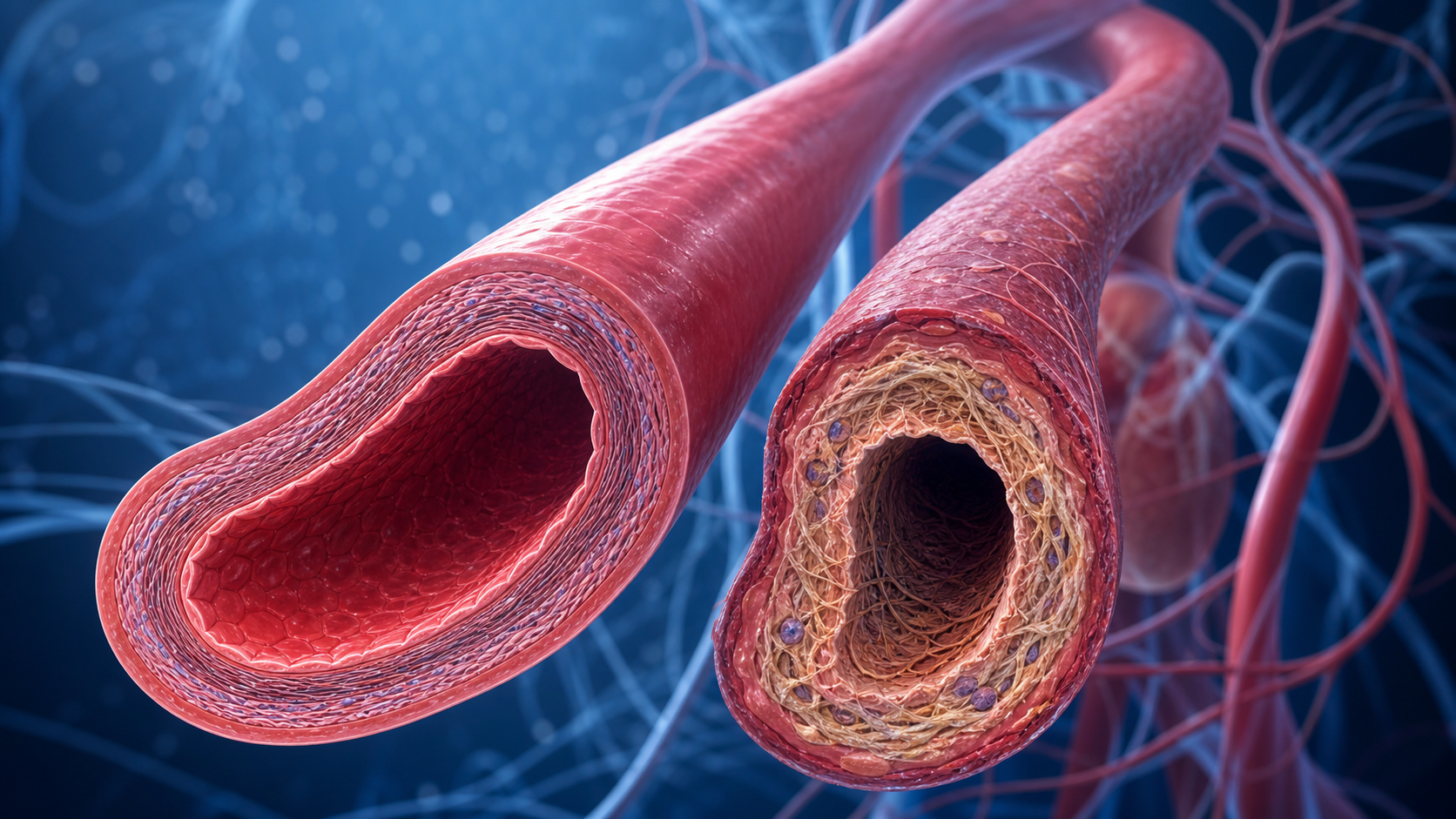
Arterial stiffness vascular aging is one of the clearest examples of how aging biology becomes visible in everyday physiology. Young, healthy arteries expand and recoil with each heartbeat, helping convert the heart’s pulsing output into steadier blood flow. With age, many large arteries gradually lose some of that elastic behavior. The change is not simply cosmetic or abstract; it may influence blood pressure patterns, cardiac workload, microvascular stress, and long-term cardiovascular risk.
The key idea is straightforward: arteries are not passive pipes. They are living tissues made of smooth muscle cells, elastic fibers, collagen, endothelial cells, immune signals, and extracellular matrix. These components respond to mechanical strain, oxidative stress, glucose exposure, inflammation, and hormonal signaling. Over decades, those responses may reshape the arterial wall.
Researchers often describe this process as vascular aging. It overlaps with chronological aging, but the two are not identical. Some people appear to have more flexible arteries than expected for their age, while others show accelerated vascular changes earlier in adulthood. This is one reason arterial stiffness has become a major research marker in aging science and preventive cardiology.
The evidence does not suggest that a single number can fully define vascular age. It does suggest that arterial stiffness, particularly when measured by pulse wave velocity, can provide useful insight into the aging vasculature. Understanding what the marker reflects, what studies have found, and what remains uncertain can help readers interpret the science without turning it into personal medical advice.
The Science
Why Elastic Arteries Matter
The aorta and other large arteries serve as cushioning vessels. During systole, when the heart contracts, the aorta stretches to accommodate blood flow. During diastole, when the heart relaxes, the arterial wall recoils and helps maintain forward flow. This buffering function reduces pressure swings and may help protect smaller downstream vessels.
When large arteries become stiffer, pressure waves travel faster. Reflected waves from peripheral branch points may return earlier, sometimes during systole rather than diastole. In simplified terms, this can increase central systolic pressure and pulse pressure, while placing more mechanical load on the left ventricle. Researchers also suspect that higher pulsatile energy may affect delicate microvascular beds in organs such as the brain and kidneys.
This is why arterial stiffness is often studied as more than a blood vessel property. It can be viewed as a systems-level marker connecting vascular structure, heart function, and tissue perfusion.
Elastin, Collagen, and the Vessel Wall
Much of arterial elasticity comes from elastin, a long-lived extracellular matrix protein that is abundant in large arteries. Elastin is especially important early in life, when arteries need to stretch repeatedly without losing shape. Because elastin turnover is limited in adult tissues, accumulated wear, fragmentation, and biochemical modification may have lasting effects.
Collagen plays a different role. It provides tensile strength and helps prevent excessive vessel expansion. With aging, the balance between elastin and collagen may shift. Collagen may accumulate, become more cross-linked, or become mechanically dominant as elastin loses function. The result may be a vessel wall that is stronger in one sense but less compliant.
Advanced glycation end products are one mechanism researchers often discuss. These compounds can form when sugars react with proteins and lipids. In long-lived matrix proteins, glycation-related cross-links may contribute to tissue stiffening. This process is not exclusive to arteries; similar matrix changes are discussed in skin, tendons, and other aging tissues.
Endothelial Function and Nitric Oxide
The endothelium is the thin cellular lining of blood vessels. It helps regulate vascular tone, clotting balance, immune cell adhesion, and signaling between blood and the vessel wall. One important endothelial signal is nitric oxide, which supports vasodilation and helps modulate vascular smooth muscle behavior.
With aging, studies suggest endothelial function may decline in many people. Oxidative stress, low-grade inflammation, metabolic dysfunction, and reduced nitric oxide bioavailability may all contribute. These processes can interact with arterial stiffness in both directions: a stiffer arterial wall may alter endothelial shear stress, while endothelial dysfunction may influence vascular tone and remodeling.
This makes arterial stiffness a useful but complex marker. It reflects structural properties, such as matrix composition, and functional properties, such as smooth muscle tone and endothelial signaling.
Inflammation and Cellular Senescence
Vascular aging also appears to involve immune and inflammatory pathways. Chronic low-grade inflammation, sometimes called inflammaging, may influence smooth muscle cell behavior, matrix remodeling, and endothelial health. Senescent cells may secrete inflammatory molecules and matrix-modifying enzymes, potentially contributing to local vascular changes.
The evidence is still developing. Human studies often show associations between inflammatory markers and arterial stiffness, but association does not prove a simple causal chain. Still, the biology is plausible: the vessel wall is exposed to lifelong mechanical strain, circulating immune signals, lipids, glucose, and environmental stressors. Over time, these inputs may shape arterial structure and function.
Pulse Wave Velocity: The Core Measurement
The most common research measure of arterial stiffness is pulse wave velocity, or PWV. It estimates how quickly the pressure wave generated by the heartbeat travels along the arterial tree. Stiffer arteries transmit the wave faster.
Carotid-femoral pulse wave velocity is often considered the reference method for central arterial stiffness because it approximates stiffness along the aorta and major elastic arteries. Other measures, such as brachial-ankle PWV, augmentation index, and central pulse pressure, may provide related but not identical information.
Measurement details matter. Device type, body position, blood pressure at the time of measurement, path-length estimation, heart rate, and operator technique can all influence results. For this reason, arterial stiffness values should be interpreted in context, not as standalone judgments about health.
Key Research Findings
Arterial Stiffness Predicts Risk in Longitudinal Studies
One of the most cited analyses is the 2010 systematic review and meta-analysis by Charalambos Vlachopoulos, Konstantinos Aznaouridis, and Christodoulos Stefanadis in the Journal of the American College of Cardiology. The authors pooled data from longitudinal studies that measured aortic pulse wave velocity and tracked outcomes over time.
Their analysis reported that higher aortic PWV was associated with greater risk of cardiovascular events, cardiovascular mortality, and all-cause mortality. They also found that each 1 m/s increase in aortic PWV corresponded to a higher adjusted risk estimate across several outcome categories. This does not mean PWV alone determines outcomes, but it suggests arterial stiffness may capture meaningful information not fully explained by standard risk factors.
The finding is important for aging science because it positions arterial stiffness as more than a descriptive marker. It may function as an integrated readout of vascular aging burden, reflecting accumulated exposure to blood pressure, metabolic stress, inflammation, and tissue remodeling.
The Framingham Heart Study Added Community-Based Evidence
Gary Mitchell and colleagues published a major community-based analysis in Circulation in 2010 using data from the Framingham Heart Study. The study examined multiple stiffness and wave reflection measures in relation to first-onset major cardiovascular events.
The researchers reported that higher carotid-femoral PWV was associated with future cardiovascular events in the cohort. Notably, among the measures assessed, aortic stiffness appeared especially informative. The study helped support the view that PWV may offer risk information in a general community sample, not only in specialized clinic populations.
For readers, the practical takeaway is not that everyone needs the test. Rather, the research suggests that central arterial stiffness may reflect vascular aging in a way that overlaps with, but is not identical to, conventional measures such as arm blood pressure.
Earlier Evidence in Hypertension Research
A 2001 Hypertension study by Stéphane Laurent and colleagues examined aortic stiffness in people with essential hypertension. The researchers assessed carotid-femoral pulse-wave velocity and followed participants for mortality outcomes.
The study reported that higher PWV was associated with all-cause and cardiovascular mortality, independent of several traditional risk factors. This was an influential finding because it helped establish direct arterial stiffness measurement as a prognostic research marker in a higher-risk population.
The result should be interpreted carefully. The cohort involved people with hypertension, so it may not apply directly to every adult. Still, it supports a broader pattern: in multiple populations, greater aortic stiffness tends to track with less favorable long-term outcomes.
Age and Blood Pressure Are Major Drivers
Across arterial stiffness research, age and blood pressure repeatedly emerge as dominant correlates. This makes biological sense. Arteries experience millions of pressure cycles each year, and higher pressure means more mechanical load on the vessel wall. Over decades, this load may contribute to remodeling.
Yet aging and blood pressure are not the whole story. Some individuals with similar age and blood pressure have different stiffness profiles. Genetics, physical activity, insulin sensitivity, kidney function, smoking exposure, sleep patterns, menopause-related hormonal shifts, and inflammatory burden may all help explain variation.
This variability is one reason vascular aging is an attractive research concept. It implies that chronological age provides a starting point, but vascular biology may move at a different pace depending on life history and current physiology.
Arterial Stiffness and Brain Aging
Researchers are also interested in how arterial stiffness may relate to brain aging. The brain depends on continuous, carefully regulated blood flow. If central arteries transmit more pulsatile energy into smaller vessels, this may place added stress on the cerebral microcirculation.
Several observational studies have linked higher arterial stiffness with markers such as white matter changes, cognitive performance differences, or future cognitive decline. These findings are not proof that stiffness is the sole driver. Brain aging is multifactorial, involving vascular, metabolic, inflammatory, sleep, and neurodegenerative pathways. Still, arterial stiffness may be one bridge between cardiovascular aging and cognitive aging research.
Arterial Stiffness and Kidney Function
The kidneys are also exposed to high blood flow and delicate microvascular filtration structures. Higher pulse pressure and increased arterial pulsatility may be relevant to kidney aging research. Observational data often report associations between arterial stiffness and reduced kidney function, especially in populations with hypertension, diabetes, or chronic kidney impairment.
Again, directionality can be difficult to untangle. Kidney dysfunction may increase vascular stiffness through mineral metabolism, inflammation, and blood pressure effects, while arterial stiffness may contribute to kidney microvascular stress. The relationship is likely bidirectional in many settings.
Practical Implications
What This Means for Readers
The main practical implication is that vascular aging is measurable, at least in part. Arterial stiffness gives researchers a window into how the large arteries are changing over time. It may also help explain why two people with the same chronological age can have different cardiovascular risk profiles.
For most readers, the evidence supports attention to established cardiovascular health fundamentals: blood pressure awareness, regular physical activity, metabolic health, sleep quality, smoking avoidance, and dietary patterns associated with cardiometabolic health. These are not presented here as medical instructions. They are broad areas where research often finds links with vascular function and long-term outcomes.
Anyone with hypertension, diabetes, kidney concerns, chest symptoms, neurological symptoms, or a family history of early cardiovascular events should work with a qualified healthcare professional for individualized evaluation.
Exercise and Arterial Function
Physical activity is one of the most studied lifestyle correlates of vascular health. Aerobic exercise may support endothelial function, nitric oxide signaling, blood pressure regulation, insulin sensitivity, and vascular remodeling. Resistance training may support muscle and metabolic health, though different training styles may have different acute and chronic effects on arterial measures.
The literature is nuanced. Some forms of very high-intensity or heavy static exertion can transiently raise blood pressure, and study findings vary by age, baseline health, and exercise protocol. Still, regular movement patterns are consistently associated with healthier cardiometabolic profiles, which may indirectly support vascular aging.
A practical, non-prescriptive interpretation is that arterial stiffness research adds another reason to value sustainable physical activity across adulthood.
Blood Pressure as a Vascular Aging Signal
Blood pressure is both a contributor to and a consequence of arterial stiffness. As arteries stiffen, systolic pressure and pulse pressure may rise. As pressure rises, the arterial wall experiences more strain, which may further encourage remodeling. This feedback loop is a central theme in vascular aging research.
For readers, routine blood pressure measurement remains more widely available and clinically established than PWV testing. Home and clinic readings can vary, so interpretation should be based on validated devices, proper technique, repeated measurements, and professional guidance when values are persistently elevated.
Arterial stiffness research does not replace standard blood pressure care. It helps explain why blood pressure patterns often change with age and why central vascular health matters.
Nutrition, Metabolism, and Glycation
Dietary patterns may influence vascular aging through multiple routes: blood pressure, lipids, glucose regulation, body composition, inflammation, gut-derived metabolites, and oxidative stress. Diets rich in minimally processed foods, fiber-containing plants, unsaturated fats, and polyphenol-rich foods are often studied in relation to vascular function.
Glycation is also relevant. Repeated high glucose exposure may contribute to advanced glycation end product formation, which may affect long-lived proteins such as collagen. However, the human evidence is complex, and arterial stiffness is influenced by more than any single nutrient or food category.
The most defensible statement is that metabolic health appears closely linked with vascular aging. Specific diet choices should reflect personal needs, cultural context, and professional guidance when medical conditions are present.
Sleep, Stress, and Autonomic Balance
Sleep and stress biology may also intersect with arterial stiffness. Poor sleep quality, circadian disruption, and chronic psychological stress can influence blood pressure, inflammation, glucose regulation, and autonomic nervous system balance. These pathways may, in turn, relate to vascular tone and remodeling.
Research in this area is still evolving. Some studies suggest associations between sleep duration, sleep apnea, stress markers, and arterial stiffness, but confounding factors are common. Even so, vascular aging offers a useful lens: the arteries are continuously responding to the body’s internal environment, not only to diet and exercise.
Testing: Useful but Context-Dependent
PWV testing is common in research and available in some clinics, longevity practices, and vascular labs. It may provide additional context, especially when interpreted alongside age, blood pressure, metabolic markers, kidney function, medication use, and cardiovascular history.
However, consumers should be cautious with direct-to-consumer interpretations. A single arterial stiffness value can be affected by temporary blood pressure changes, caffeine, recent exercise, stress, measurement method, and device algorithms. Trends over time may be more informative than isolated values, but even trends require consistent measurement conditions.
The best use of arterial stiffness information is usually as a conversation starter with a knowledgeable clinician or researcher, not as a standalone diagnosis.
Limitations and Future Research
Arterial stiffness research is strong in some areas and incomplete in others. Longitudinal studies suggest that higher PWV predicts adverse outcomes, but prediction is not the same as proving that reducing PWV directly reduces events. Future studies need to clarify when arterial stiffness is a causal contributor, when it is a marker of accumulated risk, and when it is both.
Measurement standardization remains another challenge. Different devices and protocols can produce different values. Carotid-femoral PWV is widely used in research, but other approaches may be easier in routine settings. Better calibration, reference ranges, and reporting standards could improve interpretation.
There is also a need for more diverse population data. Much of the foundational literature comes from European or North American cohorts, often with limited representation across ancestry, socioeconomic status, geography, and health backgrounds. Vascular aging may be influenced by life-course exposures, including early-life nutrition, chronic stress, air pollution, access to care, and neighborhood environment.
Researchers are also exploring molecular pathways that may connect aging biology to arterial stiffness. These include cellular senescence, extracellular matrix cross-linking, mitochondrial dysfunction, chronic inflammation, endothelial nitric oxide signaling, and vascular smooth muscle cell phenotypic change. The long-term goal is to understand which pathways are most important in humans and which markers best reflect meaningful biological change.
Finally, arterial stiffness should be integrated with other aging measures rather than treated as a complete scorecard. Biological age clocks, inflammatory markers, fitness measures, blood biomarkers, body composition, and vascular measures may each capture different parts of the aging process. The next generation of research may combine these signals into more precise risk models.
The Bottom Line
Arterial stiffness is a well-supported marker of vascular aging, and pulse wave velocity studies suggest it may predict cardiovascular outcomes beyond some traditional risk factors. The evidence indicates that arterial stiffness reflects long-term interactions among age, blood pressure, metabolism, inflammation, endothelial function, and extracellular matrix remodeling.
For readers, the most useful interpretation is measured and practical: arterial stiffness may help reveal how the vascular system is aging, but it should not be used in isolation. Personal results and risk questions belong in a clinician-guided context.
Frequently Asked Questions
What is arterial stiffness in vascular aging?
How is arterial stiffness measured in research?
Can lifestyle factors influence vascular aging?
Sources
- Prediction of cardiovascular events and all-cause mortality with arterial stiffness: a systematic review and meta-analysis(2010)
- Arterial stiffness and cardiovascular events: the Framingham Heart Study(2010)
- Aortic stiffness is an independent predictor of all-cause and cardiovascular mortality in hypertensive patients(2001)
- Determinants of pulse wave velocity in healthy people and in the presence of cardiovascular risk factors: establishing normal and reference values(2010)
- Effect of combined aerobic and resistance training versus aerobic training on arterial stiffness(2015)
Stay Updated on Longevity Science
Weekly research digests. No spam, unsubscribe anytime.
Related Articles
Arterial Stiffness and Vascular Age: A Longevity Evidence Guide
Understand arterial stiffness vascular age longevity links, key studies, measurement limits, and evidence-based lifestyle implications for healthy aging.
11 min read
Autophagy and Aging: Your Body's Cellular Cleanup System
Explore autophagy, your body's cellular cleanup system, and its critical role in aging and longevity. Research suggests modulating autophagy may support cellular health.
12 min read
Capillary Rarefaction and Aging: When Tissues Lose Their Smallest Blood Vessels
Capillary rarefaction can reduce microvascular reserve with age. This review separates human, animal, and cell evidence, plus limits.
15 min read