
Tendon Stiffness and Mobility With Age: What Exercise Can and Cannot Change
Tendons transmit muscle force and store energy. Learn how their stiffness and material properties change with age, inactivity, and progressive loading.
Table of Contents
DISCLAIMER
This article is for informational purposes only and does not constitute medical advice. The statements in this article have not been evaluated by the FDA. The information presented is based on published research and should not be used as a substitute for professional medical guidance. Consult your physician before starting any supplement or health protocol.
Tendons are often described as ropes connecting muscle to bone. The analogy misses their most useful feature: a tendon is a living, load-responsive spring. It transfers force, stores and releases energy, and helps muscle operate efficiently.
With age, inactivity, metabolic disease, and changes in muscle force can alter this system. But the phrase “tendon stiffness” is easy to misunderstand. In mechanics, stiffness can be necessary for efficient movement. In everyday language, stiffness sounds like restricted mobility. Those meanings overlap only partly.
What Tendon Stiffness Means
Mechanical stiffness describes how much a tendon resists elongation as force rises. A stiffer tendon lengthens less under a given load. Material properties, dimensions, hydration, collagen organization, and the way stiffness is measured all influence the result.
That is different from waking up feeling stiff, having limited ankle range, or experiencing pain. Joint mobility involves muscles, capsules, nerves, bones, and tolerance as well as tendons.
An extremely compliant tendon can delay force transmission. A tendon that is appropriately stiff for its task can help transfer muscle force and recycle energy during walking or running. The goal is therefore not to make every tendon as flexible as possible.
What Changes With Age
Studies of aging tendons report changes in collagen turnover, cross-linking, cellular activity, blood supply, and mechanical behavior. Findings differ by tendon, activity level, sex, health status, and testing method.
One consistent challenge is the muscle-tendon mismatch. Muscle can lose force through inactivity, while the tendon receives less loading stimulus. When training restarts, muscle strength—especially neural performance—may improve faster than tendon capacity. Rapid increases in load can then exceed what the connective tissue has recently tolerated.
Advanced glycation end products can form cross-links in long-lived proteins such as collagen. Diabetes and chronic hyperglycemia may accelerate this process. Yet age-related cross-linking does not translate into a simple rule that every older tendon is mechanically stiffer. Tendon size, degeneration, loading history, and measurement conditions complicate the picture.
Mobility Is Not the Same as Tendon Health
Static stretching can increase range of motion, often through improved stretch tolerance and changes across the muscle-tendon unit. More range can be useful when a genuine restriction interferes with function.
However, being able to reach farther does not prove that a tendon can handle more force. Conversely, limited range may come from joint structure or protective pain rather than a tendon that needs aggressive stretching.
This distinction matters in tendinopathy. Repeatedly stretching a painful tendon at compression-sensitive positions may aggravate symptoms for some people. An individualized assessment can determine whether mobility, strength, loading rate, or another factor is the main limitation.
How Tendons Respond to Exercise
Tendons respond to repeated mechanical tension. Progressive resistance and appropriate isometric, concentric, or eccentric loading can improve load tolerance and may alter stiffness or structure over time.
The signal must be large enough to matter but recoverable enough to repeat. Very light movement may support circulation and confidence without providing a strong adaptation stimulus. Sudden high-intensity loading can exceed capacity.
Tendon adaptation is slower than the feeling of cardiovascular improvement after a few walks or the early strength gains produced by better neural recruitment. Consistency over months matters. Training history also matters: a lifelong runner and a recently inactive person of the same age do not have identical tissues.
A Practical Loading Framework
Begin with the function the tendon must support. For the Achilles tendon, that may include calf raises, walking volume, and eventually faster loading if the goal requires it. For the patellar tendon, squat and step patterns may be relevant. For shoulder tendons, the plan must consider direction, range, and task.
Useful principles include:
- increase one main variable at a time—load, repetitions, range, speed, or frequency;
- allow recovery before repeating a demanding new stimulus;
- use discomfort rules selected for the condition rather than assuming all pain is damage or all pain is safe;
- track next-day response and function, not only pain during the session;
- preserve whole-body strength so the tendon is not asked to compensate for avoidable weakness elsewhere.
There is no universal perfect repetition tempo. Slow heavy resistance can provide controlled tension, while faster elastic tasks may be necessary for returning to running or sport. The stage and goal determine the choice.
What Exercise Cannot Promise
Exercise cannot guarantee that an abnormal scan will become normal. Imaging findings and symptoms often correlate imperfectly. Nor can loading erase every collagen cross-link, structural tear, systemic condition, or age-related cellular change.
Nutrition supports general tissue health, but no supplement has been established as a standalone method to rejuvenate human tendons. Protein adequacy matters for the whole training response; claims about collagen products are more modest and context-dependent than advertising suggests.
Medical evaluation is appropriate for a sudden snap, major bruising, inability to bear weight, rapidly increasing swelling, fever, or symptoms after certain medications or systemic illness. Persistent pain that changes movement also deserves assessment rather than endless self-experimentation.
The Healthy-Aging Perspective
Tendons preserve independence quietly. They transmit the force needed to climb stairs, catch balance, lift groceries, and walk efficiently. Protecting them does not require avoiding load; it requires making load progressive and intelligible.
The useful target is capacity, not maximal flexibility or a single stiffness number. A well-trained tendon should tolerate the forces of the person’s life, while the surrounding muscles and nervous system control those forces.
Age changes the starting point and sometimes the speed of adaptation. It does not eliminate adaptability. Thoughtful resistance training can make the muscle-tendon system more capable—even when it cannot make the tissue biologically young again.
Frequently Asked Questions
Are stiffer tendons always unhealthy?
Can stretching make an aging tendon young again?
How quickly do tendons adapt to training?
Sources
Stay Updated on Longevity Science
Weekly research digests. No spam, unsubscribe anytime.
Related Articles
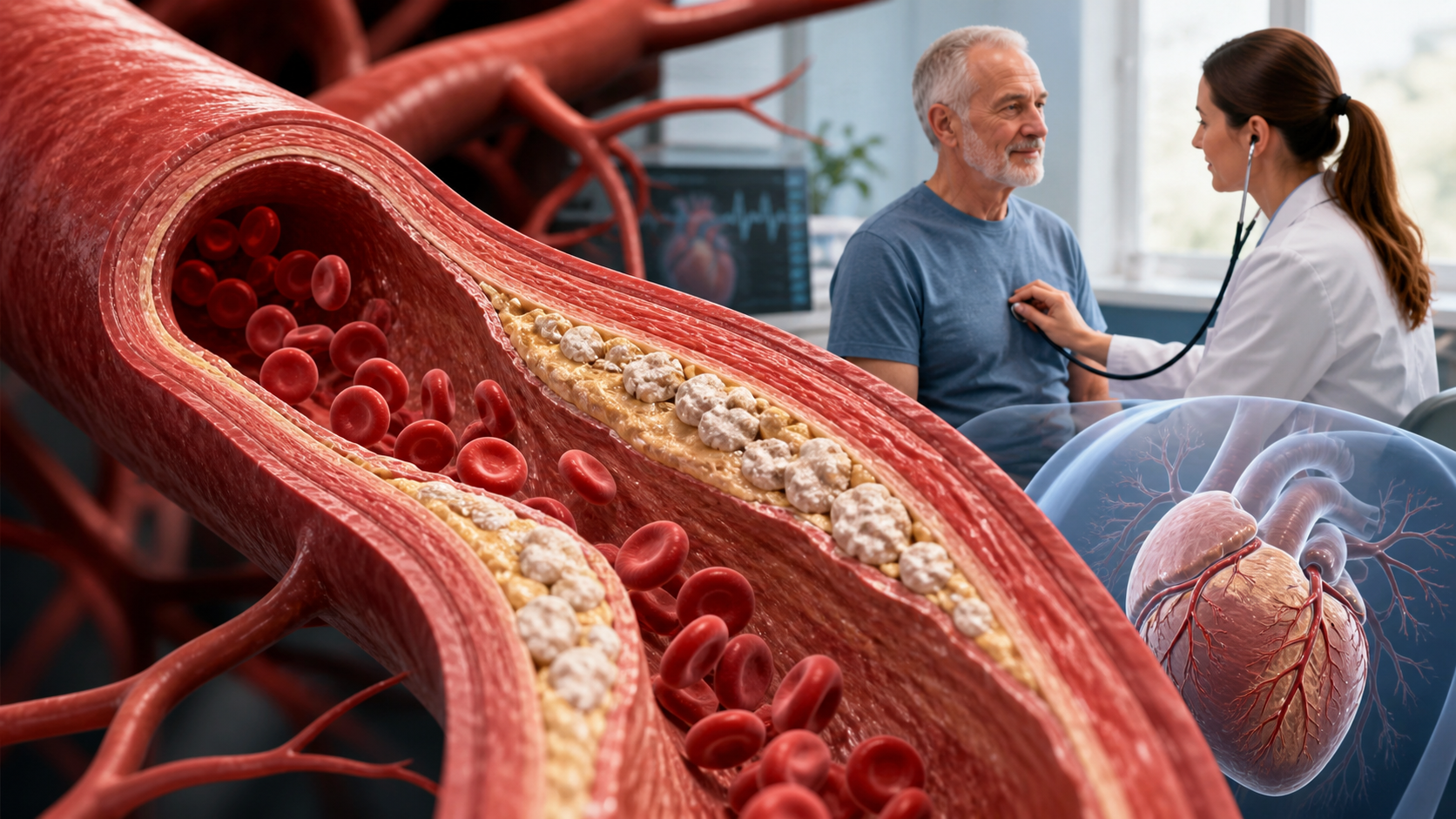
Arterial Calcification and Vascular Aging: Reading the Risk Signals
Arterial calcification can reveal accumulated vascular risk. Learn what calcium scores mean, why calcification develops, and where testing has limits.
10 min read
Arterial Stiffness and Vascular Age: A Longevity Evidence Guide
Understand arterial stiffness vascular age longevity links, key studies, measurement limits, and evidence-based lifestyle implications for healthy aging.
11 min read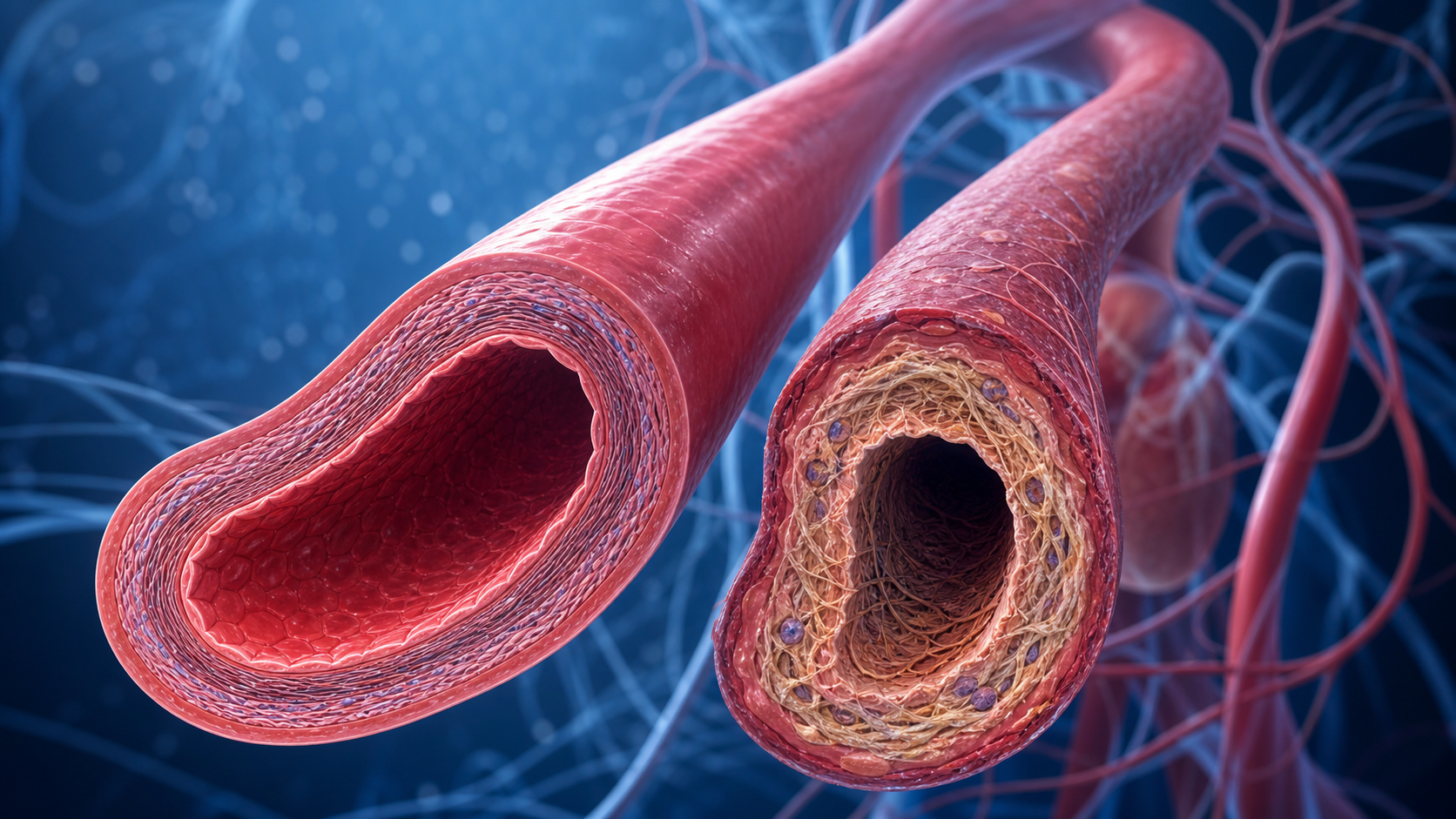
Arterial Stiffness and Vascular Aging: What the Evidence Shows
Explore arterial stiffness vascular aging, how vessels change over time, what pulse wave velocity studies show, and practical ways evidence may inform prevention.
10 min read