Stair Climbing and Healthy Aging: Strength, Power, and Safer Practice
Stairs combine leg strength, power, balance, and cardiovascular demand. Learn what stair ability reveals and how to train it without turning stairs into a risky test.
Table of Contents
DISCLAIMER
This article is for informational purposes only and does not constitute medical advice. The statements in this article have not been evaluated by the FDA. The information presented is based on published research and should not be used as a substitute for professional medical guidance. Consult your physician before starting any supplement or health protocol.
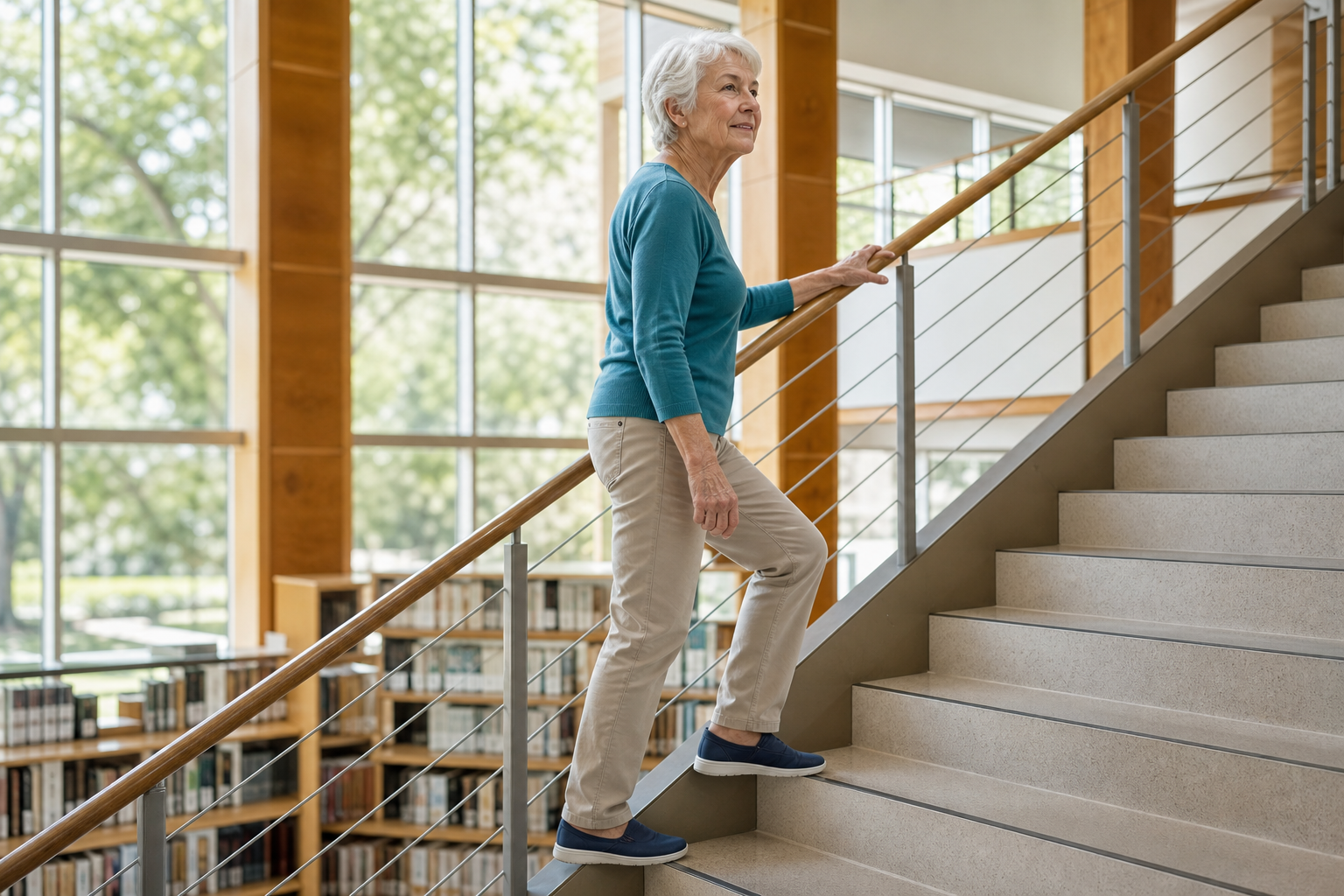
Stairs compress several physical demands into a few seconds. Each ascent asks the hip, knee, and ankle to lift body weight against gravity. The movement must be repeated quickly enough to keep momentum, balanced on a relatively small surface, and supported by the heart and lungs.
That is why stair ability can feel like an honest measure of function. It is also why stairs should not be used as an improvised maximal test. A missed step has consequences, and difficulty may arise from many systems—not simply weak legs.
Why Stairs Demand More Than Walking
Level walking moves the body mostly forward. Stair ascent adds a substantial vertical task. The lead leg produces force while the trailing leg transfers weight and clears the next step. Doing this smoothly depends on joint range, muscle strength, and power—the ability to produce force quickly.
Descent has a different profile. The quadriceps and other muscles work eccentrically to control lowering. Vision judges edge position and depth. The nervous system manages balance while gravity pulls the body forward and down. People with knee pain, reduced sensation, bifocal-related depth distortion, or fear of falling may find descent harder than ascent.
The cardiovascular demand can rise rapidly because a large amount of muscle is working against gravity. Feeling warmer and breathing faster may be normal. Chest pressure, faintness, new palpitations, or breathlessness that is severe or disproportionate is not a training target and should prompt assessment.
What Changes in Stair Performance May Mean
Needing a handrail is not automatically a failure. A rail is a useful safety tool and can reduce the consequence of a small error. More informative changes include a new need to pull heavily with the arms, pausing after each step, turning sideways, catching the toes, avoiding one leg, or losing the ability to alternate feet.
These patterns may reflect pain, weakness, reduced ankle motion, balance limitations, neurological change, poor vision, fatigue, or low aerobic capacity. They can also follow hospitalization or a period of inactivity. Watching the pattern helps identify what needs training or clinical evaluation.
Stair speed alone is incomplete. Racing may sacrifice foot placement, and using no rail may add risk without adding meaningful fitness. Functional success means reaching the destination with control and enough reserve for the rest of the day.
Train the Components Before Adding Flights
Sit-to-stands, supported step-ups, calf raises, and appropriately loaded squats or leg presses build force in a more controllable setting. Performing the effort phase with safe intent to move briskly can train power after a base of technique and strength is established. The return phase should remain controlled.
Balance practice, ankle mobility, and walking can address other pieces. A low step near a stable support allows the height and repetitions to be chosen deliberately. Alternate the lead leg when appropriate so one side does not quietly do all the work.
When actual stairs are used for exercise, choose a well-lit, uncluttered flight with a secure rail and consistent step dimensions. Avoid carrying objects at first. Start with a small number of steps, recover fully, and stop before technique deteriorates. Exercise is not the moment to prove that the rail is unnecessary.
Make the Environment Part of the Plan
Secure rails, contrasting step edges, reliable lighting, intact flooring, and removal of loose items reduce risk every day. Keep one hand available rather than carrying a load that blocks vision or balance. Shoes should fit securely and provide predictable contact.
A physical therapist can analyze stair mechanics when pain, asymmetry, toe catching, or fear persists. Occupational therapists can help adapt the home. Sudden loss of stair ability, new one-sided weakness, fainting, or repeated falls deserves medical attention.
Stairs are neither a longevity shortcut nor an enemy to avoid automatically. They are a demanding daily task that can expose lost reserve. Training strength, power, balance, and aerobic capacity—then applying those gains with a rail and good judgment—helps preserve the freedom that sits at the top of the flight.
Frequently Asked Questions
Is stair climbing enough strength training?
Why is going downstairs often harder?
When should stairs be avoided for exercise?
Sources
Stay Updated on Longevity Science
Weekly research digests. No spam, unsubscribe anytime.
Related Articles
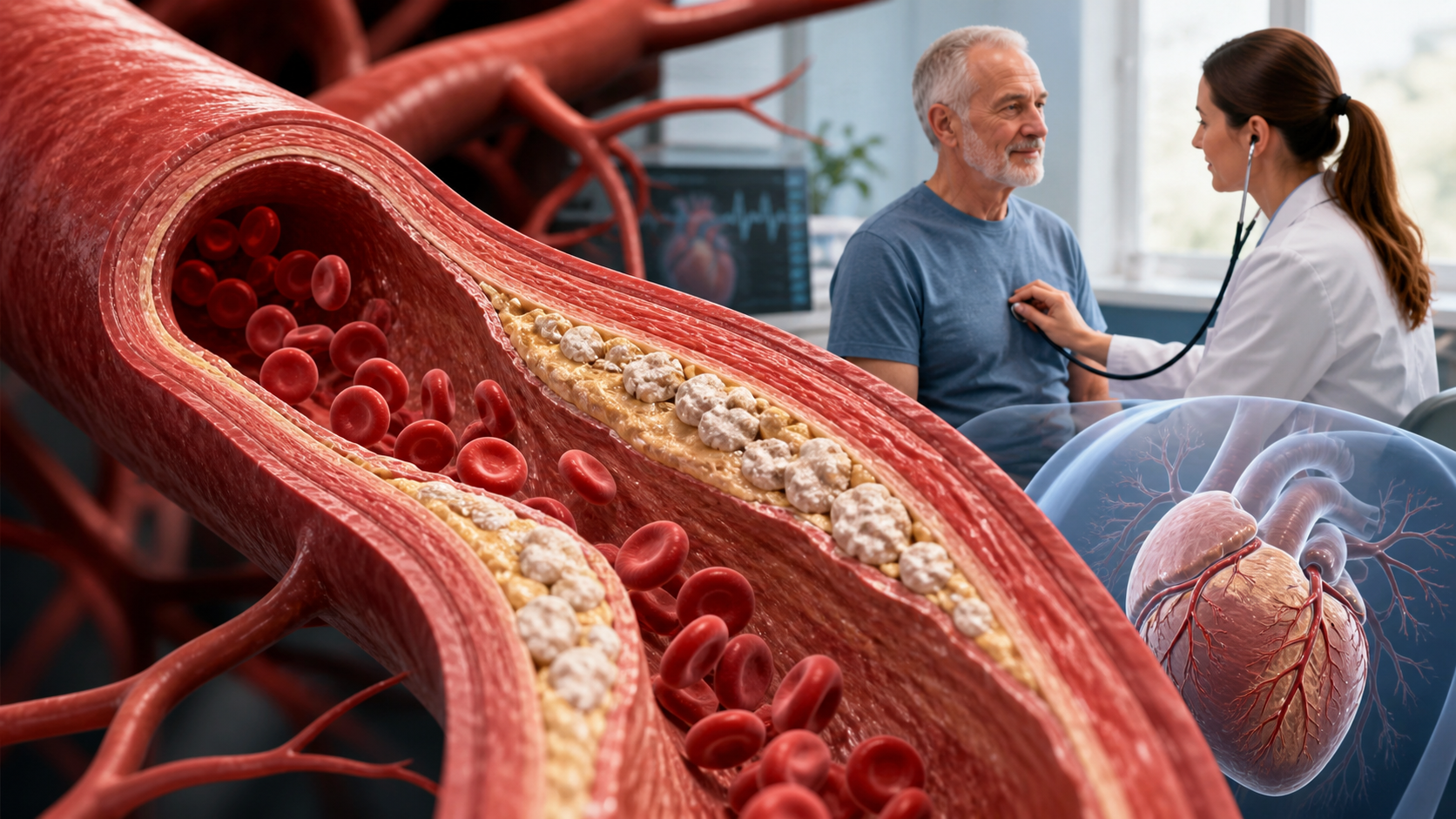
Arterial Calcification and Vascular Aging: Reading the Risk Signals
Arterial calcification can reveal accumulated vascular risk. Learn what calcium scores mean, why calcification develops, and where testing has limits.
10 min read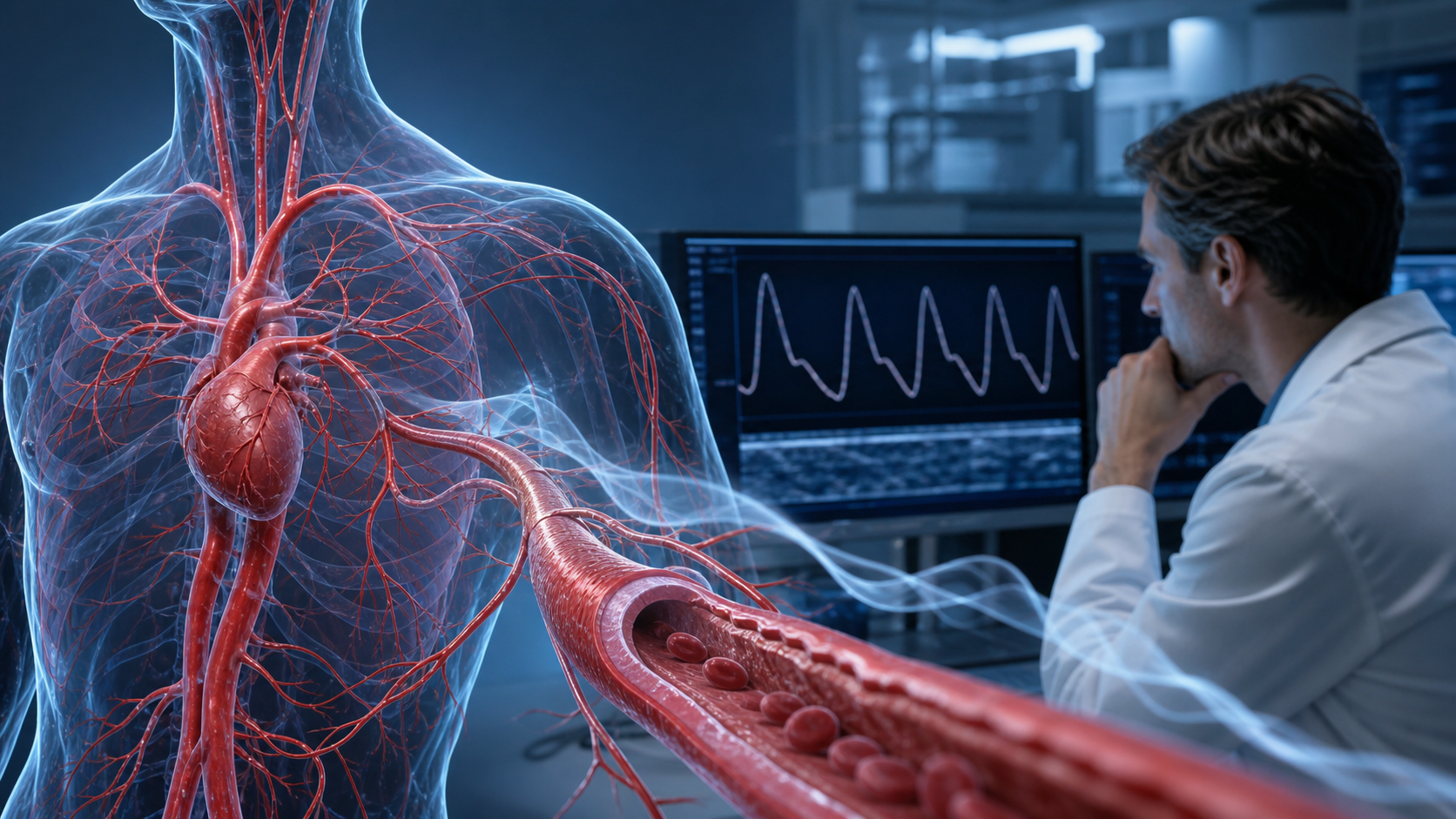
Arterial Stiffness and Vascular Age: A Longevity Evidence Guide
Understand arterial stiffness vascular age longevity links, key studies, measurement limits, and evidence-based lifestyle implications for healthy aging.
11 min read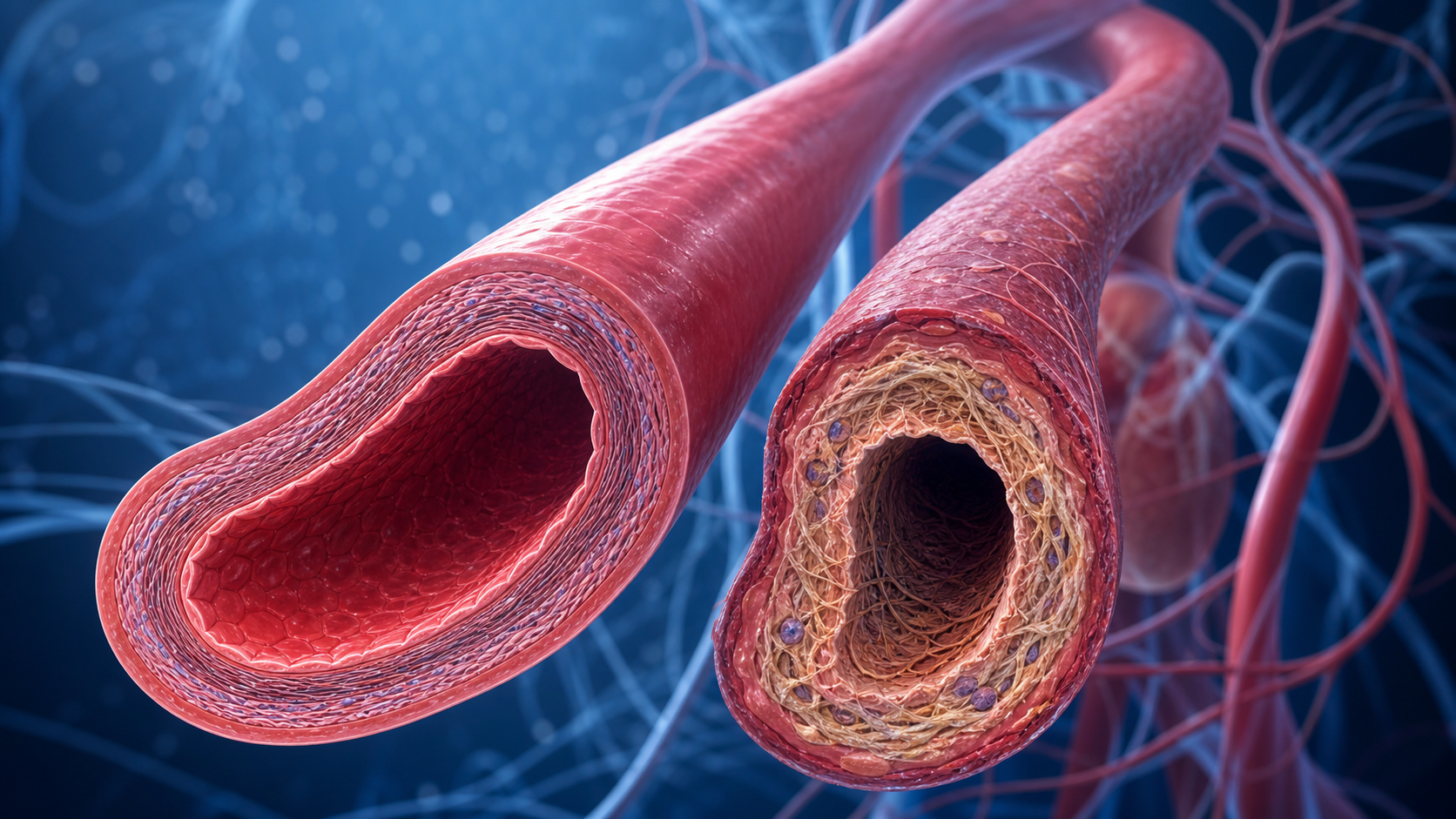
Arterial Stiffness and Vascular Aging: What the Evidence Shows
Explore arterial stiffness vascular aging, how vessels change over time, what pulse wave velocity studies show, and practical ways evidence may inform prevention.
10 min read