Postural Sway and Healthy Aging: What Balance Measurements Can Reveal
Postural sway and healthy aging: what balance measurements may reveal about neurological health, fall risk, and the aging body's hidden signals.
Table of Contents
DISCLAIMER
This article is for informational purposes only and does not constitute medical advice. The statements in this article have not been evaluated by the FDA. The information presented is based on published research and should not be used as a substitute for professional medical guidance. Consult your physician before starting any supplement or health protocol.
Introduction
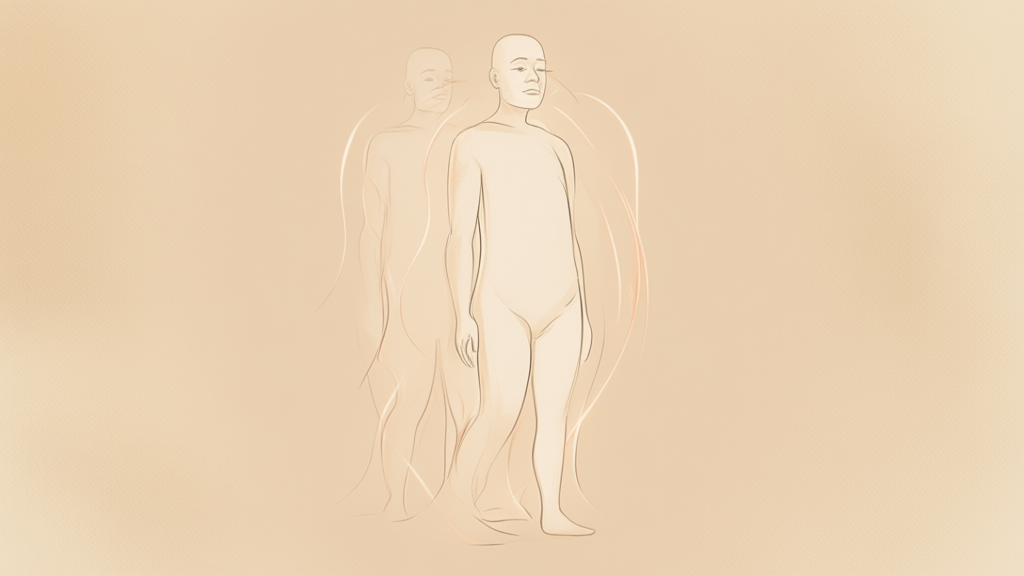
Standing still is not actually still. Even when you feel perfectly motionless, your body is making constant, tiny corrections—shifting weight between your feet, adjusting at the ankles and hips, and relying on your eyes, inner ear, and the pressure sensors in your feet to keep you upright. Researchers call this continuous micro-adjustment postural sway, and it is increasingly being studied as a window into how the body and brain age. The phrase postural sway healthy aging captures a growing research interest: whether the way a person sways while standing could tell us something meaningful about their neurological health, their risk of falling, and their trajectory through later life.
This matters because balance is not a trivial skill. Falls are among the leading causes of injury and loss of independence in older adults, and the ability to stay upright quietly integrates the brain, the sensory systems, and the musculoskeletal frame. If sway measurements could flag problems early—before a fall happens—clinicians might have a low-cost, non-invasive signal to work with. At the same time, the science is still maturing, and it is easy to over-read what a single balance test means. This article walks through what postural sway is, what the research suggests, and where the honest uncertainties lie.
What Postural Sway Is and Why Researchers Care
Postural sway is usually measured with a force plate, which records the movement of your center of pressure as you stand, or with wearable sensors that track body motion. Common metrics include the total distance the center of pressure travels, the area it covers, and the speed of those movements. Higher values generally indicate less stable control, but there is no universal “normal” number—results depend heavily on whether you stand with eyes open or closed, on a firm or foam surface, how long the test lasts, and the specific equipment used.
Researchers are interested in sway for two broad reasons. First, it is a performance-based measure of a complex system: it draws on vision, vestibular function, proprioception, muscle strength, and central nervous system integration. Second, it is relatively easy to collect compared with imaging or blood biomarkers. That combination—cheap, quick, and physiologically rich—makes it an attractive candidate for studying healthy aging and for identifying people who might benefit from preventive interventions.
It is worth emphasizing that sway is not a disease marker in the way a blood test might be. It is a behavioral signal, and interpreting it requires context about the person, the testing protocol, and what else is known about their health.
The Science: What Underlies Balance Control
The sensorimotor system
Maintaining upright posture depends on a continuous loop: sensory receptors detect small deviations, the brain integrates and weighs those signals, and motor commands adjust muscle activity to correct the deviation. Vision, the vestibular system in the inner ear, and proprioception from the feet and ankles all contribute. When any of these inputs degrade—as can happen with age-related changes in vision, peripheral nerve function, or inner ear function—the control loop may become less precise, and sway may increase.
Central integration and cognition
There is growing interest in the idea that postural control is not purely reflexive. Attention, executive function, and processing speed may all play a role, particularly when balance is challenged. This has led researchers to study dual-task paradigms, where a person stands while performing a mental task, to probe how cognitive load affects stability. The relationship is not fully understood, but it hints that sway could reflect central nervous system function as much as peripheral mechanics.
Musculoskeletal and age-related changes
Muscle strength, joint stiffness, and reaction time all decline to varying degrees with age, and each can influence sway. Loss of ankle strength or reduced sensation in the feet may make corrections slower or less coordinated. These changes are not inevitable in a uniform way—they vary widely between individuals—which is part of why sway measurements differ so much from person to person.
Key Research Findings
The literature on postural sway and aging is substantial but uneven. Several studies are worth highlighting because they illustrate the range of findings and the caution required in interpreting them.
A systematic review and meta-analysis examining postural sway and falls in older adults found associations between increased sway and fall history, though the strength of the relationship varied across studies and measurement approaches. The authors noted heterogeneity in how sway was assessed and called for standardized methods. This is a recurring theme: the signal appears real, but the field lacks uniformity.
Research on the relationship between postural sway and cognitive function in older adults has suggested that poorer balance control may correlate with lower cognitive performance, particularly on measures of executive function. Again, the associations are typically modest and cross-sectional, meaning the direction of causality is unclear—cognitive changes could affect balance, balance problems could reflect shared underlying neural changes, or both could be influenced by other factors.
Older work on sensorimotor and neuropsychological correlates of posture control in older adults helped establish that sway is not explained by any single factor. Studies in this vein found that force control and posture control were linked to multiple sensorimotor and cognitive variables, reinforcing the view that balance is a multi-system phenomenon. This foundational research shaped how later studies framed the question.
More recent observational work has explored whether sway measures predict future falls or functional decline better than traditional clinical tests. Some studies suggest added predictive value, while others find that simple tests like gait speed or the timed up-and-go perform comparably. The picture is not settled, and different populations—community-dwelling adults versus those in clinical settings—may yield different results.
Practical Implications: What This Might Mean for You
If you are an older adult or someone interested in healthy aging, the research on postural sway suggests a few reasonable takeaways—with appropriate hedging.
Balance is trainable, and it is worth paying attention to
Even if sway measurements are not yet a routine clinical tool, the underlying capacity—balance—is something that can be maintained and potentially improved. Programs that include balance and strength training have been studied for fall prevention, and some trials report modest reductions in sway. The evidence is not uniform, but the general principle that staying active and challenging balance may help preserve stability is widely supported.
A single test is not a verdict
If you encounter a postural sway measurement—whether in a research study, a physical therapy assessment, or a wearable device—it is best interpreted as one data point among many. Age, testing conditions, footwear, fatigue, and anxiety can all influence results. Markedly high sway may prompt further evaluation, but it does not by itself mean something is wrong.
Sway is one signal among several
Researchers increasingly view balance measures as part of a broader picture that includes gait speed, grip strength, and cognitive assessments. No single measure captures healthy aging, and combining signals is likely more informative than relying on any one test. This is consistent with how geroscience generally approaches biomarkers: cautiously and in combination.
Limitations and Future Research
The study of postural sway and aging faces several limitations that temper enthusiasm.
Measurement standardization remains a challenge. Different studies use different equipment, durations, and conditions, making it difficult to compare results or establish universal thresholds. Efforts to standardize protocols are ongoing but not yet complete.
Causality is unclear. Most studies are cross-sectional or observational. We know that sway tends to increase with age and that higher sway is associated with certain adverse outcomes, but whether sway changes cause those outcomes, reflect them, or share a common cause is often unresolved.
Confounding is pervasive. Health status, medication use, physical activity, and socioeconomic factors can all influence both balance and the outcomes researchers care about. Teasing apart these influences requires large, well-controlled longitudinal studies.
Clinical utility is still being established. For sway to be useful in routine care, it would need to add predictive value beyond existing assessments and be practical to implement. Research on wearable sensors is promising in this regard, but validation is ongoing.
Future work is likely to focus on longitudinal designs, standardized measurement, and integration with other biomarkers. There is also interest in whether sway patterns change in characteristic ways before clinical decline becomes apparent—an appealing possibility, though one that requires careful confirmation.
The Bottom Line
Postural sway is a measurable expression of the complex systems that keep us upright, and it appears to carry information about neurological and musculoskeletal aging. Research suggests that greater sway is associated with fall risk and possibly with cognitive changes, but the relationships are modest and the field still lacks standardization. For now, sway is best viewed as a promising research signal rather than a definitive clinical tool—one that reinforces a familiar message: balance matters, it can be trained, and it is worth monitoring as part of a broader approach to healthy aging.
Frequently Asked Questions
What does postural sway actually measure? Postural sway typically quantifies how much the body’s center of pressure moves while a person stands still, usually captured with force plates or wearable sensors. Larger or faster sway is generally interpreted as less stable control, though values vary widely between individuals and testing conditions.
Is increased postural sway a sign of aging or disease? It can reflect either. Some increase in sway is common with age as sensory and motor systems change, but markedly elevated sway has also been associated with fall risk and cognitive decline in observational studies. A single measurement is rarely diagnostic on its own.
Can balance training reduce postural sway? Several trials suggest that targeted balance and strength exercises may modestly reduce sway and improve stability in older adults, though effects vary by program and population. It remains an active area of research rather than a guaranteed outcome.
Should I ask my doctor about a balance assessment? If you have noticed unsteadiness, have fallen, or feel less confident on your feet, it may be reasonable to raise the topic with a healthcare professional. Balance assessments are not yet standardized everywhere, but clinical evaluation can help identify contributing factors—this is a general consideration, not medical advice.
Frequently Asked Questions
What does postural sway actually measure?
Is increased postural sway a sign of aging or disease?
Can balance training reduce postural sway?
Sources
Stay Updated on Longevity Science
Weekly research digests. No spam, unsubscribe anytime.
Related Articles
Arterial Stiffness and Vascular Age: A Longevity Evidence Guide
Understand arterial stiffness vascular age longevity links, key studies, measurement limits, and evidence-based lifestyle implications for healthy aging.
11 min read
Arterial Stiffness and Vascular Aging: What the Evidence Shows
Explore arterial stiffness vascular aging, how vessels change over time, what pulse wave velocity studies show, and practical ways evidence may inform prevention.
10 min read
Autophagy and Aging: Your Body's Cellular Cleanup System
Explore autophagy, your body's cellular cleanup system, and its critical role in aging and longevity. Research suggests modulating autophagy may support cellular health.
12 min read