Oral Frailty and Healthy Aging: Why Mouth Function Matters
Oral frailty links chewing, swallowing, speech, saliva, and dental health with nutrition and independence. Learn what the evidence means in practical terms.
Table of Contents
DISCLAIMER
This article is for informational purposes only and does not constitute medical advice. The statements in this article have not been evaluated by the FDA. The information presented is based on published research and should not be used as a substitute for professional medical guidance. Consult your physician before starting any supplement or health protocol.
Healthy aging is often discussed in terms of legs, lungs, heart, and brain. The mouth belongs on that list. Chewing, swallowing, speaking, tasting, and managing saliva are small daily actions that support nutrition, communication, confidence, and independence.
Researchers use the term oral frailty for a gradual decline across several oral functions. It is broader than cavities or missing teeth. A person may have an intact-looking smile yet struggle with chewing efficiency, tongue strength, dry mouth, or safe swallowing.
Oral frailty is not an inevitable consequence of age, and it is not a single diagnosis. It is a framework for noticing linked problems before they narrow diet and daily life.
What Counts as Oral Frailty?
Definitions vary across studies, but common domains include tooth loss, reduced chewing ability, low tongue pressure, difficulty swallowing, dry mouth, speech changes, and declining ability to eat firm or varied foods. Some screening tools also ask about choking, denture use, and whether a person now avoids social meals.
Each domain has several possible causes. Gum disease and decay can make chewing painful. Poorly fitted dentures may reduce bite efficiency. Neurologic conditions can affect tongue coordination and swallowing. Medications may reduce saliva. Reduced hand dexterity can make cleaning harder.
That variety is why a checklist is a starting point rather than a verdict. The useful question is which function has changed and what is driving it.
How Can Mouth Function Affect the Rest of the Body?
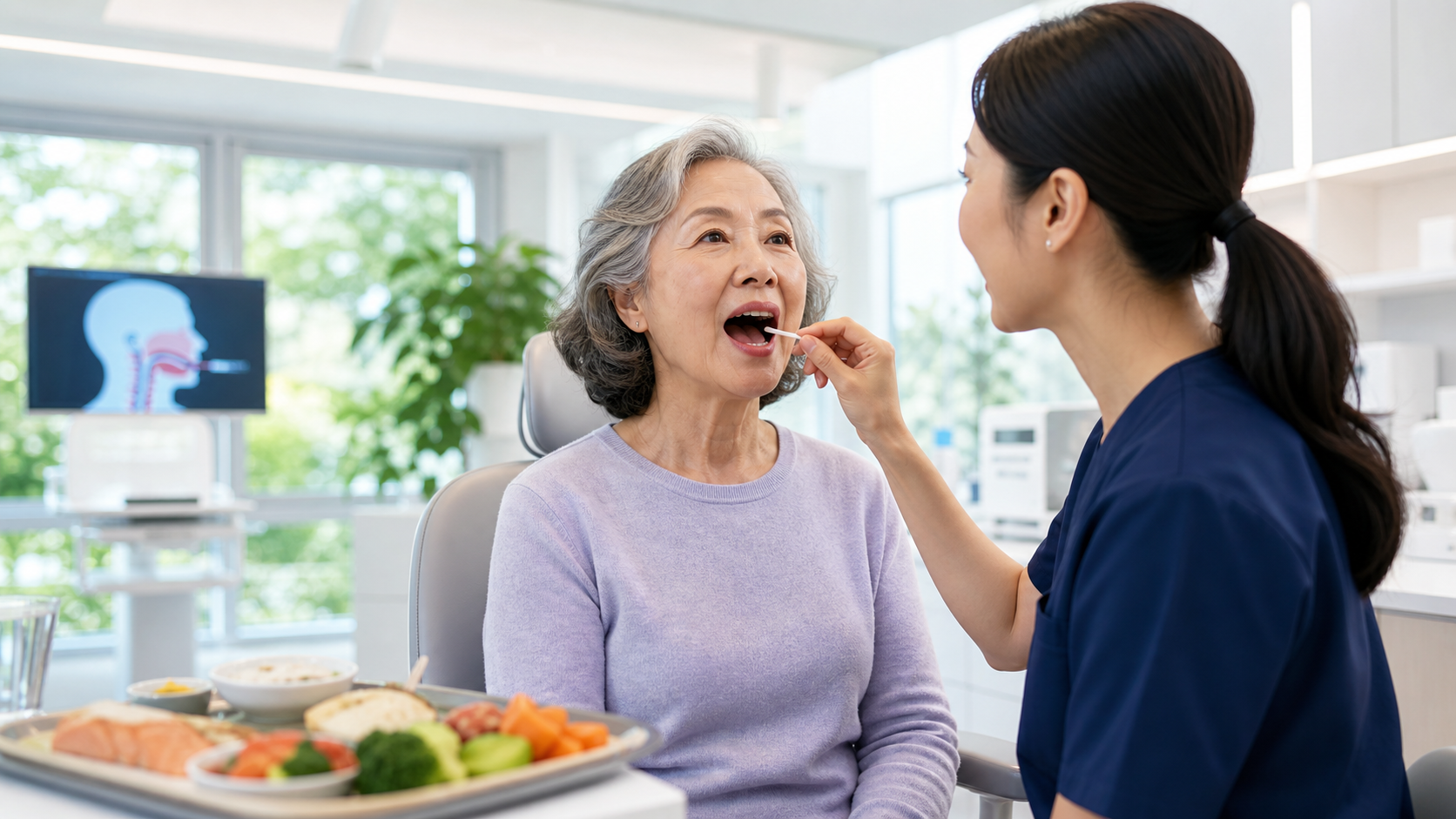
Chewing difficulty can shift a diet toward softer foods. Sometimes that means fewer fibrous vegetables, nuts, meats, or other protein-rich foods. If total energy and protein fall, muscle maintenance becomes harder. Weight loss and weakness can then further reduce shopping, cooking, and self-care.
Swallowing problems carry a different risk. Food or liquid can enter the airway, contributing to choking or aspiration. People who fear swallowing may drink less and become dehydrated. Meals can take so long that intake falls even when food is available.
Oral pain and embarrassment can also reduce social participation. These pathways help explain why observational studies associate oral frailty with physical frailty, disability, and poorer quality of life. Association is not proof of one-way causation; general frailty can also make oral care more difficult.
What Warning Signs Deserve Attention?
Signals include taking much longer to finish meals, coughing during eating or drinking, food sticking in the throat, unexplained weight loss, avoiding previously enjoyed foods, persistent dry mouth, loose teeth, mouth pain, and dentures that move or cause sores.
Changes in voice after swallowing, recurrent chest infections, or breathlessness during meals may warrant prompt assessment. Sudden inability to swallow, severe choking, facial weakness, or new speech difficulty can be an emergency.
Routine dental visits can identify disease and mechanical problems, while medical and speech-language assessments may be needed for swallowing. Nutrition professionals can help preserve adequate intake while the cause is addressed.
What Supports Oral Resilience?
Daily cleaning with fluoride toothpaste, interdental care, regular dental assessment, and avoiding tobacco remain fundamentals. Hydration and medication review may help when dry mouth is present, although persistent symptoms deserve evaluation. Dentures need maintenance and refitting as the mouth changes.
Exercise programs for tongue or swallowing muscles are used in selected clinical settings, but they should match the problem and be taught appropriately. Generic internet drills are not a substitute for evaluating aspiration risk or dental disease.
The practical goal is not a perfect set of teeth. It is comfortable, safe, varied eating and clear communication. Monitoring oral function alongside gait, strength, vision, and hearing makes healthy-aging care more complete.
This article is educational and not medical advice. Seek professional care for persistent oral pain, weight loss, choking, or swallowing difficulty.
Frequently Asked Questions
Is oral frailty the same as having missing teeth?
Can dentures completely restore oral function?
Who should assess swallowing problems?
Sources
Stay Updated on Longevity Science
Weekly research digests. No spam, unsubscribe anytime.
Related Articles
Arterial Calcification and Vascular Aging: Reading the Risk Signals
Arterial calcification can reveal accumulated vascular risk. Learn what calcium scores mean, why calcification develops, and where testing has limits.
10 min read
Arterial Stiffness and Vascular Age: A Longevity Evidence Guide
Understand arterial stiffness vascular age longevity links, key studies, measurement limits, and evidence-based lifestyle implications for healthy aging.
11 min read
Arterial Stiffness and Vascular Aging: What the Evidence Shows
Explore arterial stiffness vascular aging, how vessels change over time, what pulse wave velocity studies show, and practical ways evidence may inform prevention.
10 min read