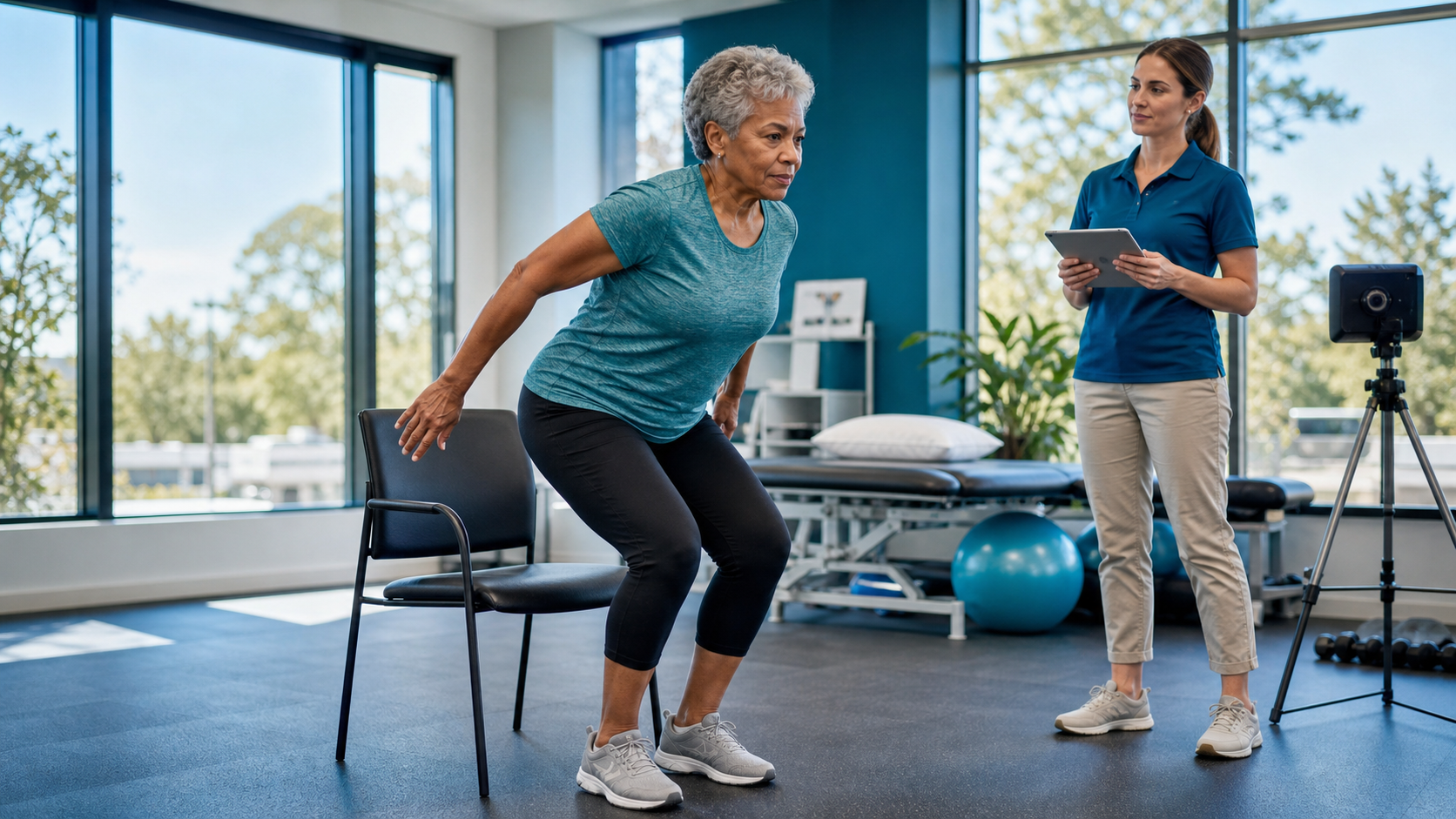
Muscle Power and Healthy Aging: Why Speed Matters Beyond Strength
Muscle power and healthy aging are closely linked because daily tasks require force delivered quickly, not strength alone. Learn what the evidence shows.
Table of Contents
DISCLAIMER
This article is for informational purposes only and does not constitute medical advice. The statements in this article have not been evaluated by the FDA. The information presented is based on published research and should not be used as a substitute for professional medical guidance. Consult your physician before starting any supplement or health protocol.
Muscle power and healthy aging belong in the same conversation. Standing up before balance is lost, climbing a step, catching yourself after a trip, and crossing a street all require force delivered quickly. A person can test reasonably strong in a slow gym movement yet struggle when daily life demands speed.
Power is commonly described as force multiplied by velocity. That does not make it an athlete-only quality. It makes power one of the most practical forms of reserve capacity in later life.
Why Power Is Different From Strength
Maximum strength asks how much force a muscle can produce. Power asks how rapidly useful force appears. Aging can affect both, but changes in fast motor units, nerve signaling, tendon behavior, coordination, and muscle quality may make rapid force especially vulnerable.
This distinction helps explain why two people with similar muscle mass can move very differently. The person who can recruit muscle quickly may rise from a chair, correct a misstep, or accelerate up a stair more effectively.
Observational research repeatedly links lower-limb power with walking speed, stair performance, and self-reported mobility. These studies cannot prove that low power alone causes disability. Chronic disease, pain, inactivity, and neurological changes may reduce power and mobility together. Even so, power often adds information beyond strength alone.
What Power Training Looks Like
Power training does not require maximal loads or risky jumping. In clinical and research settings, it often means performing the effort phase of a familiar movement as quickly as safely possible, followed by a controlled return. Examples may include a fast chair rise, brisk step-up, medicine-ball push, or a leg press using a moderate load.
The intent matters: accelerate while maintaining control. A typical progression first establishes technique and baseline strength, then introduces speed with a load that remains manageable. Longer rest periods can preserve movement quality because fatigue turns power work into slow work.
Reviews of resistance programs in older adults generally find that both traditional strength training and higher-velocity training can improve function. Power-focused programs may provide an extra advantage for tasks that depend on speed, but results differ across studies. Program length, supervision, participant frailty, and outcome measures all influence the findings.
Practical Implications and Limits
A useful program still needs a broad foundation: walking or other aerobic activity, conventional resistance exercise, balance practice, and enough recovery and protein to support adaptation. Power is a layer, not a replacement.
People with recent falls, uncontrolled cardiovascular symptoms, severe osteoporosis, painful joints, or neurological disease should seek individualized guidance before adding fast movements. The goal is not exhaustion. It is crisp, repeatable movement that builds confidence and reserve.
Researchers still need longer trials showing whether measured gains in power translate into fewer falls, less disability, or longer independent living. Current evidence is strongest for improved performance, not proof of prevention.
The Bottom Line
Strength lets you produce force; power helps you use it in time. Healthy-aging exercise is more complete when it protects both. After a safe strength base is established, carefully progressed faster-intent movements may help daily actions stay decisive rather than merely possible.
Frequently Asked Questions
What is muscle power?
Does muscle power decline faster than strength?
Can older adults train muscle power safely?
Sources
Stay Updated on Longevity Science
Weekly research digests. No spam, unsubscribe anytime.
Related Articles
Arterial Calcification and Vascular Aging: Reading the Risk Signals
Arterial calcification can reveal accumulated vascular risk. Learn what calcium scores mean, why calcification develops, and where testing has limits.
10 min read
Arterial Stiffness and Vascular Age: A Longevity Evidence Guide
Understand arterial stiffness vascular age longevity links, key studies, measurement limits, and evidence-based lifestyle implications for healthy aging.
11 min read
Arterial Stiffness and Vascular Aging: What the Evidence Shows
Explore arterial stiffness vascular aging, how vessels change over time, what pulse wave velocity studies show, and practical ways evidence may inform prevention.
10 min read