MOTS-c and Humanin: Mitochondrial Peptides and Aging
What research on MOTS-c and Humanin reveals about metabolism, stress resilience, and healthy aging—and why human evidence remains limited.
Table of Contents
DISCLAIMER
This article is for informational purposes only and does not constitute medical advice. The statements in this article have not been evaluated by the FDA. The information presented is based on published research and should not be used as a substitute for professional medical guidance. Consult your physician before starting any supplement or health protocol.
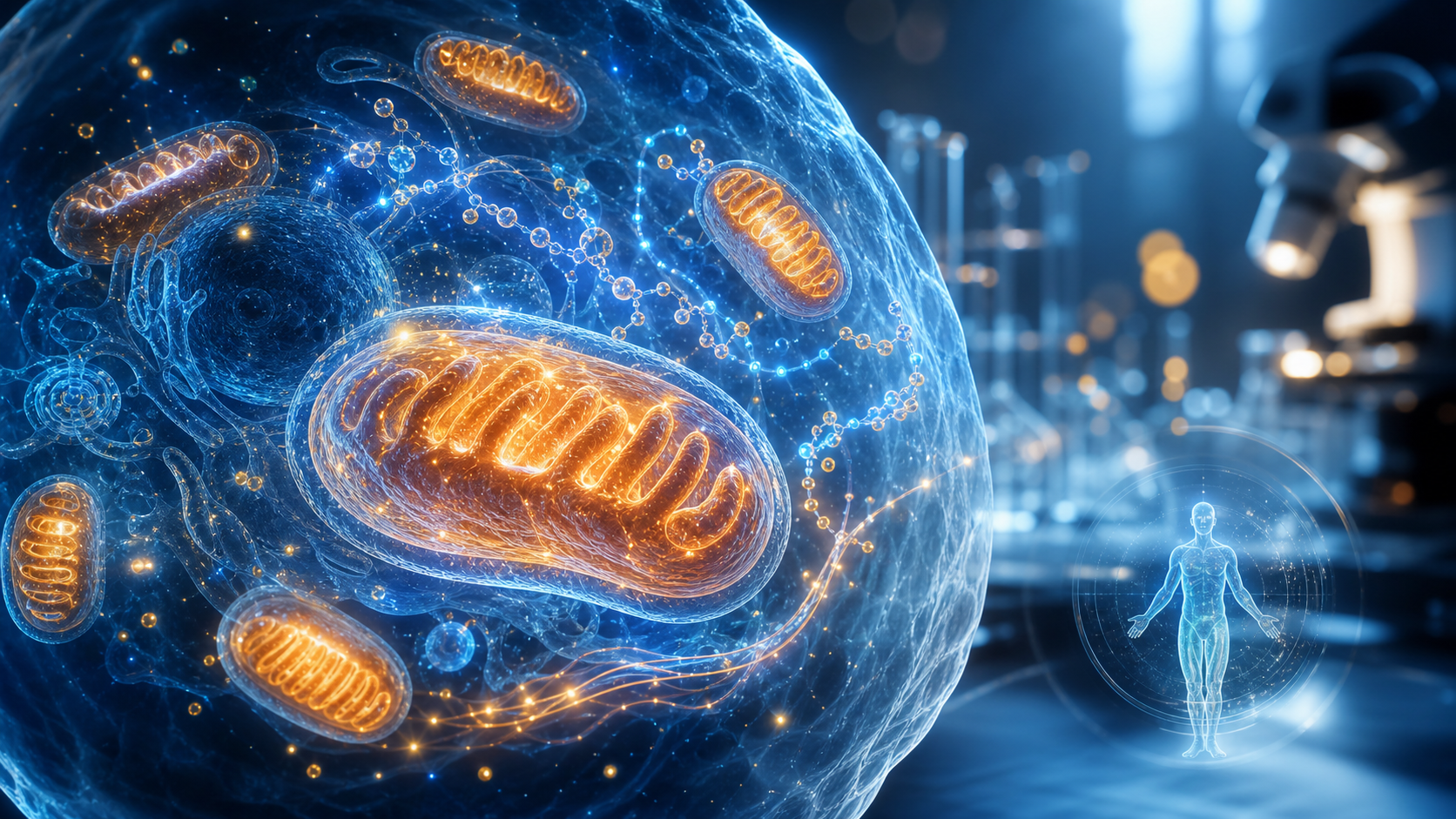
Mitochondria are best known as the structures that convert nutrients into usable cellular energy. Yet they also send signals. Among the most intriguing signals are mitochondrial-derived peptides, short chains of amino acids encoded within mitochondrial DNA. Two of the most studied are MOTS-c and Humanin.
Laboratory findings have placed these peptides at the intersection of metabolism, cellular stress, inflammation, and age-related disease. That makes them scientifically interesting—but not proven longevity therapies. Most of the strongest evidence still comes from cells and animals, while human trials remain small or preliminary.
What Are Mitochondrial-Derived Peptides?
Human mitochondrial DNA contains 37 traditionally recognized genes. Researchers once treated much of the remaining sequence as noncoding. More sensitive methods revealed small open reading frames capable of producing biologically active peptides. Humanin was identified first; MOTS-c followed later.
These molecules appear to act as retrograde signals: mitochondria communicate their condition to the rest of the cell, including the nucleus. Instead of simply responding to cellular instructions, mitochondria can help coordinate broader stress and metabolic responses.
MOTS-c: A Metabolic Stress Signal
MOTS-c is a 16-amino-acid peptide encoded within mitochondrial 12S ribosomal RNA. In experimental models it influences folate and purine metabolism, activates the energy-sensing enzyme AMPK, and supports glucose handling during metabolic stress.
In mice, MOTS-c treatment has improved insulin sensitivity and protected against diet-induced metabolic dysfunction. Other animal studies suggest potential effects on physical performance and age-associated decline. These findings fit with the idea that healthy aging depends partly on the ability to sense energy shortage and adjust cellular activity.
MOTS-c is also unusual because cellular stress can prompt it to move into the nucleus. There it may interact with transcription factors and alter expression of stress-response genes. This mitochondria-to-nucleus movement offers a plausible mechanism for coordinating whole-cell adaptation.
Human data are much thinner. Circulating MOTS-c levels and genetic variants have been examined in relation to metabolic health, exercise, and longevity, but observational associations cannot prove that raising the peptide would improve outcomes. Concentrations may vary by tissue, age, sex, activity, and measurement method.
Humanin: A Cellular Survival Signal
Humanin is a small peptide first discovered during research into neuronal survival. It can be produced from mitochondrial sequence and appears in several tissues and in circulation. Experimental research suggests it interacts with pathways involved in programmed cell death, oxidative stress, insulin signaling, and inflammation.
In cell and animal models, Humanin has shown protective effects under certain forms of metabolic, vascular, and neurological stress. Researchers have therefore studied it in the context of Alzheimer’s disease, cardiovascular injury, diabetes, and aging. The biological picture is complex: cell-survival signaling may be beneficial in stressed healthy tissue, but indiscriminately preventing damaged cells from dying would not always be desirable.
Some observational work reports lower circulating Humanin with age, while exceptionally long-lived people and their descendants have been examined for distinctive mitochondrial peptide patterns. These results are thought-provoking, not definitive. A biomarker associated with healthy aging may be a consequence of good health rather than its cause.
How the Two Peptides Differ
MOTS-c is most often framed as a regulator of metabolic adaptation. Humanin is more often studied as a cytoprotective signal. Their pathways overlap, however, and both illustrate how mitochondrial function extends beyond energy production.
The distinction matters because “mitochondrial health” is not a single switch. Cells must balance energy output, quality control, stress responses, inflammation, and appropriate removal of damaged components. A useful therapy would need to improve that network without disrupting protective tradeoffs.
What the Research Does—and Does Not—Show
Current evidence supports three cautious conclusions. First, mitochondria encode signaling peptides with real biological activity. Second, MOTS-c and Humanin affect pathways relevant to age-related decline in experimental systems. Third, their clinical usefulness in healthy people is unknown.
Animal experiments can establish mechanisms and reveal possible benefits, but doses, delivery, lifespan, and disease context differ markedly from human conditions. Observational human studies can find correlations, yet they are vulnerable to confounding. Robust evidence would require controlled trials that measure safety, pharmacology, functional outcomes, and durability—not only changes in blood biomarkers.
Exercise, Metabolism, and Everyday Relevance
Exercise already activates many of the same adaptive systems connected to mitochondrial peptides, including AMPK signaling, mitochondrial biogenesis, glucose uptake, and antioxidant defenses. Some small studies suggest acute exercise changes MOTS-c levels, although findings and measurement approaches are not yet uniform.
That does not mean exercise “works through MOTS-c” alone. It means peptide research may help explain one part of exercise’s systemic effects. For now, established behaviors—regular movement, adequate sleep, not smoking, blood-pressure management, and a nutrient-dense diet—have vastly stronger human outcome evidence than peptide injections marketed for longevity.
Safety and the Peptide-Market Problem
Online sellers sometimes present MOTS-c or Humanin analogs as research products or wellness interventions. These products are not equivalent to regulated medicines. Identity, sterility, purity, dose accuracy, and storage may be uncertain, while long-term safety data are lacking.
Potential benefits inferred from animal studies cannot define a safe human dose. Metabolic and cell-survival pathways also have effects across many organs, creating the possibility of unintended consequences. Anyone considering an experimental peptide should understand its regulatory status and speak with an appropriately qualified clinician rather than relying on marketing claims.
The Bottom Line
MOTS-c and Humanin have changed the scientific view of mitochondria. These organelles do not merely generate energy; they produce signals that may help cells coordinate metabolism and survive stress. That insight could eventually contribute to treatments for specific age-related conditions.
Today, however, mitochondrial-derived peptides belong in the category of promising research—not established age-reversal medicine. The next decisive step is careful human research showing whether targeted manipulation improves meaningful health outcomes without creating new risks.
This article is for educational purposes and is not medical advice.
Frequently Asked Questions
Are MOTS-c and Humanin approved anti-aging treatments?
Can exercise influence mitochondrial-derived peptides?
Should people buy peptide products sold online?
Sources
Stay Updated on Longevity Science
Weekly research digests. No spam, unsubscribe anytime.
Related Articles
Arterial Calcification and Vascular Aging: Reading the Risk Signals
Arterial calcification can reveal accumulated vascular risk. Learn what calcium scores mean, why calcification develops, and where testing has limits.
10 min read
Arterial Stiffness and Vascular Age: A Longevity Evidence Guide
Understand arterial stiffness vascular age longevity links, key studies, measurement limits, and evidence-based lifestyle implications for healthy aging.
11 min read
Arterial Stiffness and Vascular Aging: What the Evidence Shows
Explore arterial stiffness vascular aging, how vessels change over time, what pulse wave velocity studies show, and practical ways evidence may inform prevention.
10 min read