Extracellular Matrix Stiffness: How Aging Changes Tissue
Aging makes the extracellular matrix stiffer and less responsive. Explore collagen cross-links, cell signaling, fibrosis, and emerging interventions.
Table of Contents
DISCLAIMER
This article is for informational purposes only and does not constitute medical advice. The statements in this article have not been evaluated by the FDA. The information presented is based on published research and should not be used as a substitute for professional medical guidance. Consult your physician before starting any supplement or health protocol.
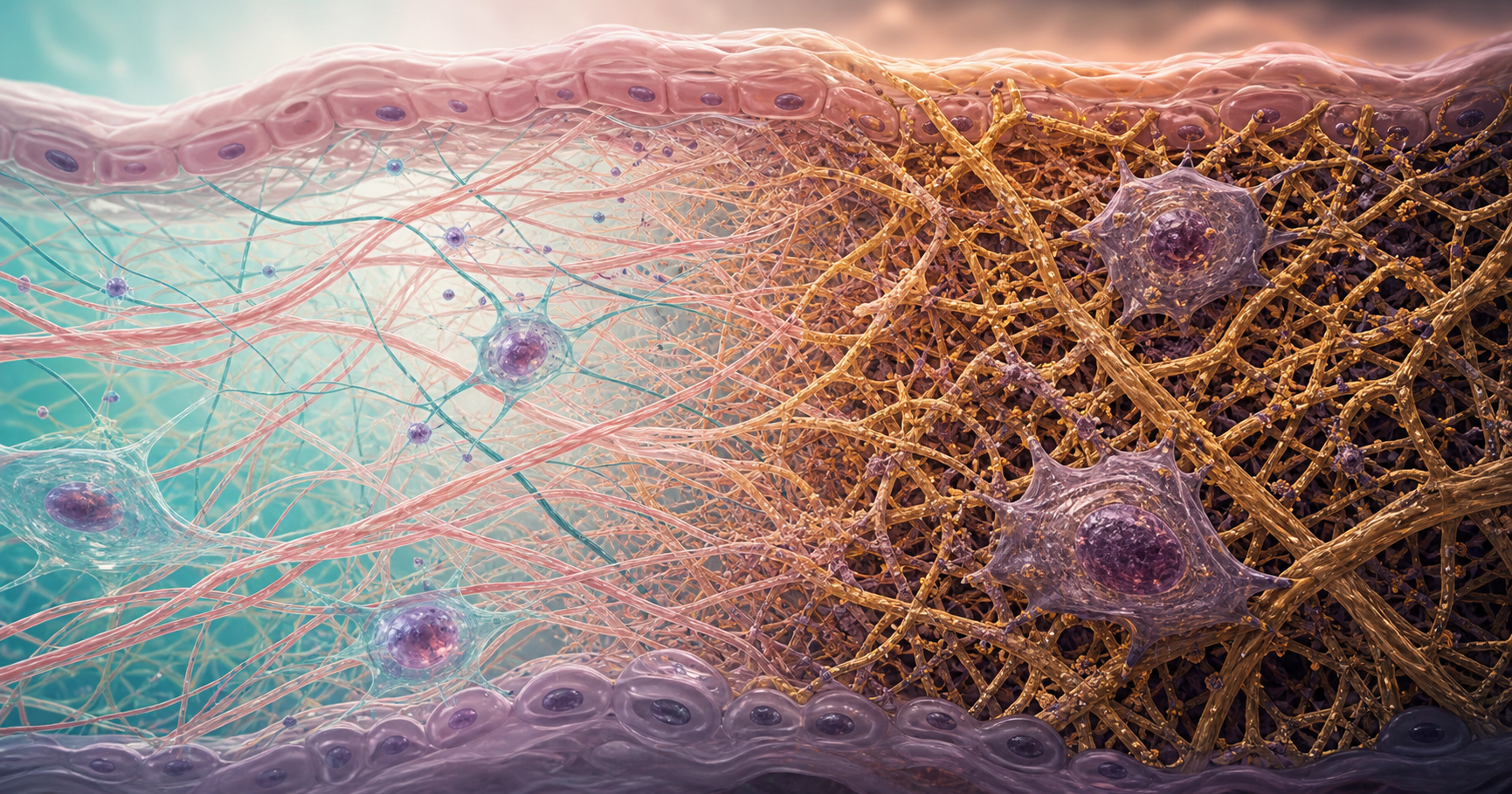
Cells do not float in empty space. They live in a dynamic scaffold of proteins, sugars, and water called the extracellular matrix, or ECM. This matrix gives tissue its structure, but it also stores signals, guides movement, and tells cells how to behave.
With age, the ECM often becomes stiffer, more cross-linked, and less effectively remodeled. Those physical changes can alter cell function even when the cells’ DNA remains unchanged. The result is a feedback loop in which an aging matrix encourages aging-like cellular behavior, and those cells then maintain a less healthy matrix.
The Matrix Is More Than Scaffolding
Major ECM components include collagens, elastin, fibronectin, laminins, proteoglycans, and hyaluronic acid. Their proportions and organization differ by tissue. Bone requires rigidity, cartilage must bear compressive load, arteries need strength and elasticity, and the lung depends on a delicate framework that expands repeatedly.
Cells attach to the ECM through receptors such as integrins. These connections link the outside environment to the internal cytoskeleton. When a cell pulls on its surroundings, it can sense resistance. This process, called mechanotransduction, influences gene expression, growth, migration, specialization, and survival.
Matrix stiffness is therefore information. A healthy cell placed in an abnormally rigid environment may activate inflammatory, fibrotic, or growth-related programs.
Why Tissues Stiffen With Age
Several processes converge on stiffness. Long-lived collagen fibers accumulate chemical modifications and cross-links. Some cross-links are created enzymatically and serve normal structural roles. Others form through nonenzymatic glycation, when sugars react with proteins and eventually create advanced glycation end products, or AGEs.
Because collagen can persist for years, damage and cross-links accumulate. Heavily cross-linked fibers resist both stretching and breakdown, slowing normal replacement.
Matrix-producing cells also change. Fibroblasts may become senescent or shift toward a persistently activated state. Matrix metalloproteinases and their inhibitors can fall out of balance, producing disorganized degradation in some locations and excess deposition in others. Chronic inflammation further changes how tissue is rebuilt.
The outcome is not simply “more collagen.” Aging matrix can be fragmented, misaligned, overly dense, or mechanically inappropriate for its tissue.
A Conversation Between Cells and Mechanics
Cells respond to stiffness through integrins, focal adhesions, the cytoskeleton, and signaling regulators such as YAP and TAZ. On a rigid surface, tension across these structures can change which genes are active.
This creates a self-reinforcing loop. A stiff matrix can encourage fibroblasts to produce and contract more matrix. Greater deposition and cross-linking then increase stiffness. Similar loops contribute to fibrosis in the liver, lung, heart, and kidney.
Senescent cells add another layer. Their secreted inflammatory factors and matrix-remodeling enzymes can disrupt surrounding tissue. At the same time, an altered mechanical environment may promote cellular stress and senescence. Matrix change and cell aging are therefore intertwined rather than separate events.
How Stiffness Appears Across the Body
In arteries, collagen cross-linking and elastin fragmentation reduce compliance. The heart must pump against a less flexible vascular system, contributing to higher systolic pressure and greater cardiac workload.
In skin, changes in collagen organization, elastin, hydration, and glycation contribute to reduced elasticity and altered wound repair. In skeletal muscle, fibrosis can interfere with force transmission and regeneration. In the lung, excessive matrix deposition reduces the ability of tissue to expand. In the liver, chronic injury can activate matrix-producing cells and progress toward fibrosis.
The brain presents a more nuanced case because healthy neural tissue is naturally soft. Local changes in ECM composition and mechanics may affect inflammation, blood vessels, and neural-cell behavior, but relationships vary by region and disease.
These examples show why there is no single whole-body “stiffness age.” Mechanical properties must be interpreted tissue by tissue.
Measuring an Aging Matrix
Researchers use atomic-force microscopy, mechanical testing, imaging, and molecular analysis to measure ECM properties. Clinicians already assess some consequences with tools such as pulse-wave velocity for arterial stiffness, ultrasound elastography for liver stiffness, and specialized imaging for tissue fibrosis.
These measurements do not all reflect the same biology. Arterial stiffness involves pressure, vessel-wall composition, smooth-muscle tone, and calcification. Liver elastography can be influenced by inflammation and congestion as well as fibrosis. A result needs context rather than being treated as a direct universal measure of biological age.
Can Matrix Aging Be Slowed?
Regular physical activity provides mechanical signals that help maintain muscle, tendon, bone, and vascular function. Aerobic training can improve vascular function, while progressive resistance exercise supports muscle and connective-tissue capacity. The optimal stimulus differs by tissue and by a person’s health.
Avoiding smoking and managing glucose exposure may also matter because smoking damages matrix proteins and chronically high glucose promotes glycation. Blood-pressure management reduces mechanical stress on arteries. Adequate nutrition supplies the substrates needed for tissue maintenance, although no food can selectively remove established cross-links throughout the body.
These measures support health; they should not be framed as complete reversal of an aged ECM.
Emerging Therapeutic Strategies
Scientists are investigating enzymes and drugs that alter cross-linking, fibrosis, inflammation, senescence, and mechanotransduction. Cross-link breakers have produced mixed results, and translating chemical effects into safe clinical improvement has been difficult. Anti-fibrotic medicines are approved for certain diseases, but that does not make them general anti-aging drugs.
Regenerative strategies face a related challenge. Transplanted cells may not function normally if placed into a severely altered matrix. Tissue engineering therefore increasingly considers both cell identity and the mechanical properties of the surrounding scaffold.
Targeting YAP/TAZ, integrins, lysyl oxidases, or senescent cells could interrupt harmful feedback loops, but these pathways also support healing and normal tissue structure. Timing, location, and dose are likely to be crucial.
The Bottom Line
Extracellular matrix stiffness is an important dimension of aging because cells continuously read the mechanical character of their surroundings. Collagen cross-linking, glycation, inflammation, senescence, and impaired remodeling can turn a supportive matrix into one that reinforces dysfunction.
The field also offers a broader lesson: rejuvenating cells may not be enough if their neighborhood remains aged. Future interventions may need to restore both cellular function and the physical environment that shapes it. For now, exercise, metabolic health, smoking avoidance, and management of established cardiovascular risks remain the most grounded ways to support tissue function while research advances.
This article is for educational purposes and is not medical advice.
Frequently Asked Questions
What makes the extracellular matrix stiffer with age?
Can exercise reduce tissue stiffness?
Are collagen supplements proven to reverse matrix aging?
Sources
Stay Updated on Longevity Science
Weekly research digests. No spam, unsubscribe anytime.
Related Articles
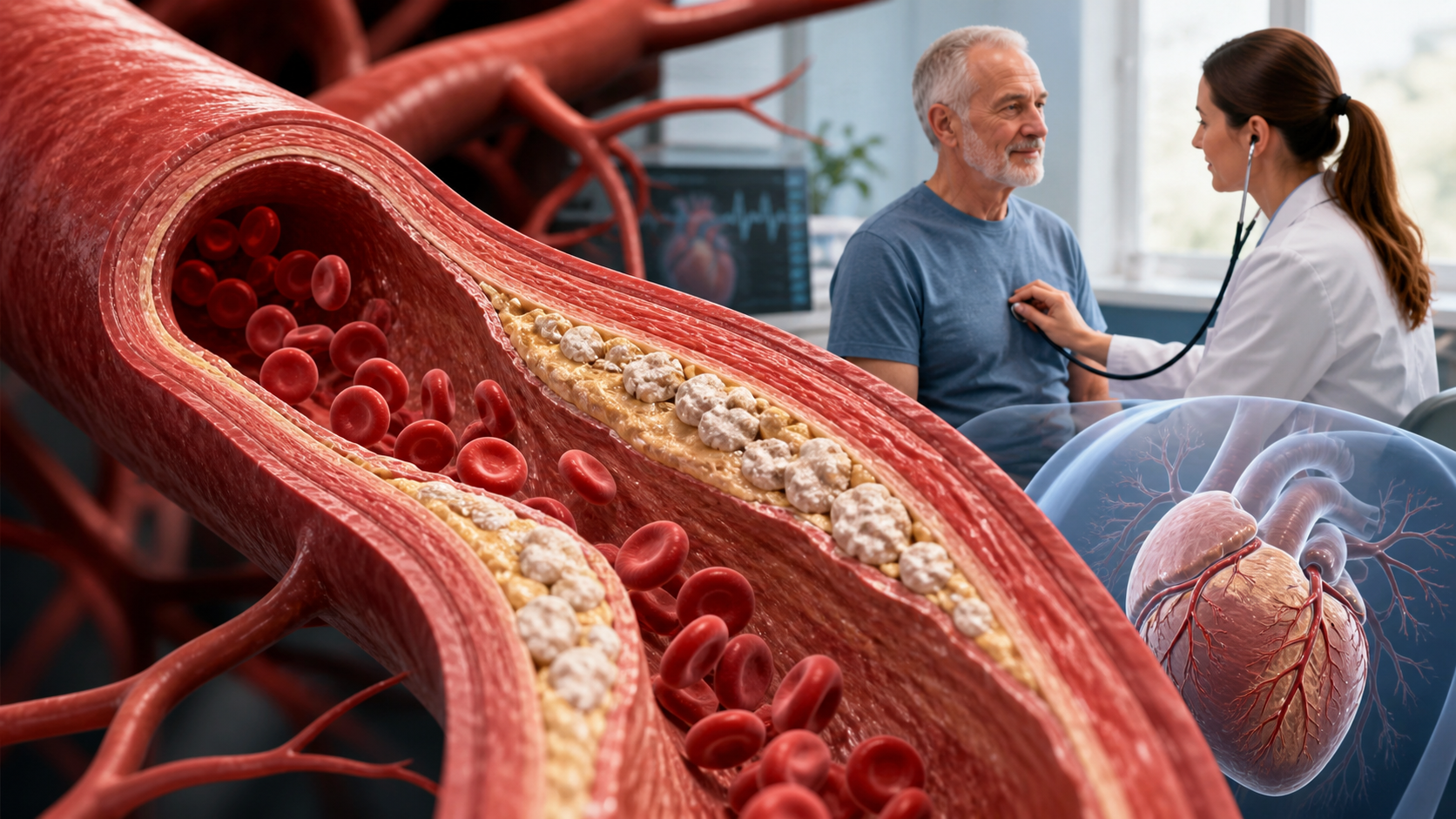
Arterial Calcification and Vascular Aging: Reading the Risk Signals
Arterial calcification can reveal accumulated vascular risk. Learn what calcium scores mean, why calcification develops, and where testing has limits.
10 min read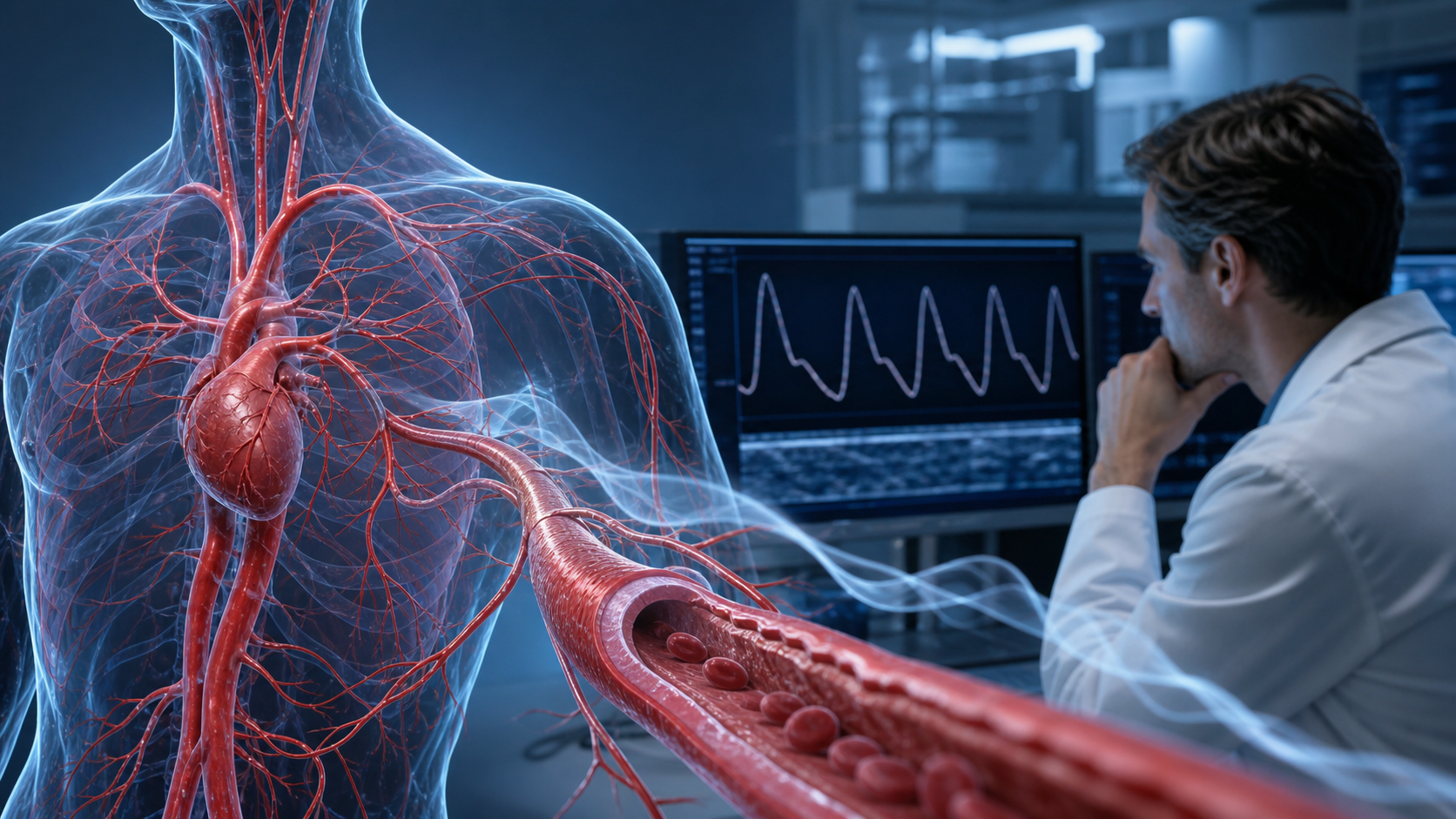
Arterial Stiffness and Vascular Age: A Longevity Evidence Guide
Understand arterial stiffness vascular age longevity links, key studies, measurement limits, and evidence-based lifestyle implications for healthy aging.
11 min read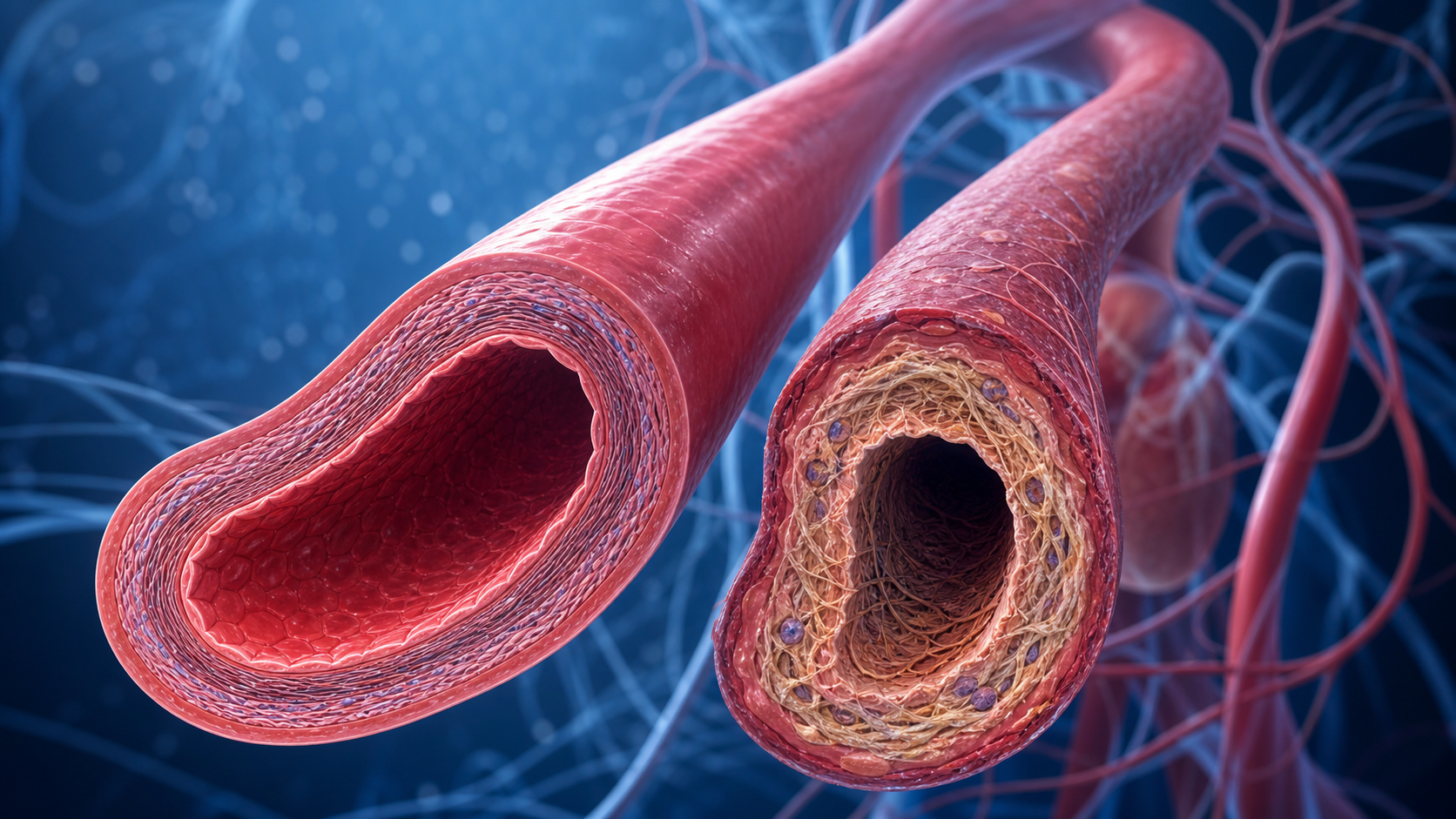
Arterial Stiffness and Vascular Aging: What the Evidence Shows
Explore arterial stiffness vascular aging, how vessels change over time, what pulse wave velocity studies show, and practical ways evidence may inform prevention.
10 min read