Dual-Task Walking and Cognitive Aging: What Your Gait Can Reveal
Walking while thinking challenges both mobility and attention. Learn what dual-task gait may reveal about cognitive aging and how it is assessed.
Table of Contents
DISCLAIMER
This article is for informational purposes only and does not constitute medical advice. The statements in this article have not been evaluated by the FDA. The information presented is based on published research and should not be used as a substitute for professional medical guidance. Consult your physician before starting any supplement or health protocol.
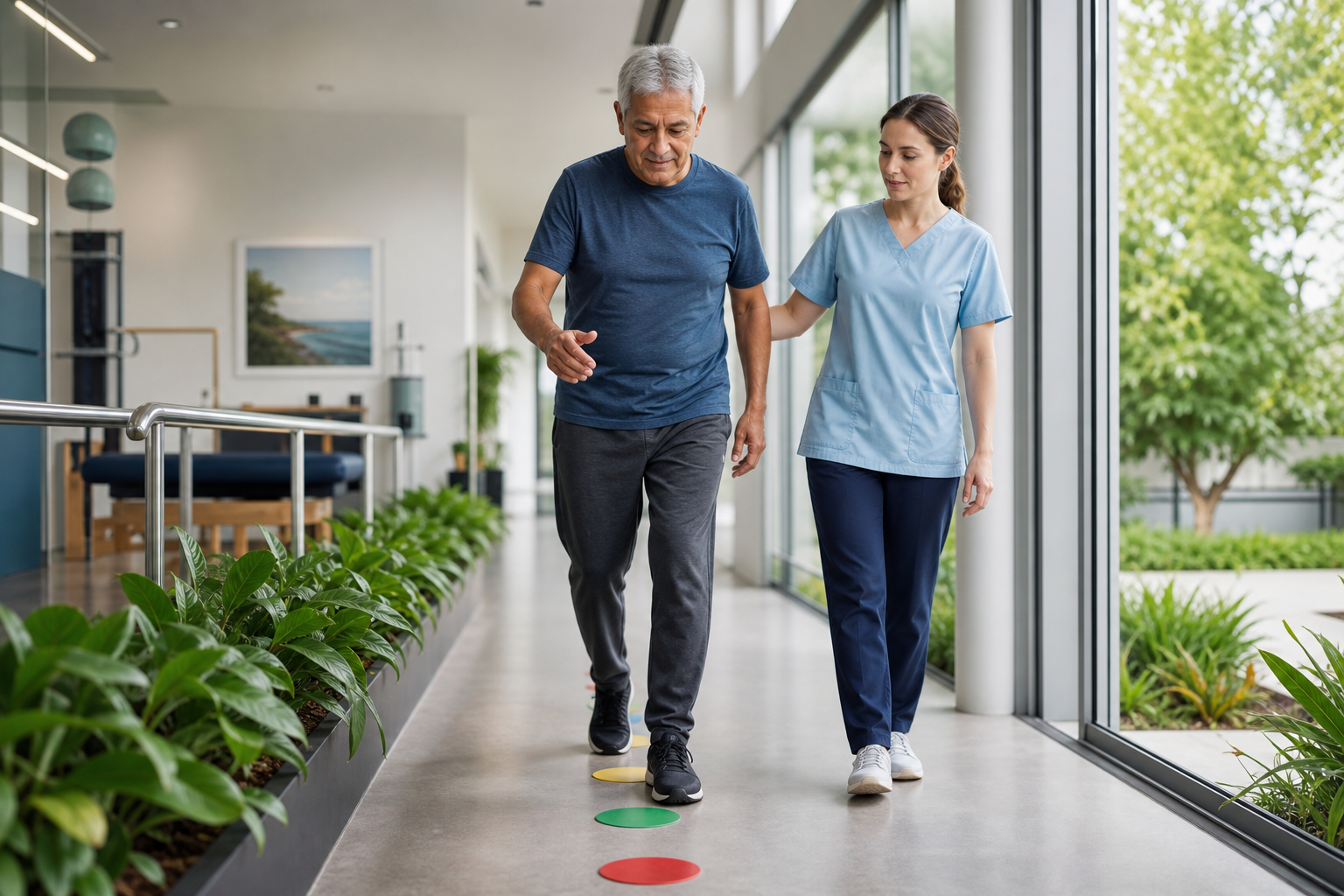
Walking feels automatic until the brain is asked to do something else at the same time. Count backward, name animals, carry a conversation, or navigate an unfamiliar route, and gait becomes a shared task between movement and attention. Researchers call this dual-task walking.
In younger adults, the added mental task may barely change pace. With aging, neurological disease, medication effects, fatigue, or reduced mobility, the competition for attention can become more visible. A person may slow down, shorten steps, become less steady, or stop walking in order to answer.
Dual-task gait is not a home dementia test. It is a research and clinical tool that can reveal how well cognitive and motor systems coordinate under load. The result is influenced by hearing, vision, pain, fitness, education, mood, and familiarity with the task—not cognition alone.
Why Walking Uses More Brain Power Than It Appears
Safe walking requires continuous prediction and correction. The brain integrates vision, balance signals, sensation from the feet and joints, muscle control, spatial awareness, and decisions about obstacles. Executive functions help divide attention, inhibit distractions, and adjust plans.
When a second task is added, both activities draw from limited processing resources. Many people protect stability by slowing down. That can be an appropriate safety strategy rather than a sign of failure. Others maintain speed but become more variable from step to step, which may be harder to notice without measurement.
Researchers often calculate a “dual-task cost”: the percentage change in gait speed or another measure between ordinary walking and walking with a cognitive task. The size of that change can be studied over time or compared with broader assessments.
What Dual-Task Gait May Reveal
Slower gait and greater gait variability have been associated with fall risk, frailty, and cognitive decline in observational studies. The motoric cognitive risk syndrome combines slow gait with a person’s report of cognitive concerns and has been linked with higher future dementia risk.
These associations do not mean that a slow dual-task walk predicts an individual’s future with certainty. Arthritis may shorten steps. Sedating medication may affect attention. Poor hearing can make the spoken task harder. Fear of falling may cause deliberate caution. A meaningful evaluation looks at the entire context.
Dual-task testing can be useful because ordinary clinic conversations may not expose difficulties that appear in a busy real environment. Crossing a street while watching traffic, walking through a store while reading signs, or talking while using stairs all require divided attention.
The test is best treated as one part of a mobility or cognitive assessment, not as a diagnostic shortcut.
How Clinicians Assess It
A clinician may first measure walking over a marked distance at a comfortable pace. The person then repeats the walk while performing a mental task, such as counting backward or naming words from a category. Wearable sensors or an instrumented walkway can measure speed, step time, stride length, and variability, but a stopwatch and careful observation can still provide useful information.
The choice of mental task matters. Counting by ones is easier than subtracting by sevens, and a language task may disadvantage someone working in a second language. Instructions also change priorities: “walk as safely as possible” can produce a different result from “give both tasks equal attention.”
Because of fall risk, testing should be supervised when someone has unsteadiness, a recent fall, dizziness, or neurological symptoms. A clear path, appropriate footwear, and access to support are basic safeguards.
Can Dual-Task Ability Be Improved?
Exercise programs that combine balance, strength, aerobic activity, and task-specific practice can improve mobility in many older adults. Some rehabilitation programs gradually add cognitive challenges to walking, beginning in controlled settings and progressing only when safety is maintained.
The goal is not to perform mental arithmetic while walking for its own sake. It is to build reserve for real situations that demand attention. A physical therapist can adapt training for pain, weakness, sensory loss, or a history of falls. Medication review, vision correction, hearing care, and appropriate assistive devices may also reduce the load on walking.
Seek medical assessment for a new change in gait, repeated falls, one-sided weakness, fainting, sudden confusion, or rapidly worsening balance. These are not problems to train through without evaluation.
Dual-task walking offers a useful window into healthy aging because it measures coordination rather than one system in isolation. It reminds us that mobility and cognition cooperate every time we move through a complex world.
This article is educational and does not replace individualized medical or rehabilitation advice.
Sources
Stay Updated on Longevity Science
Weekly research digests. No spam, unsubscribe anytime.
Related Articles
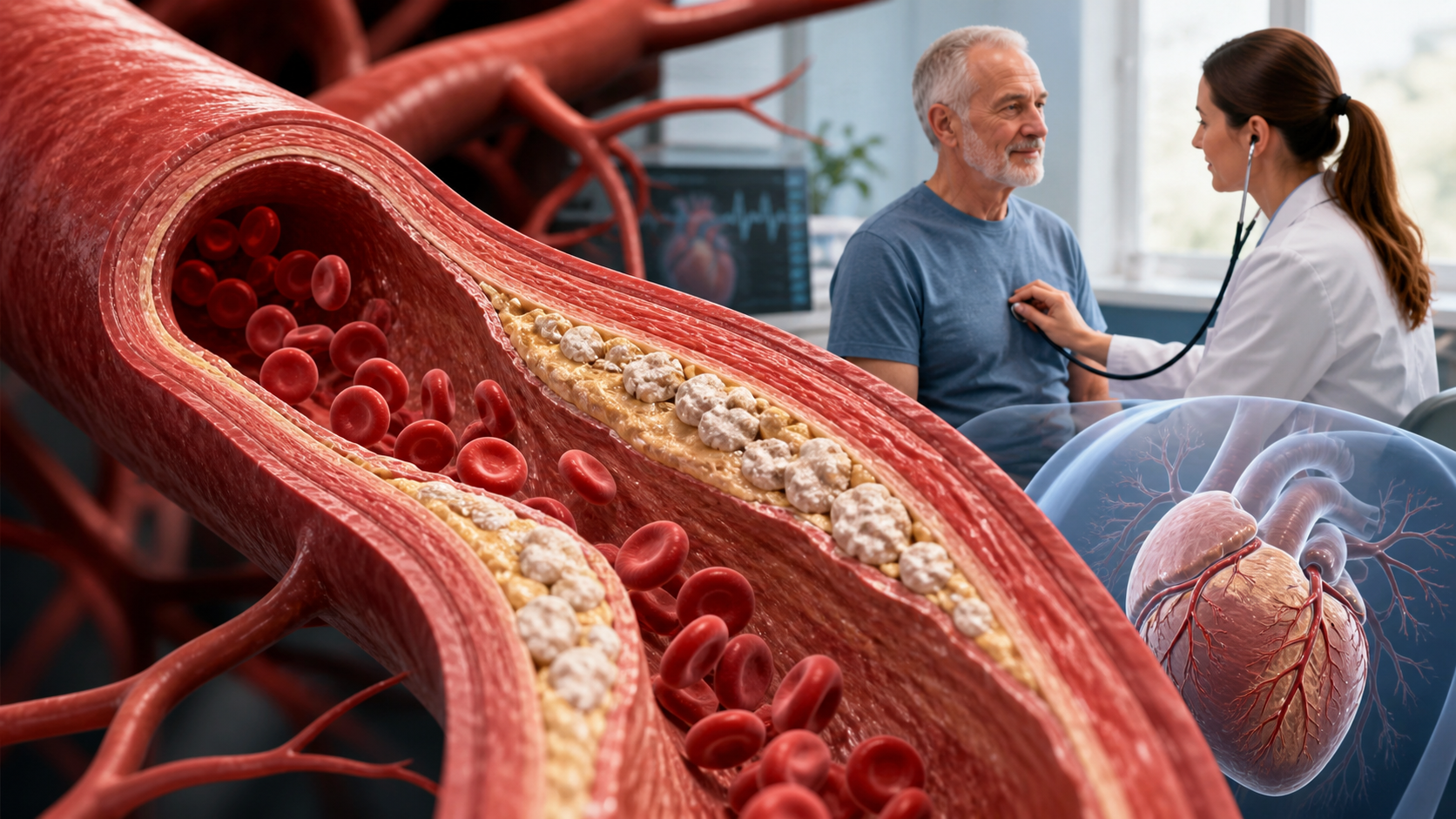
Arterial Calcification and Vascular Aging: Reading the Risk Signals
Arterial calcification can reveal accumulated vascular risk. Learn what calcium scores mean, why calcification develops, and where testing has limits.
10 min read
Arterial Stiffness and Vascular Age: A Longevity Evidence Guide
Understand arterial stiffness vascular age longevity links, key studies, measurement limits, and evidence-based lifestyle implications for healthy aging.
11 min read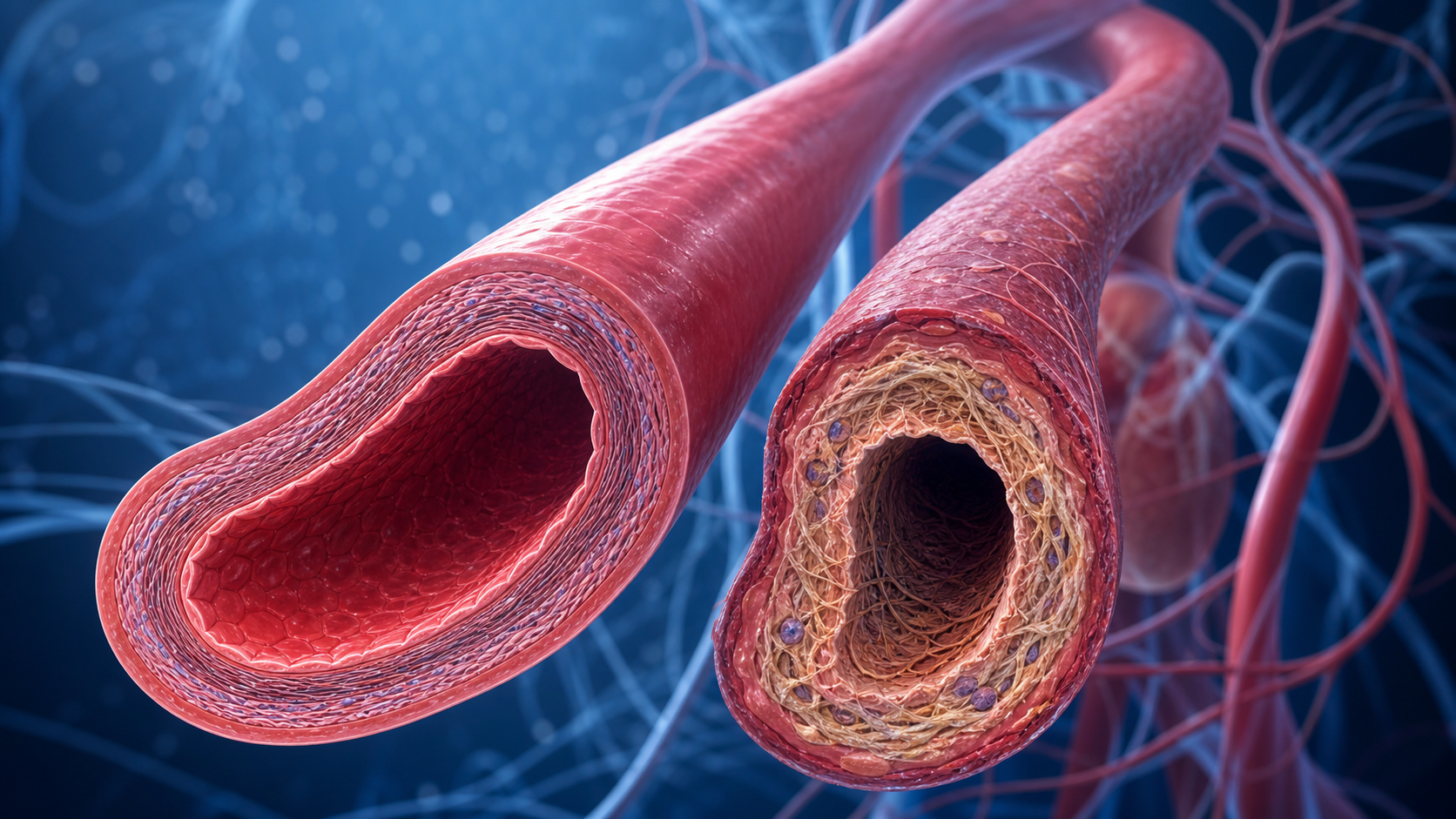
Arterial Stiffness and Vascular Aging: What the Evidence Shows
Explore arterial stiffness vascular aging, how vessels change over time, what pulse wave velocity studies show, and practical ways evidence may inform prevention.
10 min read