What Happens to Your Body When You Stop Taking NMN?
If you pause an NMN supplement, does NAD+ crash? Research on NAD+ precursor withdrawal, red blood cell recycling, and what the evidence actually suggests about stopping.
Table of Contents
SUPPLEMENT NOTICE
The supplements discussed in this article are not intended to diagnose, treat, cure, or prevent any disease. Dosages mentioned reflect those used in specific research studies and should not be interpreted as recommendations. Always consult a healthcare professional before beginning any supplement regimen, especially if you have existing health conditions or take medications.
The Question Behind the Pause
Many people who take NMN wonder what happens if they stop. The concern is intuitive: if NAD+ declines with age and NMN is a precursor, does quitting cause a rebound crash?
The short answer from research is less dramatic than supplement marketing suggests. NAD+ is tightly regulated, and oral precursors are metabolized quickly. What changes on withdrawal is likely modest and temporary—but the evidence is indirect.
How NAD+ Is Regulated
NAD+ is not stored like fat. It is synthesized, consumed, and recycled continuously. The salvage pathway converts nicotinamide back to NAD+ through enzymes including NAMPT and NMNATs.
Research suggests the body prioritizes NAD+ for redox reactions and sirtuin signaling. When precursor supply drops, salvage recycling and dietary niacin may partially compensate. This buffering is why single-dose studies often show NAD+ returning toward baseline within hours to days.
What Human Trials Actually Measured
Most NMN trials measure blood NAD+ during supplementation, not after stopping. A 2022 randomized trial in older adults found oral NMN raised blood NAD+ without serious adverse events over 12 weeks. Few trials followed participants after the supplement ended.
One small study using an isotope tracer reported that oral NMN is rapidly converted to nicotinamide in the liver before reaching circulation. That finding suggests NMN may act partly as a niacinamide prodrug—so withdrawal would resemble stopping a B3 precursor, not draining a reservoir.
Red Blood Cells and the Recycling Loop
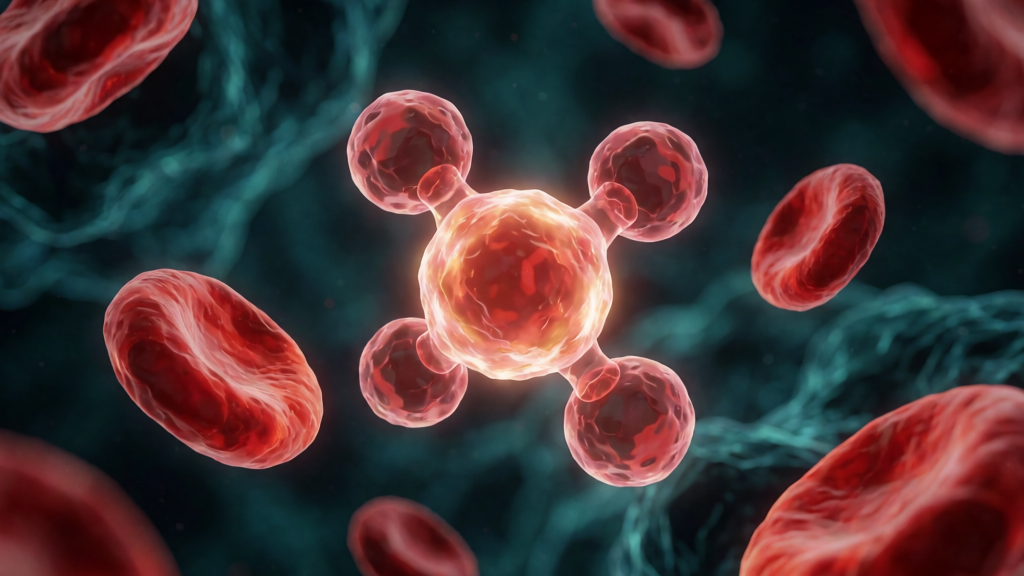
A 2023 mouse study proposed that red blood cells recycle NMN to sustain NAD+ in tissues. If that mechanism operates in humans, it would further dampen any abrupt drop after stopping.
Caveat: mouse data and tracer studies are hypothesis-generating. They do not prove that humans experience no decline, only that a catastrophic crash is unlikely.
What Might Change—and What Probably Won’t
Research suggests any post-withdrawal change would be gradual and within normal physiological variation. You may not feel anything. Markers like blood NAD+ might drift back toward your pre-supplement baseline.
What likely won’t happen: an immediate energy collapse or accelerated aging. NAD+ is homeostatically controlled, and diet supplies niacin and nicotinamide precursors.
Practical Interpretation
The evidence does not support a withdrawal syndrome. If you stop NMN, the research suggests your NAD+ will return toward its usual set point rather than plummet. Cycling or pausing is unlikely to be harmful, though long-term human data on withdrawal remain limited.
As always, this is mechanism and study-design reasoning—not a prescription to start or stop anything.
This article summarises published research and is not medical advice. Consult your healthcare provider before changing your routine.
Frequently Asked Questions
Does stopping NMN cause a crash in NAD+?
How long until NAD+ returns to baseline after stopping NMN?
Can I cycle NMN?
Sources
- Nature Aging — Nicotinamide mononucleotide increases muscle insulin sensitivity in prediabetic women(2026)
- Journal of Nutrition — Oral nicotinamide mononucleotide raises NAD+ metabolites in older adults(2026)
- Nature Metabolism — NMN tracer study showing rapid conversion to nicotinamide(2026)
- Nature Communications — Red blood cells recycle NMN to maintain tissue NAD+(2026)
- Frontiers in Pharmacology — NAD+ metabolism and therapeutic implications review(2026)
Stay Updated on Longevity Science
Weekly research digests. No spam, unsubscribe anytime.
Related Articles
Alpha-Ketoglutarate (AKG) and Aging: What Research Reveals
Explore how alpha-ketoglutarate (AKG) may influence aging through epigenetic regulation, mitochondrial function, and cellular energy metabolism.
12 min read
Apigenin and Healthy Aging: What the Evidence Really Shows
An evidence review of apigenin, separating cell and animal findings from human data on absorption, sleep, inflammation, safety, and longevity claims.
15 min read
Best Longevity Supplement Stack in 2026: An Evidence-First Guide
A cautious 2026 guide to evaluating longevity supplements, separating human outcomes from biomarkers, animal research, and marketing claims.
15 min read