
Ca-AKG May Slow Biological Aging, but Human Evidence Is Still Preliminary
Calcium alpha-ketoglutarate extended lifespan in mice and showed early human signals, but the data remain too thin to treat it as a proven anti-aging intervention.
Table of Contents
SUPPLEMENT NOTICE
The supplements discussed in this article are not intended to diagnose, treat, cure, or prevent any disease. Dosages mentioned reflect those used in specific research studies and should not be interpreted as recommendations. Always consult a healthcare professional before beginning any supplement regimen, especially if you have existing health conditions or take medications.
What Ca-AKG is and why researchers noticed it
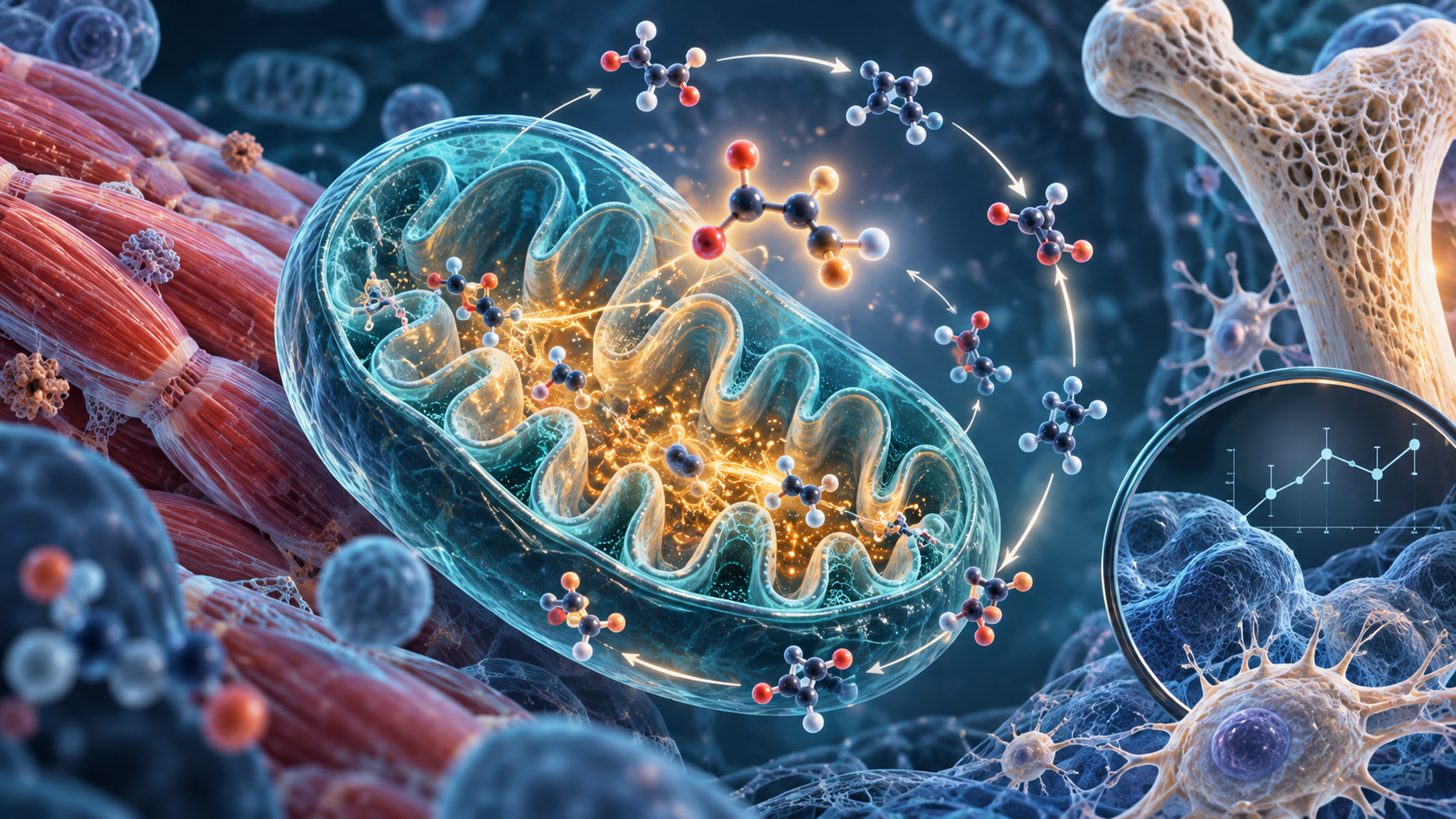
Calcium alpha-ketoglutarate (Ca-AKG) is a salt form of alpha-ketoglutarate, an intermediate in the Krebs cycle and a co-substrate for enzymes that modify DNA and histones. Because those enzymes influence epigenetic regulation, researchers hypothesized that AKG availability might affect biological aging.
The strongest early signal came from animal work. A 2020 study in Cell Metabolism reported that Ca-AKG supplementation extended median lifespan in mice and reduced frailty scores, with effects more pronounced in females. That is a meaningful finding, but mouse lifespan data do not automatically translate to humans.
What the human studies actually measured
The human evidence is much thinner. A small 2021 pilot study in Aging (Albany Medical College) gave Ca-AKG to healthy adults for several months and reported changes in epigenetic clock estimates, including DNA methylation age. The sample was small, there was no placebo arm in the primary analysis, and the authors themselves described the results as preliminary.
A subsequent randomized, placebo-controlled trial reported in 2023 found that Ca-AKG was safe and well tolerated over 6–7 months, but the biological-age effects were modest and not uniform across all epigenetic clocks. Safety data are accumulating faster than efficacy data.
Mechanism: plausible, not proven
AKG sits at the intersection of metabolism and epigenetics. It is a cofactor for TET enzymes and JmjC-domain histone demethylases, which help remove methylation marks. In principle, more substrate could shift the epigenetic landscape — but cells regulate AKG levels tightly, and oral supplementation may not raise intracellular concentrations enough to matter.
Research also suggests AKG may influence mTOR signaling and autophagy, though the direction and magnitude of these effects in humans remain uncertain. These are mechanistic hypotheses, not established clinical benefits.
What the evidence supports — and what it does not
The current evidence supports a cautious position: Ca-AKG is generally well tolerated in short-term human trials, and early data hint at small changes in epigenetic age estimates. It does not yet support claims that Ca-AKG reverses aging, may help lower disease risk, or extends human lifespan.
Epigenetic clocks themselves are surrogate markers. A lower clock reading is not the same as fewer heart attacks, less frailty, or longer life. Until larger trials with hard clinical endpoints are completed, Ca-AKG should be viewed as an investigational compound with plausible biology and early-stage human data.
Practical framing
If you are considering Ca-AKG, the research does not prescribe a universal dose. Trials have used different formulations and regimens, and no major safety signals have emerged in studies lasting under a year. Longer-term safety and efficacy data are still needed.
For now, Ca-AKG is best understood as a promising but unproven longevity candidate — one where the mechanism is interesting, the mouse data are strong, and the human data are still catching up.
This article summarises published research and is not medical advice. Consult your healthcare provider before changing your routine.
Frequently Asked Questions
Does Ca-AKG reverse aging in humans?
Is Ca-AKG safe?
What dose is used in studies?
Sources
- Cell Metabolism — Alpha-ketoglutarate extends lifespan and reduces frailty in mice (2020)(2026)
- Aging (Albany NY) — Ca-AKG pilot study in humans (2021)(2026)
- NIH Office of Dietary Supplements — Dietary Supplements for Older Adults(2026)
- Nature Reviews Molecular Cell Biology — Epigenetic regulation and metabolism(2026)
Stay Updated on Longevity Science
Weekly research digests. No spam, unsubscribe anytime.
Related Articles
Alpha-Ketoglutarate (AKG) and Aging: What Research Reveals
Explore how alpha-ketoglutarate (AKG) may influence aging through epigenetic regulation, mitochondrial function, and cellular energy metabolism.
12 min read
Apigenin and Healthy Aging: What the Evidence Really Shows
An evidence review of apigenin, separating cell and animal findings from human data on absorption, sleep, inflammation, safety, and longevity claims.
15 min read
Best Longevity Supplement Stack in 2026: An Evidence-First Guide
A cautious 2026 guide to evaluating longevity supplements, separating human outcomes from biomarkers, animal research, and marketing claims.
15 min read