Dietary Nitrate and Vascular Aging: What the Evidence Really Shows
Vegetable-rich nitrate can support nitric oxide biology, but it is not a cure for vascular aging. Learn what food sources, studies, and safety limits mean.
Table of Contents
DISCLAIMER
This article is for informational purposes only and does not constitute medical advice. The statements in this article have not been evaluated by the FDA. The information presented is based on published research and should not be used as a substitute for professional medical guidance. Consult your physician before starting any supplement or health protocol.
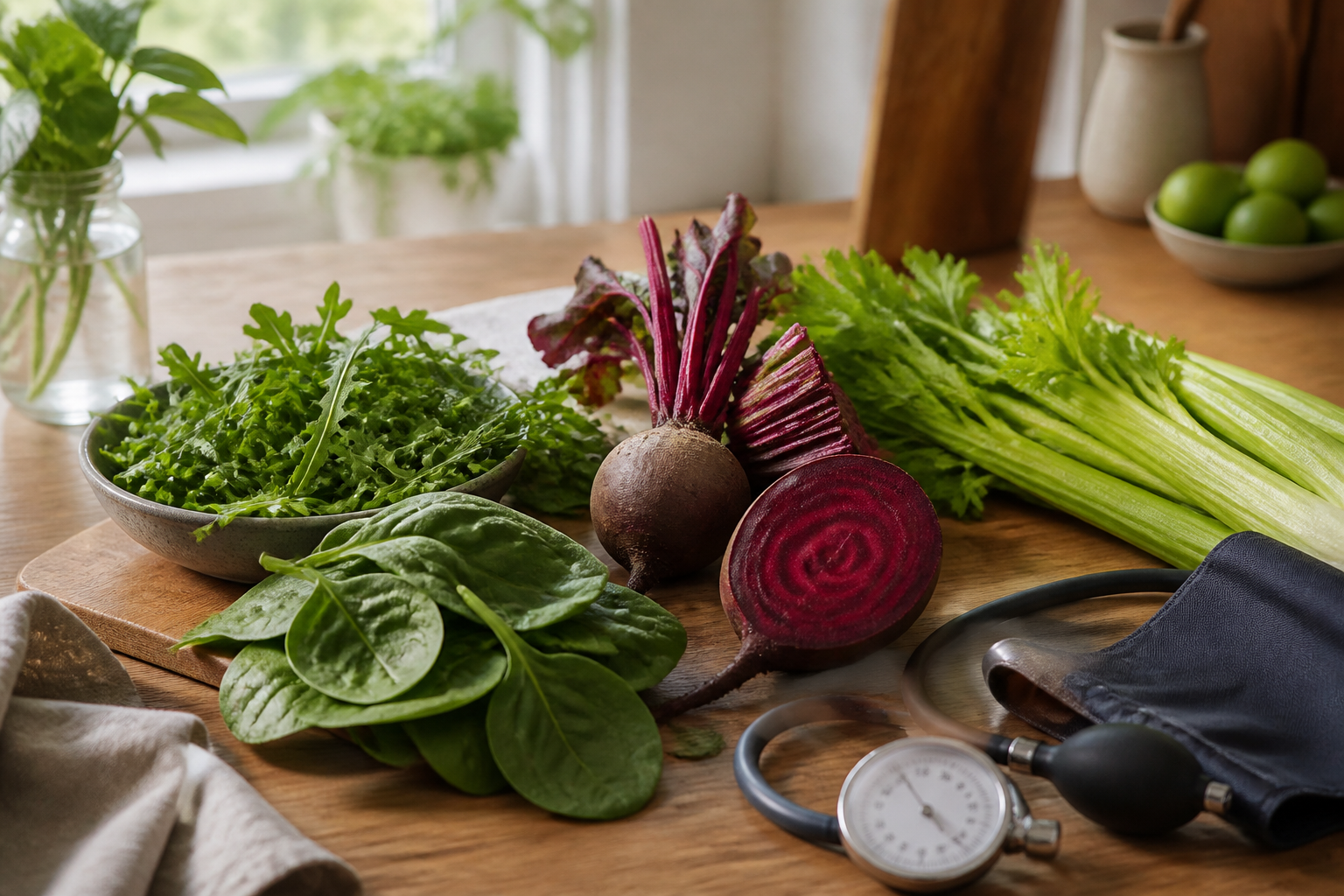
Nitric oxide helps blood vessels relax, respond to changing demand, and regulate blood flow. Its availability often declines with age as oxidative stress, inflammation, inactivity, and cardiometabolic disease affect the vessel lining. That has made dietary nitrate—especially from leafy greens and beetroot—a popular vascular-aging topic.
The biology is credible, but the marketing often outruns it. A nitrate-rich meal can influence nitric oxide pathways and may modestly affect blood pressure or exercise efficiency. It does not erase arterial disease, and a concentrated shot is not equivalent to a lifelong vegetable-rich eating pattern.
How Food Nitrate Becomes Nitric Oxide
After nitrate is absorbed, some circulates back into saliva. Oral bacteria convert part of it to nitrite, which can then contribute to nitric oxide formation, particularly when oxygen availability is lower. This nitrate–nitrite–nitric oxide pathway complements nitric oxide produced directly by the vessel lining.
The mouth is therefore part of the pathway. Strong antiseptic mouthwash can suppress nitrate-reducing bacteria for a time, although that does not mean necessary dental treatment should be avoided. Oral health and cardiovascular health are not competing goals; routine brushing, flossing, dental care, and clinician-directed products still matter.
Vegetables provide more than nitrate. Leafy greens also bring potassium, folate, carotenoids, and fiber. That food matrix is one reason evidence about vegetable intake should not be reduced to a single molecule.
What Human Studies Can and Cannot Prove
Trials of beetroot juice or other nitrate sources commonly measure short-term blood pressure, blood-vessel function, or exercise performance. Some find modest improvements, while results vary with dose, baseline health, age, fitness, medication use, and study duration.
A lower reading after a controlled intervention is not proof that vascular aging reversed. Blood pressure changes across the day, and arterial health includes structure, stiffness, plaque burden, endothelial function, inflammation, and organ damage. Longer studies with meaningful clinical outcomes are harder to conduct and remain more informative than a single wearable or cuff result.
The practical conclusion is supportive rather than spectacular: nitrate-rich vegetables fit well inside dietary patterns already associated with cardiovascular health. Their value is strongest when they displace heavily salted, low-fiber foods rather than simply being added as a supplement on top of them.
Build a Food-First Pattern
Rocket, spinach, lettuce, beetroot, celery, and some herbs can be meaningful nitrate sources. Concentration varies with variety, soil, season, storage, and cooking. A mixed plate is more resilient than trying to calculate an exact milligram target from food tables.
Use leafy greens in salads, soups, omelets, grain bowls, or lightly cooked side dishes. Pair beetroot with beans, yogurt, whole grains, nuts, or other vegetables so the meal supplies protein and fiber as well as color. People who monitor blood pressure can record readings under consistent conditions and look at weekly patterns, not chase immediate changes after one meal.
Exercise, sleep, smoking avoidance, weight management when relevant, and prescribed care have far larger evidence bases than any nitrate hack. A vegetable cannot compensate for untreated hypertension.
Know the Safety Boundaries
Concentrated products deserve more caution than normal servings of vegetables. Nitrate may amplify blood-pressure lowering in some people, while beetroot can harmlessly color urine or stool. Kidney disease, fluid or potassium restrictions, recurrent kidney stones, swallowing difficulties, and complex medication regimens can change what is appropriate.
Seek medical advice for fainting, chest pressure, new severe breathlessness, neurological symptoms, or persistently abnormal blood pressure. Do not use nitrate foods or supplements to self-adjust medication.
Dietary nitrate is best understood as one mechanism inside a high-quality diet. The durable anti-aging move is not finding the strongest shot. It is making vegetables routine enough that vascular support comes packaged with the many other benefits whole plants provide.
Frequently Asked Questions
Are dietary nitrates the same as nitrites in processed meat?
Is beetroot juice necessary to obtain dietary nitrate?
Can nitrate-rich foods replace blood pressure medicine?
Sources
Stay Updated on Longevity Science
Weekly research digests. No spam, unsubscribe anytime.
Related Articles
AGEs in Your Diet: How Advanced Glycation End Products Accelerate Aging
Advanced glycation end products in food may accelerate aging. Learn which foods are highest in AGEs and how cooking methods affect your aging rate.
9 min read
Anti-Aging Breakfast Ideas: Start Your Day With Longevity-Supporting Foods
Science-backed anti-aging breakfast ideas that support longevity. Learn which morning foods may promote healthy aging through nutrition research.
8 min read
Science-Backed Anti-Aging Foods: What to Eat
Discover the top science-backed anti-aging foods that may slow biological aging, from berries to leafy greens and fatty fish.
9 min read