Blueberries and Brain Aging: What Human Studies Suggest
Blueberries contain anthocyanins linked with vascular and cognitive health. Learn what trials show, what remains uncertain, and how to use them.
Table of Contents
DISCLAIMER
This article is for informational purposes only and does not constitute medical advice. The statements in this article have not been evaluated by the FDA. The information presented is based on published research and should not be used as a substitute for professional medical guidance. Consult your physician before starting any supplement or health protocol.
Blueberries have become a symbol of “brain food,” largely because their dark pigment contains anthocyanins, a family of flavonoids also found in blackberries, cherries, purple cabbage, and other deeply colored plants. Laboratory research suggests these compounds can influence oxidative stress, inflammation, blood-vessel function, and cell signaling.
Human evidence is promising but much less dramatic than the marketing. Small randomized trials have reported improvements in selected memory or executive-function measures after blueberry interventions, while other outcomes show little or no change. The studies vary in participants, duration, dose, and whether they use whole berries, juice, or freeze-dried powder.
What Anthocyanins May Do
The brain depends on a dense network of small blood vessels. Flavonoid-rich foods may support endothelial function—the ability of blood vessels to respond and regulate flow. Some metabolites of anthocyanins can circulate after digestion and may influence signaling pathways related to inflammation and neuronal function.
This does not mean blueberry antioxidants simply travel to the brain and neutralize aging. Digestion and the gut microbiome transform anthocyanins into many metabolites, and individual responses differ. The broader food matrix also matters: berries provide fiber, vitamin C, water, and a relatively low energy density.
Researchers are still working out which effects are direct, which are vascular, and which reflect an overall dietary pattern. Mechanistic plausibility supports further study, but it is not a substitute for long-term clinical outcomes.
What Human Studies Show
Early pilot trials in older adults with memory concerns found that blueberry supplementation was associated with improvements on some memory tests. Larger observational cohorts have linked higher long-term intake of berries and flavonoids with slower cognitive decline. Observational findings cannot fully separate berries from the other habits of people who eat them regularly.
Randomized trials offer stronger evidence but remain relatively small and short. Some report changes in memory, task switching, or brain blood flow; others find benefits only on particular tests or in certain subgroups. There is not enough evidence to say that blueberries delay dementia or materially slow biological aging.
The fair summary is that berries are compatible with a brain-healthy diet, have several plausible biological advantages, and may modestly support aspects of cognition. They are not a stand-alone therapy.
Whole Berries Versus Extracts
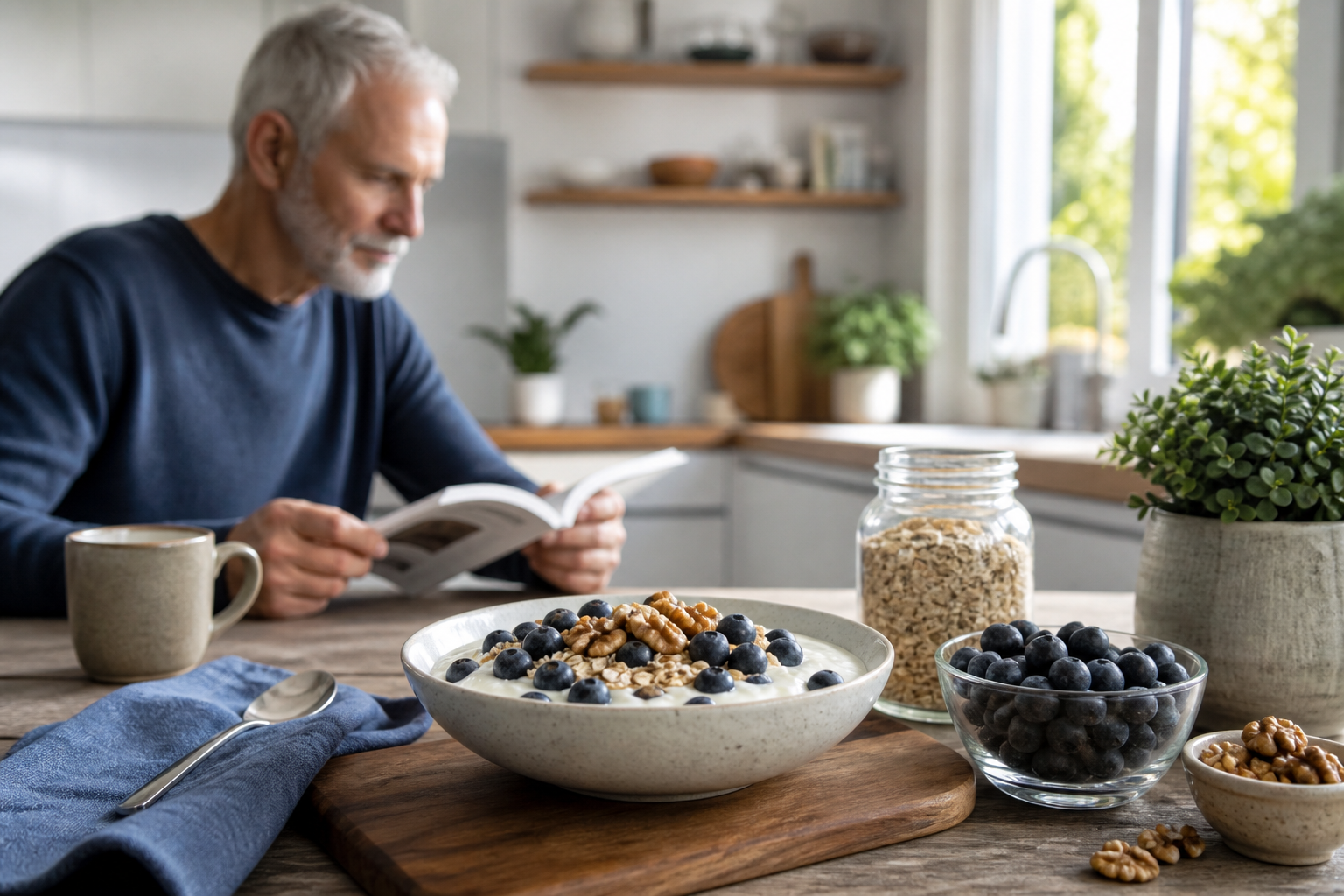
Whole fresh or frozen blueberries are the simplest option. Frozen berries retain much of their nutritional value, are often cheaper, and reduce spoilage. Unsweetened berries can be added to yogurt, oats, salads, or blended with other whole foods.
Juice removes much of the fiber and can deliver sugar quickly. Sweetened dried berries may contain substantial added sugar. Extracts and powders vary in composition, and a label promising a high antioxidant score does not establish a clinical benefit. Food also provides the advantage of replacing a less nutritious snack rather than adding another supplement to a growing stack.
People taking anticoagulants or managing blood glucose do not usually need to avoid ordinary servings of blueberries, but major diet changes can be discussed with a clinician when medication control is sensitive.
Building the Pattern That Matters
The strongest nutrition evidence for cognitive aging concerns dietary patterns, not single foods. Mediterranean-style and MIND-style patterns emphasize vegetables, berries, legumes, whole grains, nuts, fish, olive oil, and limited highly processed foods. Blueberries can fit naturally into that structure.
Variety is useful because different plants provide different fibers and phytochemicals. Rotate blueberries with strawberries, blackberries, citrus, apples, leafy greens, and other colorful produce. Combine that diet with physical activity, adequate sleep, social engagement, and management of cardiovascular risk.
Blueberries deserve a place on the plate, not a pedestal. Their likely value comes from being a nutrient-dense, enjoyable food that helps make a sustainable healthy pattern easier.
This article is for education and is not individualized medical or nutrition advice.
Sources
Stay Updated on Longevity Science
Weekly research digests. No spam, unsubscribe anytime.
Related Articles
AGEs in Your Diet: How Advanced Glycation End Products Accelerate Aging
Advanced glycation end products in food may accelerate aging. Learn which foods are highest in AGEs and how cooking methods affect your aging rate.
9 min read
Anti-Aging Breakfast Ideas: Start Your Day With Longevity-Supporting Foods
Science-backed anti-aging breakfast ideas that support longevity. Learn which morning foods may promote healthy aging through nutrition research.
8 min read
Science-Backed Anti-Aging Foods: What to Eat
Discover the top science-backed anti-aging foods that may slow biological aging, from berries to leafy greens and fatty fish.
9 min read