Neutrophil Function and Immune Aging: When First Responders Change
Neutrophils respond quickly to injury and infection, but their coordination may shift with age. Learn what immune-aging research shows and where uncertainty remains.
Table of Contents
DISCLAIMER
This article is for informational purposes only and does not constitute medical advice. The statements in this article have not been evaluated by the FDA. The information presented is based on published research and should not be used as a substitute for professional medical guidance. Consult your physician before starting any supplement or health protocol.
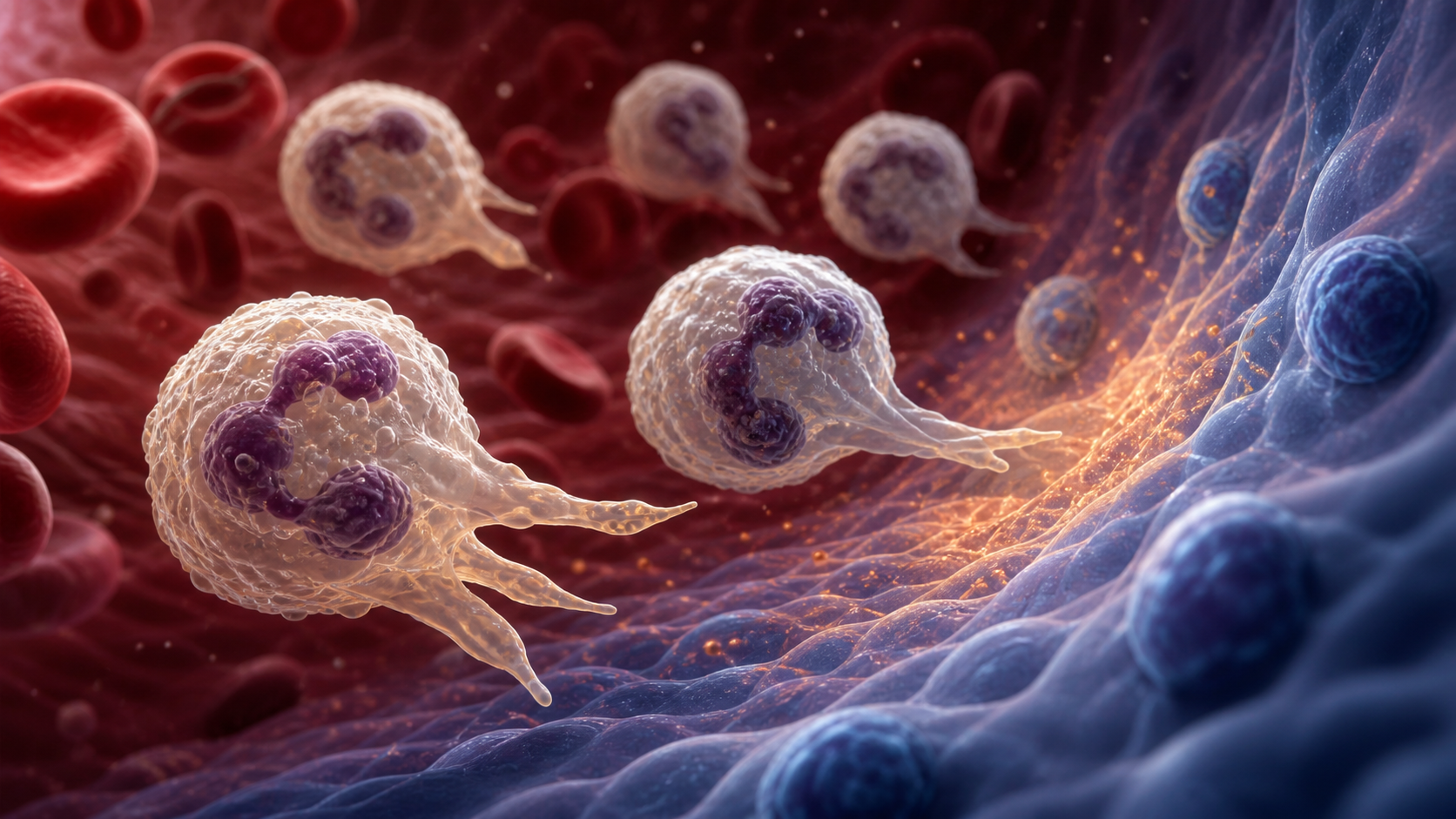
Neutrophils are built for speed. They circulate in blood, detect chemical distress signals, squeeze through vessel walls, and reach damaged or infected tissue within minutes. They can engulf microbes, release antimicrobial molecules, and form extracellular traps. That power makes them essential—and potentially damaging when timing or location goes wrong.
Immune aging is often described as a weak defense, but neutrophil research shows a more complicated pattern. Cell counts may look normal while direction-finding, signaling, or resolution becomes less precise. At the same time, chronic low-grade inflammation may keep parts of the innate immune system persistently activated.
How Neutrophils Normally Coordinate a Response
Bone marrow produces enormous numbers of neutrophils. Mature cells enter the circulation and remain ready to respond to chemokines, microbial products, and signals released by injured tissue. Their effectiveness depends on a sequence: detect, adhere, migrate, attack, and then withdraw or die in a controlled way.
Chemotaxis is especially important. A neutrophil must follow a concentration gradient toward the source rather than wandering into healthy tissue. Surface receptors, the cytoskeleton, metabolism, and intracellular signaling continuously translate the gradient into movement.
At the target, neutrophils use several tools. Phagocytosis encloses material for destruction. Granules release enzymes and antimicrobial proteins. Reactive oxygen species can help kill microbes. Neutrophil extracellular traps may immobilize threats but can also injure surrounding tissue or promote clotting when excessive.
Resolution is not simply the response switching off. Neutrophils undergo programmed cell death and are cleared by macrophages, helping change the tissue environment from defense toward repair. A healthy response therefore depends on restraint as much as force.
What Research Suggests Changes With Age
Studies of older adults have reported differences in neutrophil chemotaxis, phagocytosis, oxidative burst, receptor signaling, and extracellular-trap formation. Findings are not uniform. Participants differ in frailty, medications, infections, metabolic health, and laboratory methods.
One recurring idea is reduced navigational precision. A cell may still move but follow a gradient less accurately, reaching the target less efficiently while exposing surrounding tissue to enzymes and oxidants. Experimental studies have explored altered signaling through pathways that organize the cytoskeleton and front-to-back polarity.
Metabolism matters too. Neutrophils rely heavily on glycolysis but also use mitochondrial and lipid pathways for selected functions. Aging, nutrient availability, diabetes, and systemic inflammation can change the environment in which those pathways operate.
The concept of inflammaging adds a paradox. Baseline inflammatory signaling may be higher even when responses to a new challenge are less coordinated. Chronic signals can prime, exhaust, or redirect innate immune cells. This does not mean every older person is inflamed or immunocompromised; it describes population-level tendencies with wide individual variation.
What Blood Tests Can and Cannot Tell You
A complete blood count is clinically useful, but a normal neutrophil count does not test chemotaxis or microbial killing. A high or low count can have many causes and should be interpreted with symptoms, history, and other findings.
The neutrophil-to-lymphocyte ratio is studied as a broad inflammatory marker in many diseases. It is not a validated immune-age clock. Acute infection, psychological stress, corticosteroids, smoking, obesity, surgery, and chronic illness can all change it. Turning one result into a longevity score risks false reassurance or unnecessary alarm.
Research assays can measure migration, phagocytosis, oxidative burst, surface markers, and gene expression. These tests are valuable for understanding mechanisms but are not routine healthy-aging screens.
Practical immune support remains broad rather than neutrophil-specific: vaccination when appropriate, adequate nutrition, physical activity suited to ability, sleep, oral health, smoking avoidance, and management of chronic conditions. These measures have evidence for health outcomes; they should not be advertised as proven ways to make a neutrophil biologically younger.
Persistent fever, recurrent infections, unusual wounds, or abnormal blood counts require medical evaluation. Supplements promoted as immune boosters can interact with medications or be inappropriate in autoimmune, transplant, or cancer settings. Consult a healthcare provider before using them.
Neutrophils reveal why immune aging cannot be summarized as “more” or “less” immunity. The important variable may be coordination: reaching the right place, using enough force, and resolving the response on time. Research is clarifying those steps, but no home test or single intervention can yet translate them into a dependable measure of immune age.
Frequently Asked Questions
Do older adults have fewer neutrophils?
Is a neutrophil-to-lymphocyte ratio an immune-age test?
Can supplements reverse neutrophil aging?
Sources
Stay Updated on Longevity Science
Weekly research digests. No spam, unsubscribe anytime.
Related Articles

Ankle Power and Healthy Aging: The Push-Off That Keeps Walking Efficient
Ankle plantar-flexor power supports walking speed and balance recovery. Learn why push-off changes with age and how strength can be trained safely.
9 min read
Arterial Calcification and Vascular Aging: Reading the Risk Signals
Arterial calcification can reveal accumulated vascular risk. Learn what calcium scores mean, why calcification develops, and where testing has limits.
10 min read
Arterial Stiffness and Vascular Age: A Longevity Evidence Guide
Understand arterial stiffness vascular age longevity links, key studies, measurement limits, and evidence-based lifestyle implications for healthy aging.
11 min read