Skin Aging Reversal: What Science Says About Turning Back the Clock
Research into skin aging reversal reveals promising approaches from retinoids to cellular reprogramming. Explore evidence-based strategies.
Table of Contents
DISCLAIMER
This article is for informational purposes only and does not constitute medical advice. The statements in this article have not been evaluated by the FDA. The information presented is based on published research and should not be used as a substitute for professional medical guidance. Consult your physician before starting any supplement or health protocol.
Two Types of Skin Aging
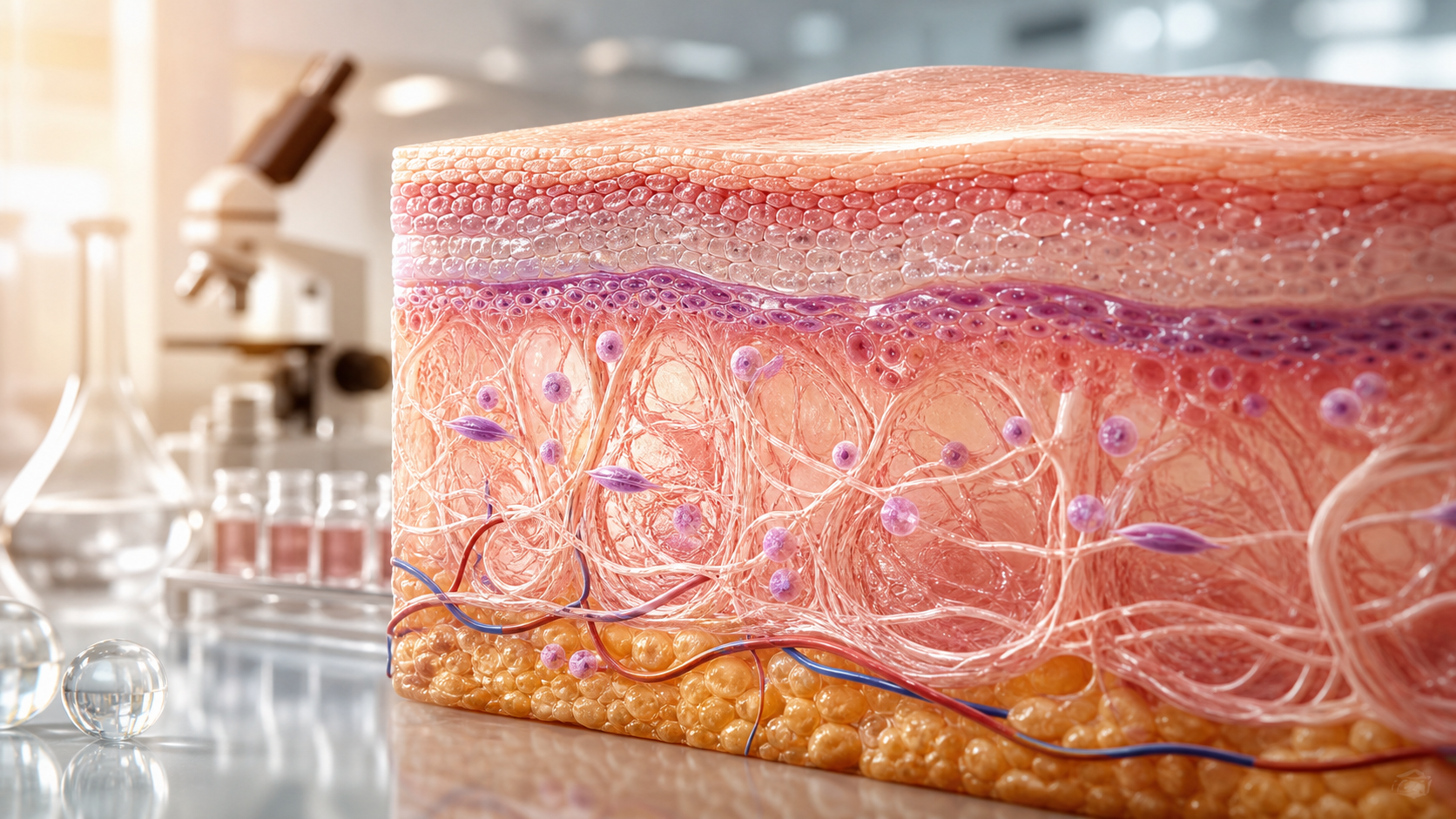
Skin aging is unique among aging processes because it involves two distinct pathways: intrinsic aging, driven by internal biological factors, and extrinsic aging, primarily caused by environmental exposures. Understanding this distinction is essential for developing effective reversal strategies.
Intrinsic Aging
Intrinsic or chronological skin aging occurs in all individuals regardless of environmental exposure. It is characterized by:
- Gradual thinning of the epidermis and dermis
- Reduced collagen and elastin production
- Decreased cell turnover rates
- Fine wrinkle formation
- Reduced skin hydration
- Slower wound healing
Intrinsic aging is driven by the same cellular processes that cause aging throughout the body: telomere shortening, mitochondrial dysfunction, cellular senescence, hormonal changes, and epigenetic alterations.
Extrinsic Aging (Photoaging)
Extrinsic aging, dominated by ultraviolet radiation exposure, is responsible for up to 80 to 90 percent of visible facial aging. A 2007 review in the Journal of Investigative Dermatology described how photoaging produces distinct changes:
- Deep wrinkles and furrows
- Roughened, leathery texture
- Mottled hyperpigmentation and lentigines
- Loss of skin elasticity (solar elastosis)
- Telangiectasias (visible blood vessels)
- Actinic keratoses
The dramatic difference between sun-exposed and sun-protected skin in the same individual illustrates the dominant role of UV exposure in visible aging.
Retinoids: The Gold Standard
Mechanism of Action
Retinoids, derivatives of vitamin A, remain the most thoroughly studied and validated topical anti-aging compounds. A 2006 review in Clinical Interventions in Aging detailed their multiple mechanisms of action:
- Collagen stimulation: Retinoids activate genes involved in procollagen synthesis and inhibit collagenase enzymes that break down existing collagen.
- Epidermal renewal: They increase keratinocyte proliferation and accelerate cell turnover, replacing damaged surface cells with healthier ones.
- Melanin regulation: Retinoids inhibit melanin transfer to keratinocytes, reducing hyperpigmentation.
- Extracellular matrix repair: They promote the production of glycosaminoglycans and other matrix components that provide skin volume and hydration.
Clinical Evidence for Reversal
Multiple randomized controlled trials have demonstrated that topical tretinoin (prescription retinoid) can partially reverse signs of photoaging:
- Reduction in fine and coarse wrinkles
- Improved skin texture and smoothness
- Decreased hyperpigmentation
- Increased epidermal thickness
- Enhanced collagen deposition in the dermis
Histological studies confirm that these clinical improvements correspond to measurable changes in skin architecture, including increased epidermal thickness, new collagen formation, and improved vascularization.
Over-the-Counter Retinol
Retinol, the non-prescription form of vitamin A, converts to retinoic acid in the skin through a two-step enzymatic process. While less potent than prescription tretinoin, studies suggest retinol can produce similar benefits with potentially fewer side effects, though results may take longer to manifest.
Cellular Senescence in Skin Aging
The Senescent Cell Burden
A 2021 review in Frontiers in Cell and Developmental Biology highlighted the role of cellular senescence in skin aging. Senescent cells accumulate in aged skin and contribute to aging through the senescence-associated secretory phenotype (SASP), which releases:
- Matrix metalloproteinases that degrade collagen and elastin
- Pro-inflammatory cytokines that promote chronic inflammation
- Growth factors that may disrupt normal tissue homeostasis
Senolytic Approaches for Skin
Researchers are investigating whether senolytic compounds, drugs that selectively eliminate senescent cells, can rejuvenate aged skin. Preclinical studies have shown that senolytic treatment may:
- Reduce age-related pigmentation changes
- Improve skin elasticity and thickness
- Enhance wound healing capacity
- Reduce inflammatory markers in skin tissue
Topical senolytic formulations are being developed to target senescent cells specifically in the skin, potentially offering a more targeted approach than systemic senolytics. However, clinical trials in human skin aging are still in early stages.
Collagen Restoration Strategies
The Collagen Problem
Collagen constitutes approximately 75 percent of the skin’s dry weight and provides structural integrity and firmness. Collagen production decreases by approximately 1 percent per year after age 20, while collagen degradation increases, creating a progressive net loss.
Approaches to Collagen Restoration
Several strategies are being investigated to restore collagen in aged skin:
- Microneedling: Creates controlled micro-injuries that stimulate the wound healing response and new collagen synthesis. Clinical studies have shown improvements in wrinkles, scars, and skin texture.
- Radiofrequency treatments: Deliver thermal energy to the dermis, stimulating collagen remodeling. Evidence supports modest tightening and texture improvements.
- Fractional laser resurfacing: Creates microscopic columns of thermal damage that trigger collagen remodeling during the healing process. Well-supported by clinical evidence for photoaging treatment.
- Topical peptides: Signal peptides like palmitoyl pentapeptide may stimulate fibroblast collagen production, though evidence is less robust than for retinoids.
- Oral collagen supplements: A growing body of evidence suggests hydrolyzed collagen peptides may improve skin hydration, elasticity, and wrinkle depth when taken orally.
Growth Factors and Cytokines
Topical Growth Factors
Growth factor-containing topical products represent an emerging approach to skin rejuvenation. Products containing epidermal growth factor (EGF), transforming growth factor beta (TGF-beta), and other growth factors have shown promise in clinical studies for:
- Improving skin thickness and firmness
- Reducing fine wrinkle appearance
- Enhancing skin texture and radiance
However, concerns exist about the potential for growth factors to stimulate abnormal cell growth, particularly in sun-damaged skin. Long-term safety data for topical growth factor products remains limited.
Exosome-Based Skin Care
Building on the broader exosome research described in regenerative medicine, topical exosome products are entering the skin care market. These products aim to deliver regenerative signals directly to skin cells, potentially stimulating repair and rejuvenation.
While preclinical data on exosomes for skin aging is encouraging, the commercial products currently available vary widely in quality, composition, and evidence base. Consumers should approach these products with appropriate skepticism until more rigorous clinical data becomes available.
Stem Cell Approaches to Skin Rejuvenation
Fibroblast Rejuvenation
Dermal fibroblasts, the cells responsible for collagen and elastin production, undergo functional decline during aging. Research into fibroblast rejuvenation includes:
- Autologous fibroblast injection: Transplanting a patient’s own cultured fibroblasts back into aged skin. FDA-approved for nasolabial fold correction, with evidence of collagen restoration at injection sites.
- Fibroblast reprogramming: Experimental approaches to epigenetically rejuvenate aged fibroblasts, potentially restoring their youthful collagen-producing capacity.
- Conditioned media: Using growth factors secreted by young or activated fibroblasts as topical treatments.
Epidermal Stem Cell Support
The skin’s epidermal stem cells, located in the basal layer and hair follicle bulge, are responsible for continuous skin renewal. These cells decline in number and function with age, contributing to reduced skin regeneration and wound healing.
Research into supporting epidermal stem cell function during aging includes nutritional approaches, topical factors that enhance stem cell niche quality, and methods to reduce the senescent cell burden that may impair stem cell activity.
Emerging Frontiers
NAD+ and Skin Aging
The decline in NAD+ levels with age affects skin cells as it does cells throughout the body. Research suggests that NAD+ restoration may benefit skin aging through:
- Enhanced DNA repair in UV-damaged skin cells
- Improved mitochondrial function in fibroblasts and keratinocytes
- Support for sirtuin-mediated epigenetic maintenance
- Potential protection against UV-induced senescence
Both topical and oral NAD+ precursor formulations are being explored for skin aging applications.
Circadian Rhythm and Skin Repair
Emerging research highlights the importance of circadian rhythms in skin repair and regeneration. Skin cells undergo DNA repair, cell division, and other maintenance activities in circadian patterns, with many repair processes peaking at night.
Disrupted circadian rhythms may impair these repair processes, potentially accelerating skin aging. Chronobiological approaches to skin care, applying regenerative products when skin repair mechanisms are most active, represent a developing area of research.
Microbiome and Skin Aging
The skin microbiome, the community of microorganisms living on the skin surface, changes with age. Research suggests these changes may influence skin aging through effects on:
- Skin barrier function
- Local immune responses
- Inflammation levels
- Production of beneficial metabolites
Microbiome-targeting approaches to skin rejuvenation, including prebiotic and probiotic skin care formulations, are an active area of commercial and academic research.
Evidence-Based Practical Approach
While many advanced skin rejuvenation strategies remain experimental, current evidence supports a practical approach to slowing and partially reversing skin aging:
- Sun protection: Consistent broad-spectrum sunscreen use and UV avoidance remain the single most effective anti-aging skin intervention.
- Topical retinoids: Starting with lower concentrations and gradually increasing may help build tolerance while delivering proven anti-aging benefits.
- Antioxidants: Topical vitamin C (L-ascorbic acid) has evidence supporting photoprotective and collagen-stimulating effects.
- Moisturization: Maintaining skin barrier function with appropriate moisturizers supports overall skin health.
- Nutrition: Diets rich in antioxidants, omega-3 fatty acids, and adequate protein may support skin health from within.
- Sleep: Adequate sleep supports circadian repair processes critical for skin maintenance.
For those considering more advanced interventions, consultation with a board-certified dermatologist can help identify appropriate evidence-based treatments matched to individual needs and concerns.
Frequently Asked Questions
Can skin aging truly be reversed?
What is the most evidence-based approach to reversing skin aging?
How does sun exposure age skin differently from natural aging?
Sources
Stay Updated on Longevity Science
Weekly research digests. No spam, unsubscribe anytime.
Related Articles

Age Reversal Clinical Trials to Watch in 2026
A comprehensive guide to the most important age reversal clinical trials in 2026, from senolytics to epigenetic reprogramming and beyond.
14 min read
Age Reversal Supplements: What Does the Evidence Actually Say?
A critical review of supplements claiming to reverse biological aging, examining the scientific evidence behind NMN, resveratrol, spermidine, and more.
14 min read
Altos Labs Longevity Research: 2026 Progress Update
Altos Labs is one of the best-funded longevity startups. Here is what research suggests about their cellular rejuvenation progress in 2026.
10 min read