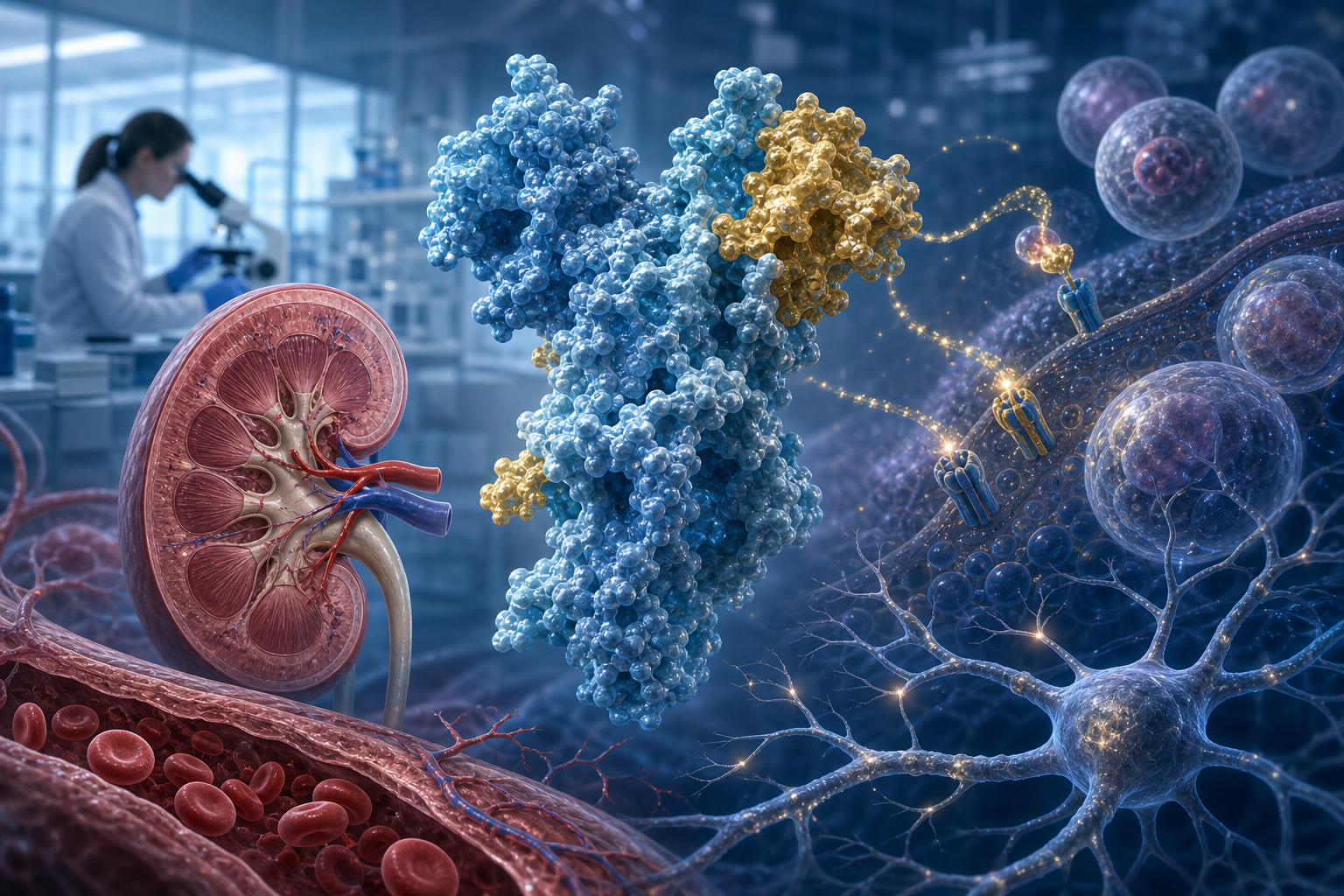
Klotho Protein and Anti-Aging: The Longevity Factor You Should Know
Klotho protein may be one of the most important anti-aging factors. Explore what research reveals about this longevity-associated protein.
Table of Contents
DISCLAIMER
This article is for informational purposes only and does not constitute medical advice. The statements in this article have not been evaluated by the FDA. The information presented is based on published research and should not be used as a substitute for professional medical guidance. Consult your physician before starting any supplement or health protocol.
The Discovery of Klotho
In 1997, researchers at the University of Texas Southwestern made a discovery that would reshape longevity research. A team led by Dr. Makoto Kuro-o identified a gene that, when disrupted in mice, caused a syndrome remarkably similar to human aging. They named this gene klotho, after the Greek goddess who spins the thread of life.
Mice lacking functional klotho developed a constellation of aging-related conditions: shortened lifespan, arteriosclerosis, osteoporosis, skin atrophy, cognitive decline, and emphysema. Even more remarkably, when researchers engineered mice to overexpress klotho, these animals lived approximately 20 to 30 percent longer than their normal counterparts.
This discovery established klotho as one of the most compelling longevity-associated factors ever identified, and two decades of subsequent research have only strengthened this connection.
Understanding Klotho Biology
Forms of Klotho
Klotho exists in several forms, each with distinct biological roles:
- Membrane klotho: Anchored to cell surfaces, primarily in the kidneys and brain. Functions as a co-receptor for fibroblast growth factor 23 (FGF23), regulating phosphate and calcium homeostasis.
- Soluble klotho: Cleaved from the membrane form or produced through alternative splicing. Circulates in blood and cerebrospinal fluid, where it may function as an endocrine factor.
- Secreted klotho: A truncated form produced by alternative mRNA splicing.
The soluble form of klotho has attracted the most attention in aging research because it circulates throughout the body and may exert systemic anti-aging effects.
How Klotho Declines With Age
Research has consistently shown that klotho levels decline with age in both humans and animal models. A 2009 review in Biochimica et Biophysica Acta documented this age-related decline and explored its potential consequences.
Circulating klotho levels begin to decrease as early as age 40 in some studies, with more pronounced declines occurring after age 60. This decline correlates with many hallmarks of aging, though whether reduced klotho is a cause or consequence of aging remains an active area of investigation.
Klotho and Brain Aging
Cognitive Protection
Some of the most exciting klotho research involves its potential neuroprotective effects. A landmark 2023 study published in Nature Aging demonstrated that a single injection of klotho protein enhanced cognitive function in aged nonhuman primates.
The study showed that klotho administration improved spatial memory and learning in aged rhesus macaques, providing the first evidence in primates that klotho could acutely enhance cognition. This built upon earlier mouse studies showing similar cognitive benefits.
Mechanisms of Neuroprotection
Research suggests klotho may protect the brain through multiple mechanisms:
- Synaptic plasticity: Klotho may enhance NMDA receptor signaling and long-term potentiation, processes fundamental to learning and memory.
- Oxidative stress defense: Studies indicate klotho may upregulate antioxidant enzymes including superoxide dismutase and catalase in neural tissue.
- Neuroinflammation modulation: Research suggests klotho may suppress microglial activation and reduce neuroinflammatory markers.
- Myelin maintenance: Some studies indicate klotho may support oligodendrocyte function and myelin integrity.
Implications for Neurodegenerative Conditions
While researchers are careful to note that klotho is not a proven therapy for any neurological condition, observational studies have found associations between higher klotho levels and reduced risk of age-related cognitive decline. Individuals who carry a genetic variant associated with higher klotho expression (KL-VS heterozygotes) tend to perform better on cognitive tests and may have larger brain volumes in certain regions.
Klotho and Kidney Aging
The Kidney Connection
The kidneys are among the primary sites of klotho expression, and the protein plays essential roles in renal function. Klotho serves as an obligate co-receptor for FGF23, a hormone that regulates phosphate balance. This function is critical because phosphate dysregulation accelerates vascular calcification and may drive multiple aspects of aging.
A 2007 study in Science detailed how klotho regulates calcium homeostasis through its interactions with TRPV5 calcium channels, providing mechanistic insight into its protective role in mineral metabolism.
Kidney Function and Systemic Aging
Research has established a bidirectional relationship between kidney function and klotho levels. Chronic kidney disease is associated with dramatically reduced klotho levels, and low klotho may, in turn, accelerate kidney aging. This creates a potential vicious cycle where kidney decline drives systemic aging through klotho depletion.
Studies suggest that interventions maintaining kidney health may help preserve klotho levels, potentially providing broader anti-aging benefits throughout the body.
Cardiovascular Protection
Vascular Health
Research indicates klotho may protect the cardiovascular system through several mechanisms:
- Anti-calcification: Klotho may inhibit vascular calcification by regulating phosphate transport and suppressing osteogenic differentiation of vascular smooth muscle cells.
- Endothelial function: Studies suggest klotho may preserve endothelial function by enhancing nitric oxide production and reducing oxidative stress in blood vessels.
- Cardiac protection: Animal studies indicate klotho overexpression may protect against cardiac hypertrophy and fibrosis.
Observational Human Data
Epidemiological studies have found associations between higher circulating klotho levels and reduced cardiovascular risk. Lower klotho levels have been linked to increased risk of atherosclerosis, heart failure, and cardiovascular mortality in observational studies, though causation has not been established.
Klotho and Inflammation
Chronic inflammation is considered one of the primary drivers of aging, and klotho appears to play a role in modulating inflammatory responses. Research suggests several anti-inflammatory mechanisms:
- NF-kB suppression: Klotho may inhibit NF-kB signaling, a master regulator of inflammatory gene expression.
- TNF-alpha modulation: Studies indicate klotho may reduce production and signaling of TNF-alpha, a key pro-inflammatory cytokine.
- Wnt pathway regulation: Klotho may modulate Wnt signaling, which is implicated in both aging and inflammation when overactivated.
These anti-inflammatory properties may partially explain klotho’s broad anti-aging effects, as inflammaging contributes to dysfunction across multiple organ systems.
Natural Ways to Support Klotho
Exercise
Multiple studies have examined the relationship between physical activity and klotho levels. Research suggests that both acute exercise bouts and regular exercise training may increase circulating klotho levels.
A meta-analysis of exercise studies found that aerobic exercise, in particular, appears to increase soluble klotho levels. Resistance training may also have positive effects, though the evidence is less consistent. The mechanisms may involve exercise-induced improvements in kidney function, reduced oxidative stress, and metabolic adaptations.
Lifestyle Factors
Research has identified several lifestyle factors that may influence klotho expression:
- Vitamin D status: Some studies suggest adequate vitamin D levels may support klotho expression, as the vitamin D receptor and klotho gene share regulatory elements.
- Dietary patterns: Mediterranean and plant-rich diets have been associated with higher klotho levels in observational studies, potentially through reduced inflammation and oxidative stress.
- Stress management: Chronic psychological stress may reduce klotho expression, while stress reduction practices may help preserve levels.
- Sleep quality: Emerging research suggests associations between sleep quality and klotho levels, though the direction of causation is unclear.
Therapeutic Development
Injectable Klotho
The primate study demonstrating cognitive enhancement with a single klotho injection has spurred significant interest in therapeutic klotho development. Several research groups and biotechnology companies are exploring klotho-based therapies, though none have yet reached late-stage clinical trials for aging indications.
Challenges include:
- Producing sufficient quantities of bioactive klotho protein
- Determining optimal dosing and administration routes
- Understanding long-term safety implications
- Identifying which patient populations may benefit most
Gene Therapy Approaches
Some researchers are exploring gene therapy approaches to increase endogenous klotho expression. These strategies aim to deliver the KL gene using viral vectors, potentially providing sustained klotho elevation. However, gene therapy for aging applications remains in early preclinical stages with significant safety questions to address.
Small Molecule Activators
Another approach involves identifying small molecules that can upregulate klotho gene expression. Several compounds have shown the ability to increase klotho in preclinical studies, including certain HDAC inhibitors and PPAR-gamma agonists, though none have been developed specifically for aging applications.
The Bigger Picture
Klotho research illustrates a broader principle in aging science: single factors can have outsized effects on the aging process when they influence multiple downstream pathways. Klotho’s involvement in mineral metabolism, inflammation, oxidative stress defense, and neural function positions it as a potential master regulator of aging.
However, it is important to maintain perspective. While the animal and observational human data are compelling, the field has not yet demonstrated that klotho supplementation can reverse aging in humans. The gap between exciting preclinical data and proven clinical therapies is substantial, and many promising anti-aging factors have failed to translate from laboratory to bedside.
For now, the most practical takeaway from klotho research may be the importance of lifestyle factors that support natural klotho expression: regular exercise, nutritious diet, adequate vitamin D, stress management, and kidney health maintenance. These interventions offer proven benefits regardless of their specific effects on klotho levels.
Frequently Asked Questions
What is klotho protein and why is it linked to longevity?
Can klotho levels be increased naturally?
Are klotho supplements available?
Sources
Stay Updated on Longevity Science
Weekly research digests. No spam, unsubscribe anytime.
Related Articles

Age Reversal Clinical Trials to Watch in 2026
A comprehensive guide to the most important age reversal clinical trials in 2026, from senolytics to epigenetic reprogramming and beyond.
14 min read
Age Reversal Supplements: What Does the Evidence Actually Say?
A critical review of supplements claiming to reverse biological aging, examining the scientific evidence behind NMN, resveratrol, spermidine, and more.
14 min read
Altos Labs Longevity Research: 2026 Progress Update
Altos Labs is one of the best-funded longevity startups. Here is what research suggests about their cellular rejuvenation progress in 2026.
10 min read