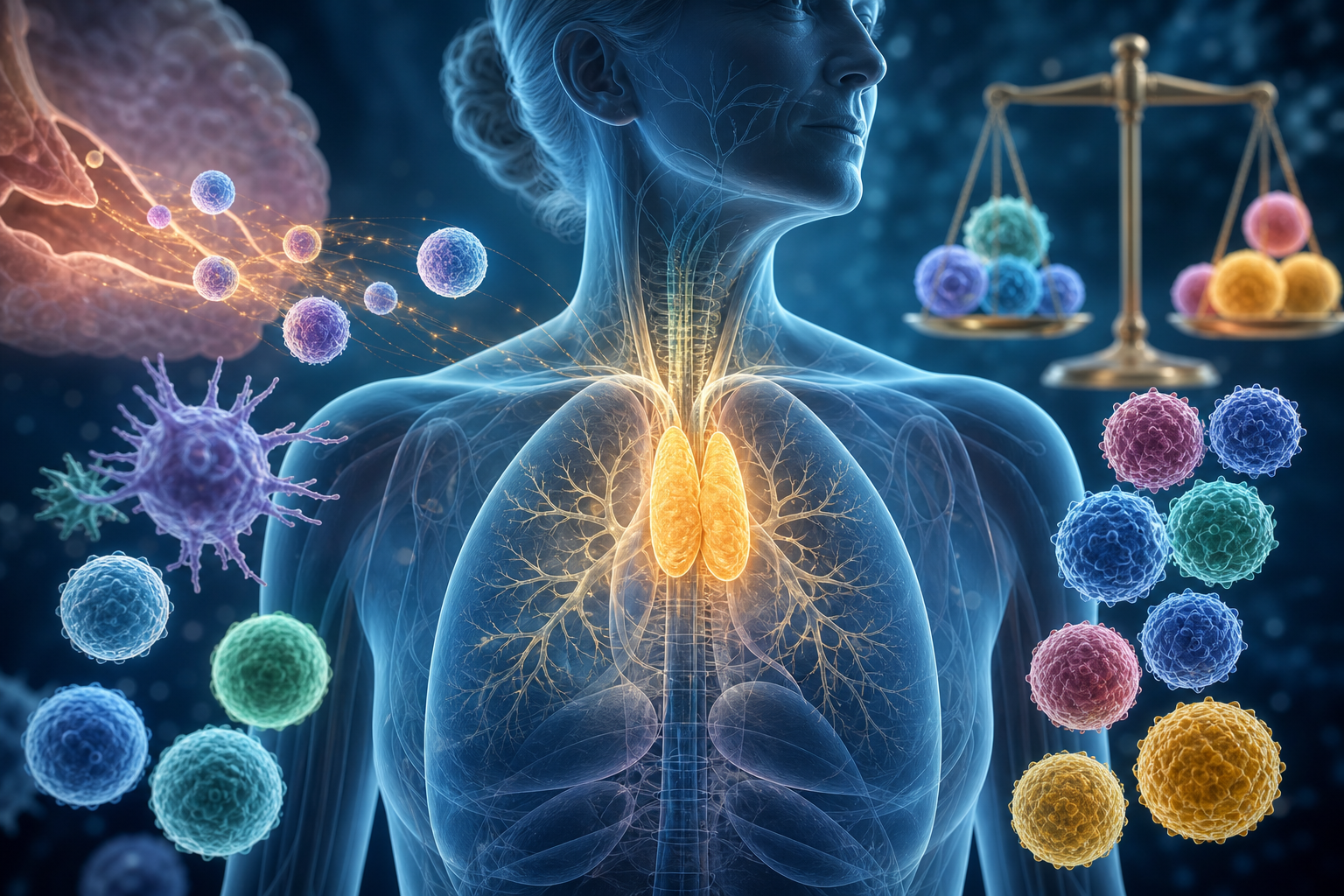
Immune System Rejuvenation: Can We Reverse Immunosenescence?
Research into immune system rejuvenation suggests aging immunity may be partially reversible. Explore strategies for reversing immunosenescence.
Table of Contents
DISCLAIMER
This article is for informational purposes only and does not constitute medical advice. The statements in this article have not been evaluated by the FDA. The information presented is based on published research and should not be used as a substitute for professional medical guidance. Consult your physician before starting any supplement or health protocol.
The Aging Immune System
The immune system is among the organ systems most profoundly affected by aging. This decline, termed immunosenescence, underlies many of the health challenges faced by older adults: increased susceptibility to infections, reduced vaccine efficacy, higher cancer rates, and chronic inflammatory conditions.
A 2007 review in Immunology characterized immunosenescence as involving both the innate and adaptive immune systems, with changes that accumulate gradually but may have sudden clinical consequences when immune competence falls below critical thresholds.
Understanding and potentially reversing immunosenescence has become a major focus of longevity research, as immune function is considered a key determinant of both lifespan and healthspan.
Key Features of Immune Aging
Thymic Involution
The thymus, a small organ behind the breastbone, is the primary site where T cells mature and are educated to distinguish self from non-self. Beginning around puberty, the thymus undergoes progressive involution, gradually shrinking and replacing functional thymic tissue with fatty tissue.
By age 65, thymic output of new T cells may be reduced by more than 95 percent compared to childhood levels. This dramatic decline means the immune system progressively loses its ability to generate diverse, naive T cells capable of responding to new threats.
T Cell Aging
A 2009 review in Indian Journal of Medical Research detailed how T cell aging fundamentally reshapes the immune landscape:
- Naive T cell depletion: The pool of naive T cells, ready to respond to new pathogens, shrinks dramatically with age.
- Memory T cell accumulation: The immune compartment becomes increasingly filled with memory T cells specific to previously encountered pathogens.
- Clonal expansion of exhausted cells: Large clonal populations of senescent T cells accumulate, particularly CD8+ T cells specific for persistent viruses like CMV.
- Reduced T cell receptor diversity: The repertoire of T cell receptors contracts, limiting the ability to recognize novel threats.
- Impaired T cell signaling: Aged T cells show altered signaling through the T cell receptor, reducing their activation and effector function.
B Cell and Antibody Changes
Aging also affects the humoral immune system:
- Reduced generation of new B cells from bone marrow
- Decreased antibody diversity and affinity
- Impaired class switching and somatic hypermutation
- Reduced vaccine antibody responses
- Increased production of autoreactive antibodies
Inflammaging
Perhaps the most clinically significant aspect of immune aging is the development of chronic low-grade inflammation, termed inflammaging. This persistent inflammatory state involves elevated levels of pro-inflammatory cytokines (IL-6, TNF-alpha, CRP) and contributes to:
- Cardiovascular disease
- Type 2 diabetes
- Neurodegenerative conditions
- Sarcopenia and frailty
- Impaired wound healing
The TRIIM Trial: A Landmark Study
Study Design
One of the most exciting developments in immune rejuvenation research was the Thymus Regeneration, Immunorestoration, and Insulin Mitigation (TRIIM) trial, published in Aging Cell in 2019. This small clinical trial enrolled nine healthy men aged 51 to 65 and treated them with a combination of:
- Recombinant human growth hormone
- DHEA (dehydroepiandrosterone)
- Metformin
The treatment period was one year, with the primary aim of determining whether thymic regeneration was possible in older adults.
Results
The TRIIM trial produced remarkable results:
- Thymus regeneration: MRI imaging showed replacement of thymic fat with functional thymic tissue in seven of nine participants.
- Immune rejuvenation: Participants showed increased naive T cell counts and improved T cell receptor diversity.
- Epigenetic age reversal: Participants showed an average reduction of 2.5 years in biological age as measured by multiple epigenetic clocks.
- Persistent effects: Some benefits appeared to persist for at least six months after treatment ended.
Limitations and Caveats
While the TRIIM results were encouraging, important limitations must be noted:
- The study enrolled only nine participants with no placebo control group.
- Only men were included; effects in women are unknown.
- The combination of three drugs makes it difficult to attribute effects to specific components.
- Long-term safety of growth hormone administration in older adults is a concern, given potential cancer risk associations.
- The follow-up TRIIM-X trial is investigating these questions further.
Exercise as Immune Rejuvenation
Moderate Exercise Benefits
Regular moderate exercise is one of the most accessible strategies for supporting immune function during aging. Research has shown that physically active older adults tend to show:
- Higher numbers of naive T cells
- Greater T cell receptor diversity
- Better natural killer cell function
- Improved vaccine responses
- Lower levels of inflammatory markers
A notable study of master cyclists aged 55 to 79 found that their thymic output and T cell profiles more closely resembled young adults than sedentary age-matched controls, suggesting that lifelong exercise may substantially slow immune aging.
Mechanisms of Exercise-Mediated Immune Support
Exercise may support immune function through multiple mechanisms:
- Muscle-derived myokines: Exercising muscles release cytokines like IL-6 (acutely) and IL-15 that may promote immune cell function and turnover.
- Reduced adiposity: Exercise helps reduce visceral fat, a major source of chronic inflammatory signals.
- Stress hormone regulation: Regular exercise may improve cortisol regulation, supporting immune homeostasis.
- Enhanced circulation: Physical activity increases blood and lymph flow, potentially improving immune surveillance.
Nutritional Strategies
Zinc and Thymic Function
Zinc is essential for immune function, and deficiency becomes more common with age due to reduced absorption and intake. Research suggests zinc supplementation may:
- Support thymic function and T cell maturation
- Enhance natural killer cell activity
- Reduce infection duration in older adults
- Improve vaccine responses
Vitamin D and Immune Regulation
Vitamin D receptors are expressed on most immune cells, and vitamin D deficiency is associated with impaired immune function. Studies suggest adequate vitamin D status may:
- Support both innate and adaptive immune responses
- Help regulate inflammatory pathways
- Reduce risk of respiratory infections in deficient individuals
Gut Microbiome and Immune Health
The gut microbiome profoundly influences immune function, and age-related changes in microbial composition may contribute to immunosenescence. Strategies to support gut microbial health include:
- Dietary fiber to support beneficial bacterial populations
- Fermented foods as sources of probiotics
- Prebiotic foods that nourish beneficial gut bacteria
- Limiting processed foods that may disrupt microbial balance
Pharmacological Approaches
Low-Dose Rapamycin
Research has shown that low-dose rapamycin, an mTOR inhibitor, may improve immune function in older adults. A clinical study in elderly volunteers demonstrated that a rapamycin analog (everolimus) improved vaccine responses by approximately 20 percent when administered before influenza vaccination.
The mechanism may involve rapamycin’s ability to reduce the burden of senescent T cells and promote T cell progenitor function. However, mTOR inhibition also has immunosuppressive properties at higher doses, highlighting the importance of dose optimization.
Senolytics for Immune Aging
Senolytic compounds that eliminate senescent immune cells may help restore immune function. The accumulation of senescent T cells is a major feature of immunosenescence, and their removal could potentially free immune space for functional cells.
Preclinical studies using senolytics like dasatinib and quercetin have shown improvements in immune function in aged animals, including enhanced vaccine responses and reduced inflammatory markers. Human trials for immune-specific indications are underway.
Interleukin-7 Therapy
IL-7 is a cytokine critical for T cell development and survival. Research has shown that IL-7 administration may help expand the naive T cell pool and improve T cell diversity in aged individuals. Clinical trials have explored IL-7 therapy in immunocompromised patients, with some evidence of immune reconstitution.
Emerging Strategies
Thymus Bioengineering
Researchers are exploring the possibility of bioengineering functional thymic tissue that could be implanted to restore T cell production. Approaches include:
- Decellularized thymic scaffolds seeded with thymic epithelial cells
- 3D-printed thymic organoids
- Thymic epithelial cells derived from induced pluripotent stem cells
These approaches remain in early preclinical stages but represent a potentially transformative solution to thymic involution.
Immune Cell Reprogramming
Applying cellular reprogramming techniques to aged immune cells is an emerging research area. Studies have shown that partial reprogramming may restore youthful function to aged T cells, including improved proliferative capacity and cytokine production.
Trained Immunity
The concept of trained immunity, lasting enhancement of innate immune responses through epigenetic reprogramming, offers another approach to immune rejuvenation. Certain stimuli, including specific vaccines and microbial products, may train innate immune cells to respond more effectively, potentially offsetting some aspects of immune aging.
A Multi-Pronged Approach
Given the complexity of immune aging, effective immune rejuvenation likely requires addressing multiple aspects simultaneously. A comprehensive approach might include:
- Regular moderate exercise to support immune cell function and reduce inflammation
- Nutritional adequacy with attention to zinc, vitamin D, and micronutrients
- Gut microbiome support through dietary diversity
- Adequate sleep, as sleep deprivation significantly impairs immune function
- Stress management, given the immunosuppressive effects of chronic psychological stress
- Discussion with a healthcare provider about pharmacological options for those at high risk
The field of immune rejuvenation is advancing rapidly, with multiple therapeutic candidates in various stages of development. While a complete reversal of immunosenescence remains elusive, the combination of lifestyle optimization and emerging interventions offers growing hope for maintaining robust immune function throughout the lifespan.
Frequently Asked Questions
What is immunosenescence?
Can immune aging be reversed?
How does exercise affect immune aging?
Sources
Stay Updated on Longevity Science
Weekly research digests. No spam, unsubscribe anytime.
Related Articles

Age Reversal Clinical Trials to Watch in 2026
A comprehensive guide to the most important age reversal clinical trials in 2026, from senolytics to epigenetic reprogramming and beyond.
14 min read
Age Reversal Supplements: What Does the Evidence Actually Say?
A critical review of supplements claiming to reverse biological aging, examining the scientific evidence behind NMN, resveratrol, spermidine, and more.
14 min read
Altos Labs Longevity Research: 2026 Progress Update
Altos Labs is one of the best-funded longevity startups. Here is what research suggests about their cellular rejuvenation progress in 2026.
10 min read