
Gene Therapy for Age Reversal: Where We Stand in 2026
Explore the current landscape of gene therapy for age reversal in 2026, examining key strategies, clinical progress, and ethical considerations.
Table of Contents
DISCLAIMER
This article is for informational purposes only and does not constitute medical advice. The statements in this article have not been evaluated by the FDA. The information presented is based on published research and should not be used as a substitute for professional medical guidance. Consult your physician before starting any supplement or health protocol.
The dream of reversing the hands of time has captivated humanity for millennia. In the 21st century, this aspiration has transitioned from myth to the realm of scientific inquiry, with gene therapy emerging as a particularly potent frontier. As we navigate the landscape of longevity research in 2026, the discussion around gene therapy for age reversal is characterized by both profound excitement and cautious optimism. While the concept of a single genetic cure delivered by a single genetic intervention remains firmly in the realm of science fiction, targeted gene-based strategies are making considerable strides in addressing the fundamental mechanisms of aging.
This article aims to provide a comprehensive overview of where we stand with gene therapy for age reversal in 2026. We will explore the scientific rationale, the most promising therapeutic avenues, the progress in clinical translation, and the significant challenges and ethical considerations that accompany this rapidly evolving field.
What is Gene Therapy in the Context of Aging?
At its core, gene therapy involves introducing genetic material into a person’s cells to replace missing or defective genes, introduce new genes, or modify existing ones to fight disease. In the context of aging, gene therapy seeks to manipulate genes that play crucial roles in the aging process itself, aiming to counteract age-related decline or even restore youthful cellular functions.
Our understanding of aging has evolved significantly. It is no longer viewed merely as a passive decline but rather as a complex biological process driven by a series of interconnected cellular and molecular hallmarks (López-Otín et al., 2013; PMID: 23746838). Gene therapy offers a unique approach to directly target these underlying mechanisms, moving beyond symptomatic treatment of age-related diseases to potentially addressing the root causes of aging.
How Does Aging Manifest at the Genetic Level?
Before delving into gene therapy strategies, it’s essential to understand the genetic and molecular underpinnings of aging that these therapies aim to address. Research suggests that aging is characterized by a constellation of cellular and molecular changes, often referred to as the “hallmarks of aging.” These may include:
- Genomic Instability: Accumulation of DNA damage and mutations over time.
- Telomere Attrition: Shortening of protective caps at the ends of chromosomes, leading to cellular senescence.
- Epigenetic Alterations: Changes in gene expression patterns without altering the underlying DNA sequence.
- Loss of Proteostasis: Impairment of protein quality control mechanisms.
- Mitochondrial Dysfunction: Decline in the efficiency and number of cellular powerhouses.
- Cellular Senescence: Accumulation of “zombie” cells that stop dividing and secrete pro-inflammatory factors.
- Deregulated Nutrient Sensing: Impaired cellular responses to nutrient availability.
- Stem Cell Exhaustion: Decline in the regenerative capacity of tissues.
- Altered Intercellular Communication: Changes in signaling between cells, often leading to chronic inflammation.
Gene therapy approaches are designed to intervene in one or more of these hallmarks, theoretically slowing, halting, or even reversing aspects of the aging process.
What Are the Key Gene Therapy Strategies for Age Reversal?
The scientific community is exploring several exciting gene therapy avenues, each targeting different facets of aging.
Targeting Telomere Attrition: The Promise of Telomerase Activation
Telomeres are protective caps at the ends of our chromosomes, crucial for maintaining genomic integrity. With each cell division, telomeres naturally shorten, a process linked to cellular aging and the onset of senescence. When telomeres become critically short, cells either stop dividing (senescence) or undergo programmed cell death (apoptosis).
Telomerase Reverse Transcriptase (TERT) Gene Therapy: One of the most direct gene therapy approaches involves introducing or activating the gene for telomerase reverse transcriptase (TERT), the catalytic subunit of the enzyme telomerase. Telomerase can rebuild and extend telomeres, potentially resetting the cellular clock.
- Research Findings: Seminal work by researchers like Dr. Maria Blasco at the Spanish National Cancer Research Centre (CNIO) has demonstrated the potential of TERT gene therapy. Studies in mice have shown that viral delivery of TERT can extend telomeres, delay age-related pathologies, and increase lifespan in adult and old mice without increasing cancer incidence in these models (de Jesús et al., 2012; PMID: 22767071). Further research indicates that telomerase activity and telomere length are critical regulators of aging (Blasco, 2007; PMID: 17360281).
- Current Status (2026): While preclinical results in animal models have been compelling, human application faces significant hurdles. The primary concern is the potential link between telomerase activation and increased cancer risk, as many cancer cells exhibit high telomerase activity. However, newer research suggests that controlled, transient activation of telomerase might be possible without promoting oncogenesis, particularly if delivery is carefully regulated and targeted. Clinical trials focusing on specific telomere-related diseases (e.g., dyskeratosis congenita) are underway, which may pave the way for broader age-reversal applications in the future.
Epigenetic Reprogramming: Resetting the Cellular Clock
Epigenetics refers to changes in gene expression that do not involve alterations to the underlying DNA sequence but can be inherited. These “epigenetic marks” accumulate and change with age, contributing to cellular dysfunction and aging phenotypes. Epigenetic reprogramming aims to reset these age-related epigenetic patterns to a more youthful state.
Yamanaka Factors (OSKM): A groundbreaking discovery by Dr. Shinya Yamanaka in 2006 identified four transcription factors – Oct4, Sox2, Klf4, and c-Myc (OSKM) – that can reprogram adult somatic cells into induced pluripotent stem cells (iPSCs). This process effectively “resets” the epigenetic clock, making the cells biologically younger.
- Partial Reprogramming: Full reprogramming to iPSCs is not suitable for age reversal in a living organism due to the risk of teratoma formation (tumors) and loss of cell identity. However, researchers are exploring “partial reprogramming,” where cells are exposed to Yamanaka factors for a shorter duration or at lower levels, aiming to rejuvenate them without losing their specialized function.
- Key Studies: Dr. Juan Carlos Izpisua Belmonte’s lab at the Salk Institute demonstrated in 2017 that partial reprogramming in vivo could ameliorate age-associated hallmarks in naturally aged mice and extend lifespan in a progeria mouse model (Ocampo et al., 2017; PMID: 27956354).
- More recently, Dr. David Sinclair’s lab at Harvard Medical School showed that AAV-mediated delivery of three Yamanaka factors (OSK, excluding c-Myc) could reverse age-related vision loss and tissue damage in mice, suggesting a recovery of youthful epigenetic information (Lu et al., 2020; PMID: 33268865).
- Current Status (2026): Partial reprogramming is one of the most exciting and rapidly advancing areas in age-reversal gene therapy. Companies like Altos Labs, backed by significant investment, are heavily focused on cellular rejuvenation through reprogramming. The challenge remains in achieving safe, controlled, and tissue-specific partial reprogramming in vivo across multiple tissues without inducing cancer or disrupting normal cellular function. Clinical trials are still distant for systemic human application, but targeted therapies for specific organs (e.g., the eye, as suggested by Sinclair’s work) might enter early phases within the next few years.
Senolytics and Senomorphics via Gene Therapy
Cellular senescence, the accumulation of “zombie cells” that secrete pro-inflammatory factors, is a major contributor to aging and age-related diseases. Senolytics are compounds that selectively destroy senescent cells, while senomorphics modulate their harmful secretions. Gene therapy offers a way to deliver these senolytic or senomorphic agents directly and specifically to senescent cells.
- Gene-Based Senescent Cell Clearance: Researchers have demonstrated that the genetic elimination of senescent cells can delay the onset of multiple age-related disorders and extend healthy lifespan in mice (Baker et al., 2011; PMID: 22048312). While this initial work used transgenic models, gene therapy aims to achieve similar effects by delivering genes that selectively induce apoptosis in senescent cells (e.g., by targeting specific pathways like BCL-XL or p53 in senescent cells) or by delivering factors that inhibit their pro-inflammatory secretome.
- Current Status (2026): While numerous small-molecule senolytics are in clinical trials, gene therapy approaches are still largely in preclinical development. The specificity of delivery to senescent cells and avoiding harm to healthy cells remains a key challenge. However, advancements in targeted gene delivery vectors (e.g., AAVs engineered to specifically infect senescent cells) are showing promise.
Enhancing Mitochondrial Function
Mitochondrial dysfunction is another hallmark of aging, leading to reduced energy production and increased oxidative stress. Gene therapy aims to improve mitochondrial health by delivering genes that enhance mitochondrial biogenesis, protect against oxidative damage, or improve the efficiency of the electron transport chain.
- NAD+ Metabolism: Nicotinamide adenine dinucleotide (NAD+) is a coenzyme critical for many cellular processes, including energy metabolism and DNA repair. NAD+ levels decline with age, contributing to mitochondrial dysfunction and other age-related pathologies (Gomes et al., 2013; PMID: 24360282). While often targeted by small molecule precursors (NMN, NR), gene therapy could potentially enhance the endogenous synthesis pathways of NAD+ or deliver genes that better utilize NAD+ within mitochondria.
- Targeted Mitochondrial Gene Delivery: Direct gene therapy to mitochondria is complex due to their unique genetic structure. However, nuclear gene therapy can deliver genes encoding mitochondrial proteins that are then imported into the mitochondria. For example, AAV-mediated gene delivery of pyruvate dehydrogenase complex has shown promise in improving mitochondrial function in models of mitochondrial disease, which conceptually could be extended to age-related mitochondrial decline (Vafai et al., 2021; PMID: 33627409).
- Current Status (2026): Research in this area is mostly preclinical, often focusing on rare mitochondrial diseases. Applying these strategies for systemic age reversal is a more complex undertaking, but the foundational work is laying the groundwork for future applications.
CRISPR and Gene Editing for Age-Related Pathologies
CRISPR-Cas9 and other gene-editing technologies offer unprecedented precision in modifying the genome. While not strictly “gene therapy” in the sense of adding a new gene, they allow for precise edits to existing genes that could have profound implications for aging.
- Repairing Mutations: Gene editing could correct specific genetic mutations linked to premature aging syndromes (progeria) or to increased risk of age-related diseases (e.g., APOE4 for Alzheimer’s disease).
- Removing Deleterious Genes: It may be possible to remove or inactivate genes that contribute negatively to the aging process.
- Modulating Gene Expression: CRISPR activation or interference (CRISPRa/i) can upregulate or downregulate specific genes without permanent DNA changes, offering a controllable way to modify age-related gene networks.
- Current Status (2026): CRISPR-based therapies are rapidly moving into clinical trials for various genetic diseases. Their application for broad age reversal is still speculative, but their precision makes them a powerful tool for research and potentially for highly targeted interventions in the future.
Delivery Mechanisms for Gene Therapy: The Vehicle Matters
The effectiveness and safety of gene therapy heavily rely on the delivery system, known as the vector.
- Viral Vectors:
- Adeno-Associated Viruses (AAVs): Currently the most common vectors for gene therapy due to their good safety profile, ability to infect both dividing and non-dividing cells, and relatively low immunogenicity. Different AAV serotypes can target specific tissues (e.g., liver, muscle, brain, retina). Many of the promising preclinical studies for age reversal utilize AAVs.
- Lentiviruses: Can integrate their genetic material into the host cell’s genome, leading to long-lasting expression. Often used for ex vivo therapies (cells removed, modified, and re-introduced) but carry a higher risk of insertional mutagenesis in vivo.
- Non-Viral Methods:
- Lipid Nanoparticles (LNPs): Gained prominence with mRNA vaccines, LNPs can deliver genetic material (like mRNA for transient protein expression or CRISPR components) into cells. They generally have lower immunogenicity than viral vectors but may have lower transduction efficiency in some tissues.
- Other Nanoparticles: Various other synthetic nanoparticles are being developed to improve targeting and reduce toxicity.
The choice of vector is critical, balancing efficacy, safety, and tissue specificity, especially for systemic age-reversal applications where widespread and controlled gene expression is required.
Clinical Landscape and Current Trials (2026 Perspective)
As of 2026, the landscape of gene therapy for age reversal is primarily characterized by robust preclinical research and a growing number of early-phase clinical trials targeting age-related diseases rather than systemic age reversal in healthy individuals.
- Focus on Disease: Most ongoing human clinical trials involving gene therapy are aimed at treating specific genetic disorders (e.g., spinal muscular atrophy, inherited retinal diseases) or age-related conditions like certain cancers, Parkinson’s disease, or Alzheimer’s disease. These trials are designed to evaluate safety, dosage, and initial efficacy for a defined medical condition.
- Early Longevity Trials: A few pioneering efforts are beginning to emerge that are more directly related to longevity. These are typically small, early-phase studies, often focusing on single-gene interventions or specific biomarkers of aging. For instance, some companies may be exploring gene therapies to boost NAD+ levels or enhance specific protective pathways. However, these are highly experimental and not yet considered mainstream medical interventions.
- Academic and Biotech Initiatives: Major academic institutions and well-funded biotech companies (such as Altos Labs, Calico, and various university labs) are investing heavily in understanding and manipulating the biology of aging at a genetic level. While their ultimate goal may be age reversal, their immediate focus is on generating robust, reproducible data in animal models and identifying safe and effective targets for human translation.
It is crucial to differentiate between therapeutic applications for age-related diseases (which are progressing) and broader age reversal in otherwise healthy individuals (which is largely still in preclinical stages). The latter faces a much higher bar for safety and ethical approval.
Challenges and Ethical Considerations
The journey toward gene therapy for age reversal is fraught with significant scientific and ethical challenges.
Scientific Hurdles:
- Safety and Off-Target Effects: Introducing genetic material into cells carries inherent risks. Viral vectors can elicit immune responses, and there’s a risk of insertional mutagenesis (where the new gene integrates into the genome in an undesirable location, potentially activating oncogenes or inactivating tumor suppressors). Gene editing, while precise, can still have off-target edits or lead to unintended consequences.
- Delivery and Specificity: Delivering gene therapies effectively and safely to all relevant tissues and cell types throughout the body, while avoiding unwanted effects elsewhere, is a massive challenge. Achieving tissue-specific and age-appropriate expression is complex.
- Dosage and Control: Maintaining the optimal level and duration of gene expression is critical. Too much or too little of a gene product could be detrimental. Developing mechanisms for inducible or reversible gene expression is an active area of research.
- Complexity of Aging: Aging is not a single process but a multifaceted syndrome involving numerous interconnected pathways. Targeting one hallmark may not be sufficient for comprehensive age reversal and could potentially unmask other vulnerabilities.
- Long-Term Effects: The long-term safety and efficacy of systemic gene therapy for age reversal are unknown. The potential for unforeseen side effects decades down the line requires extensive research.
Ethical and Societal Considerations:
- Equity and Access: If effective age-reversal therapies become available, who will have access to them? The high cost of developing and administering advanced gene therapies could exacerbate existing health inequalities, creating a stark divide between those who can afford extended youth and those who cannot.
- Societal Impact: A significantly extended human lifespan could have profound societal implications, including changes to population demographics, economic structures, retirement ages, resource allocation, and even the meaning of life and death.
- Unforeseen Consequences: Altering fundamental biological processes like aging could have unintended ecological or evolutionary consequences that are difficult to predict.
- The Definition of “Healthy”: Where does “therapy” end and “enhancement” begin? If gene therapy can reverse aging, could
Frequently Asked Questions
Is gene therapy for age reversal currently available to the public?
What are the main risks associated with gene therapy for aging?
How soon might we see effective gene therapies for age reversal?
Sources
- The hallmarks of aging(2013)
- Telomerase gene therapy in adult and old mice delays aging and increases longevity without increasing cancer(2012)
- In vivo amelioration of age-associated hallmarks by partial reprogramming in mice(2017)
- Reprogramming to recover youthful epigenetic information and restore vision(2020)
- Clearance of p16Ink4a-positive senescent cells delays ageing-associated disorders(2011)
- AAV-mediated gene delivery of pyruvate dehydrogenase complex improves mitochondrial function and extends lifespan in a mouse model of mitochondrial disease(2021)
- Telomere length, telomerase and telomeric chromatin in the regulation of ageing and cancer(2007)
- Declining NAD+ induces a pseudohypoxic state disrupting Sirt1-mediated DNA repair during aging(2013)
Stay Updated on Longevity Science
Weekly research digests. No spam, unsubscribe anytime.
Related Articles

Age Reversal Clinical Trials to Watch in 2026
A comprehensive guide to the most important age reversal clinical trials in 2026, from senolytics to epigenetic reprogramming and beyond.
14 min read
Biological vs Chronological Age: What Really Matters
Understand the crucial difference between biological and chronological age, how biological age is measured, and why it may be a better predictor of health outcomes.
9 min read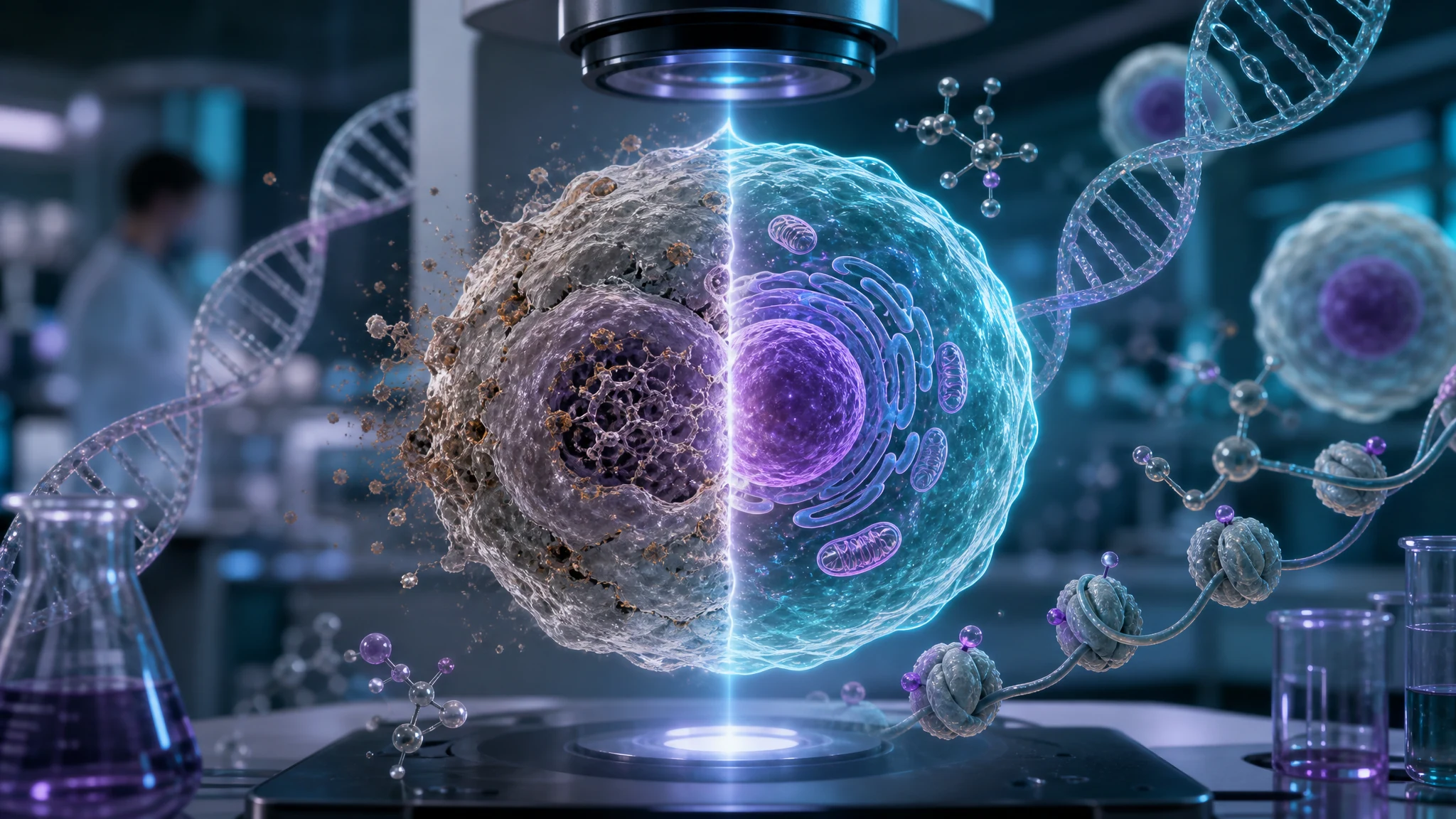
Cellular Rejuvenation: Latest Research Findings in 2026
Explore the latest cellular rejuvenation research in 2026, from partial reprogramming to senolytics and mitochondrial restoration strategies.
13 min read