Toe Strength, Balance, and Healthy Aging: A Practical Guide
Your toes help control pressure and propulsion, but toe exercises are only one part of fall prevention. Learn safe checks, training ideas, and warning signs.
Table of Contents
DISCLAIMER
This article is for informational purposes only and does not constitute medical advice. The statements in this article have not been evaluated by the FDA. The information presented is based on published research and should not be used as a substitute for professional medical guidance. Consult your physician before starting any supplement or health protocol.
The foot is the body’s contact point with the ground, and the toes do more than fit inside a shoe. They help manage pressure as weight shifts forward, contribute to propulsion, and make small corrections during standing and walking.
Interest in “foot core” training has made toe exercises popular online. The idea has merit, but balance is never controlled by one muscle group. Vision, sensation, reaction time, vestibular function, hips, knees, ankles, medications, and the environment all participate.
What Toe Strength Contributes
During a step, body weight moves from heel toward the forefoot. The toes help stabilize that final contact and support push-off. When standing, pressure shifts subtly in every direction; the foot and ankle respond before larger hip or stepping strategies are needed.
Painful joints, poorly fitting shoes, reduced sensation, deformity, inactivity, and weakness can alter this role. A person may grip the floor with curled toes as compensation, which is not the same as coordinated strength. More force is not automatically better if it comes with pain or rigid movement.
Research has found associations between foot characteristics and balance or falls, and some exercise programs improve foot strength or functional measures. These findings do not justify using a home toe test to predict an individual’s fall risk. Clinical fall assessment is broader by design.
Start With Safe Observation
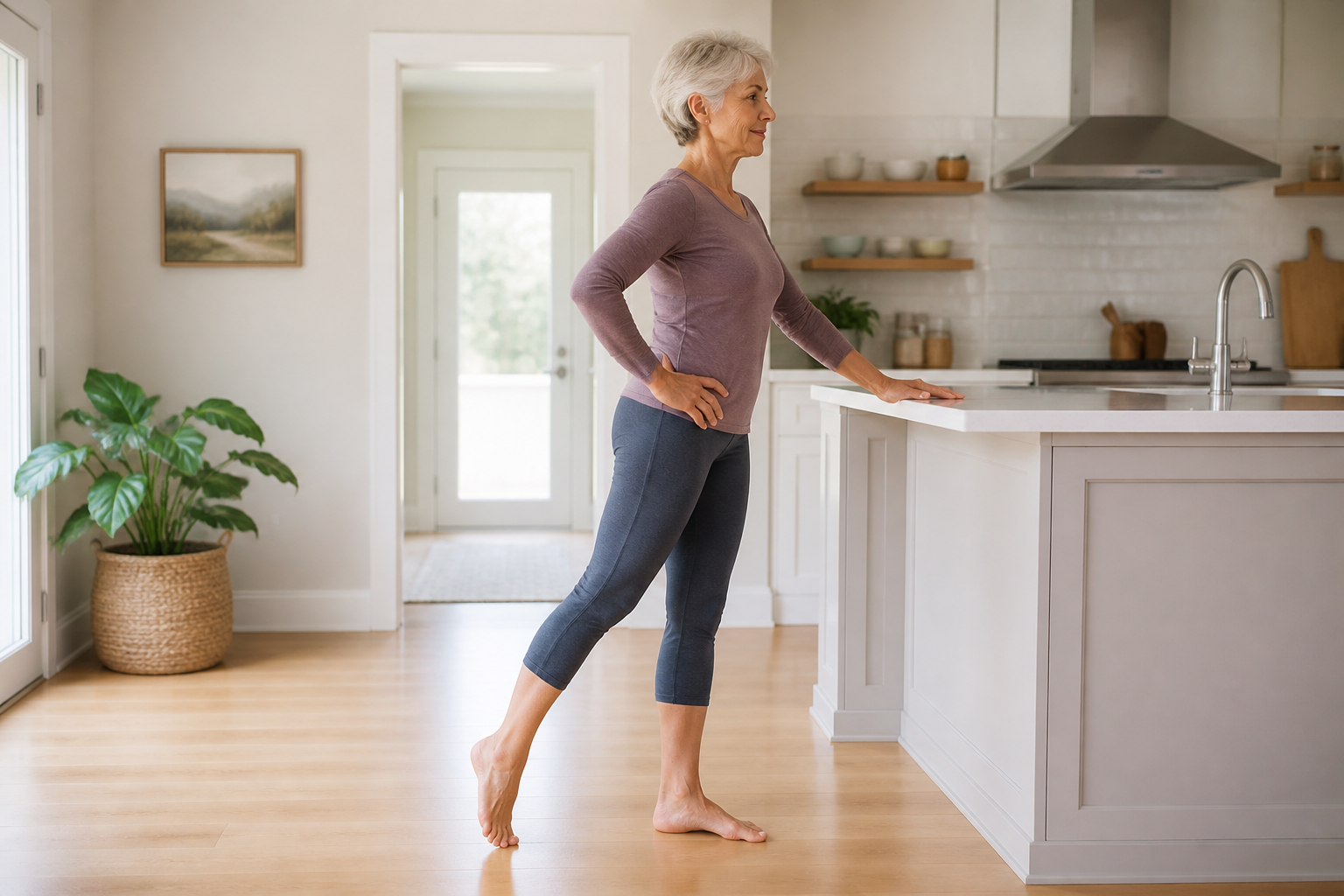
Near a stable counter, notice whether you can spread and relax the toes, lift the big toe while the others stay down, and then reverse the pattern. Observe whether one side cramps, whether the arch collapses abruptly, or whether pressure causes pain.
Check shoes for adequate width and secure heel contact. A shoe can be cushioned yet unstable, or firm yet shaped poorly for the foot. Inspect skin and nails, especially when sensation or circulation is reduced. Corns, wounds, infection, and nail problems deserve proper care rather than exercise through pain.
Balance tests found online can create fall risk. Do not close your eyes, stand on an unstable object, or attempt single-leg challenges without an appropriate support and safe exit.
Train the Foot Inside Whole-Body Movement
Begin seated. Press the big toe gently into the floor without curling it, hold briefly, and relax. Practice spreading the toes or shortening the foot slightly by drawing the ball of the foot toward the heel while keeping the toes long. Small, controlled effort is enough.
Progress to supported heel raises, slow weight shifts, and sit-to-stands. These integrate the toes with calves, ankles, knees, and hips. Walking on varied but safe surfaces, stepping practice, and evidence-based strength and balance programs provide more complete training than isolated toe drills alone.
Two or three short sessions a week may be more tolerable than a large daily dose. Progress repetitions, range, or reduced hand support one variable at a time. The movement should remain smooth and pain-free.
Know When the Foot Is Signaling More
New numbness, burning, weakness, foot drop, wounds, marked swelling, color change, or sudden inability to bear weight needs medical assessment. Recurrent falls, dizziness, faintness, or a rapid decline in walking should trigger a broader review rather than a stronger toe routine.
A clinician may check sensation, circulation, footwear, vision, medicines, blood pressure responses, gait, and home hazards. Physical therapists and podiatrists can adapt exercises when arthritis, neuropathy, deformity, or prior injury changes mechanics.
Toe strength is a useful capacity, not a longevity score. Train it as part of a system: healthy feet, capable legs, practiced balance, safe surroundings, and attention to symptoms. The goal is not impressive toe control. It is confident contact with the ground through daily life.
Frequently Asked Questions
Do strong toes prevent every fall?
Should toe exercises be done barefoot?
Is toe cramping during exercise normal?
Sources
Stay Updated on Longevity Science
Weekly research digests. No spam, unsubscribe anytime.
Related Articles

Circadian Amplitude and Healthy Aging: Why Strong Daily Rhythms Matter
Explore circadian amplitude healthy aging research and learn why stronger daily light, sleep, activity, and meal rhythms may support long-term resilience.
10 min read
Alcohol and Aging: What the Latest Research Says
A review of the latest research on alcohol's effects on aging, biological age, disease risk, and longevity, including evolving views on moderate drinking.
9 min read
Blue Light and Aging: How Screen Time May Be Accelerating Your Biological Clock
Examine the evidence linking blue light exposure to accelerated aging through circadian disruption, retinal damage, and metabolic effects. Practical mitigation tips.
11 min read