Sleep Apnea and Biological Aging: What Researchers Are Finding
Sleep apnea disrupts oxygen and sleep continuity. Explore its links with biological aging markers, the limits of current studies, and why evaluation matters.
Table of Contents
DISCLAIMER
This article is for informational purposes only and does not constitute medical advice. The statements in this article have not been evaluated by the FDA. The information presented is based on published research and should not be used as a substitute for professional medical guidance. Consult your physician before starting any supplement or health protocol.
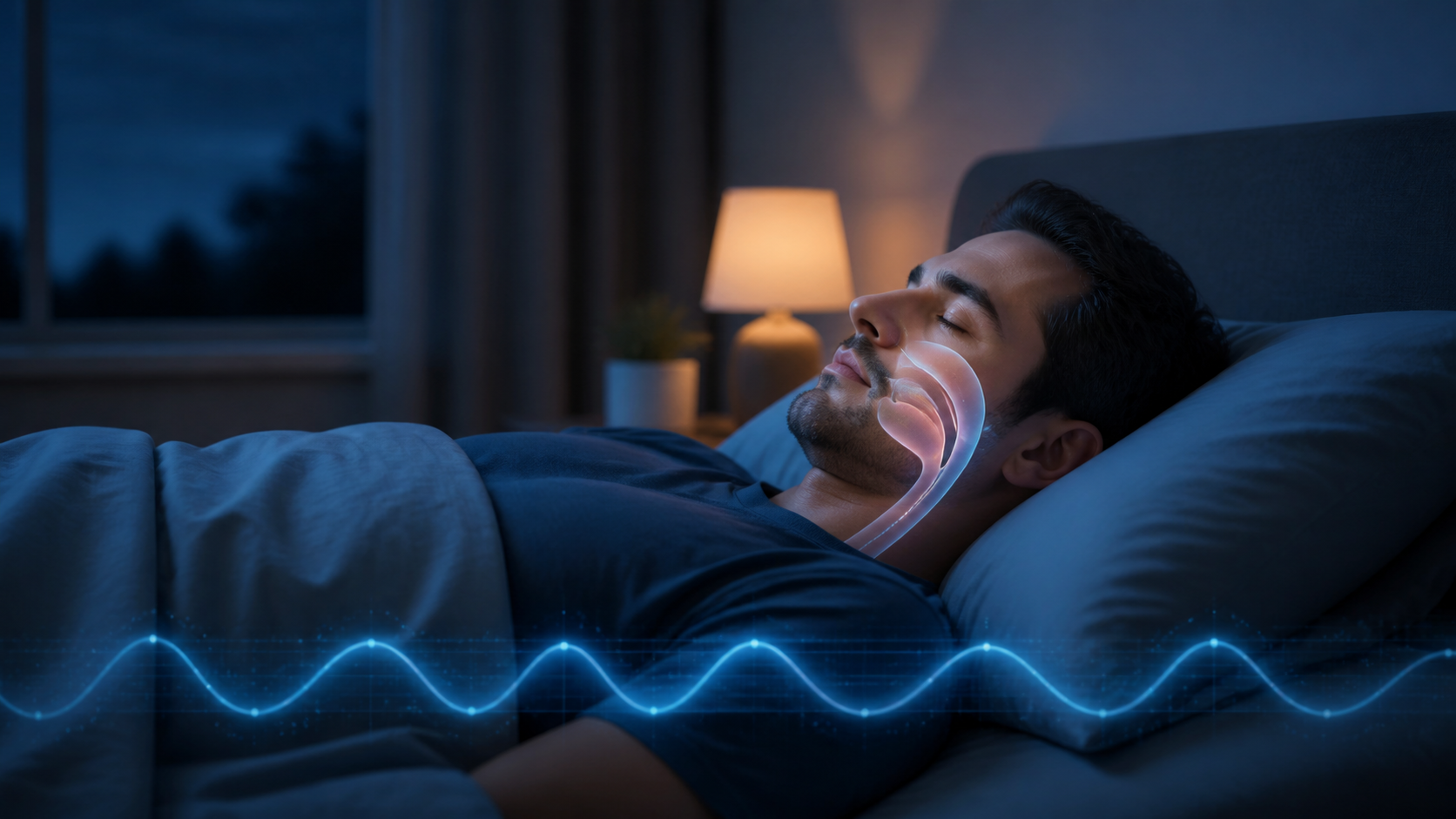
Sleep apnea repeatedly interrupts breathing during sleep. In obstructive sleep apnea, the upper airway narrows or closes even as the body continues trying to breathe. Oxygen may fall, carbon dioxide may rise, and the brain briefly activates to reopen the airway. A person can experience these cycles many times without remembering them.
Researchers are asking whether that repeated stress connects with biological aging. Early findings make the question plausible, but the answer is not a simple claim that apnea adds a fixed number of years.
How Sleep Apnea Stresses Multiple Systems
Intermittent low oxygen can activate sympathetic nerves, oxidative stress, inflammation, and changes in blood-vessel function. Repeated arousals fragment sleep architecture and may reduce restorative sleep. Pressure swings in the chest can also affect the cardiovascular system.
These pathways overlap with processes studied in aging science. Yet overlap does not prove equivalence. Obesity, age, sex, smoking, alcohol, medication, and cardiometabolic disease can influence both apnea severity and biological markers. Good studies must separate these factors as carefully as possible.
What Biological-Aging Studies Measure
There is no single definitive test of biological age. Studies may use DNA-methylation clocks, telomere length, inflammatory proteins, metabolomic patterns, or organ-specific measures. Each captures a different layer of biology.
Several observational studies have associated sleep-disordered breathing or low overnight oxygen with accelerated epigenetic-age estimates. Associations can vary by sex, ancestry, clock, and apnea feature. An apnea-hypopnea index counts events, while oxygen burden may better reflect the depth and duration of physiological stress in some analyses.
Cross-sectional results cannot establish direction. Faster biological aging could increase vulnerability to apnea through muscle, airway, or metabolic changes. Apnea could influence aging markers. Both could arise from shared causes.
Does Treatment Change Aging Markers?
Continuous positive airway pressure keeps the airway open and is a standard therapy for many people with obstructive apnea. Other options may include oral appliances, weight management, positional therapy, surgery, or care addressing contributing nasal and anatomical factors.
Treatment can improve breathing metrics, sleepiness, and quality of life for appropriate patients. Effects on blood pressure and cardiovascular outcomes depend on adherence, baseline risk, and study design. Small studies have explored whether treatment changes epigenetic or inflammatory markers, but evidence is not yet strong enough to promise biological-age reversal.
The clinically meaningful goal remains effective apnea care, not gaming a clock result.
Why Diagnosis Requires More Than Snoring
Snoring is common and does not always indicate apnea. Conversely, some people with apnea do not fit the stereotype of an older man with obesity. Women may report insomnia, fatigue, morning headaches, or mood symptoms. Children and younger adults can also be affected.
Evaluation may use a home sleep apnea test or an in-laboratory sleep study depending on symptoms and medical complexity. Consumer wearables can flag patterns but do not replace validated diagnosis. A low nighttime oxygen reading may also have causes other than obstructive apnea.
A Practical Healthy-Aging Perspective
The most useful response to a possible link with aging is not fear. It is recognizing that sleep-disordered breathing is common, underdiagnosed, and treatable. Loud habitual snoring, witnessed pauses, choking awakenings, marked daytime sleepiness, or difficult-to-control blood pressure deserves discussion with a clinician.
Regular sleep timing, avoiding excess alcohol near bedtime, physical activity, and weight management may support sleep health, but they may not replace indicated clinical care. People should not stop prescribed therapy based on wearable data or a biological-age test.
Sleep apnea may contribute to biological stress through oxygen instability and fragmented sleep. Current research supports concern and continued study, not a precise aging sentence. Diagnosis and evidence-based treatment offer a clearer benefit than chasing a younger number on an unvalidated clock.
Frequently Asked Questions
Does sleep apnea make a person age faster?
Can treating sleep apnea reverse biological age?
Who should be evaluated for sleep apnea?
Sources
Stay Updated on Longevity Science
Weekly research digests. No spam, unsubscribe anytime.
Related Articles

Circadian Amplitude and Healthy Aging: Why Strong Daily Rhythms Matter
Explore circadian amplitude healthy aging research and learn why stronger daily light, sleep, activity, and meal rhythms may support long-term resilience.
10 min read
Alcohol and Aging: What the Latest Research Says
A review of the latest research on alcohol's effects on aging, biological age, disease risk, and longevity, including evolving views on moderate drinking.
9 min read
Blue Light and Aging: How Screen Time May Be Accelerating Your Biological Clock
Examine the evidence linking blue light exposure to accelerated aging through circadian disruption, retinal damage, and metabolic effects. Practical mitigation tips.
11 min read