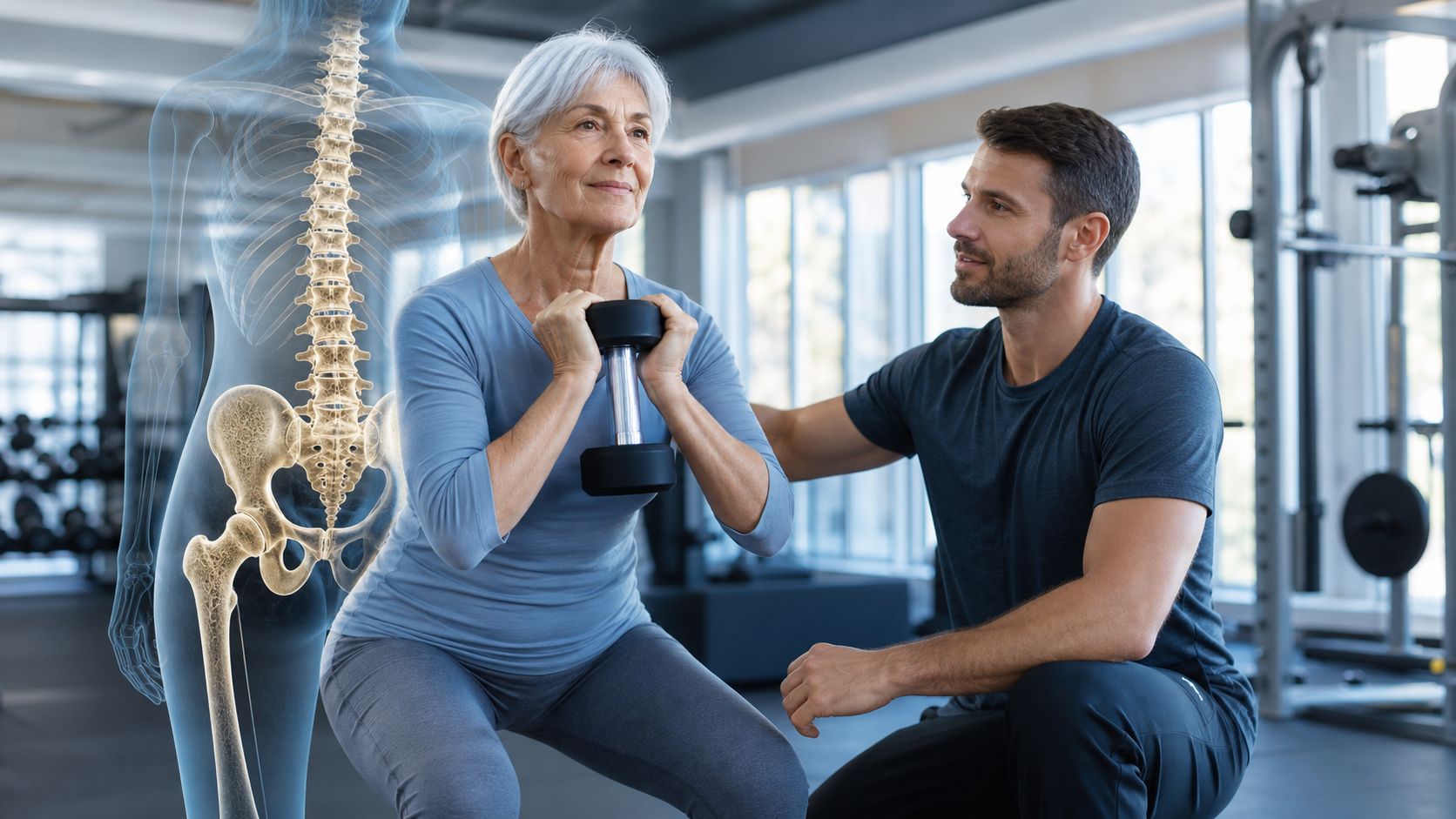
Resistance Training and Bone Aging: What the Evidence Shows
Resistance training may support bone strength as people age. Review the evidence, practical principles, limits, and safety considerations without hype.
Table of Contents
DISCLAIMER
This article is for informational purposes only and does not constitute medical advice. The statements in this article have not been evaluated by the FDA. The information presented is based on published research and should not be used as a substitute for professional medical guidance. Consult your physician before starting any supplement or health protocol.
Bone is living tissue. It adapts to loading, repairs microscopic damage, and helps regulate mineral balance. With age, remodeling can become less favorable: breakdown may outpace formation, architecture can deteriorate, and falls become more consequential.
Resistance training is often presented as a direct answer. The evidence is promising but more precise: well-designed progressive loading may help maintain or modestly improve bone strength at certain sites, while also improving muscle and balance that influence fracture risk.
Why Bone Responds to Mechanical Load
Muscle contractions and ground forces bend bone slightly. Bone cells detect that strain and coordinate remodeling. Loads that are novel, sufficiently intense, and applied safely tend to create a stronger signal than endlessly repeating easy movement.
Adaptation is site-specific. Squats and deadlift patterns load the hips and spine differently from upper-body pulling or pressing. Bone also responds slowly, so meaningful trials usually last months rather than weeks.
The response is not unlimited. Hormonal status, nutrition, medication, genetics, prior activity, and disease influence how much tissue can adapt. Exercise should therefore be understood as one component of bone care rather than a substitute for diagnosis or medication when those are indicated.
What Trials and Reviews Suggest
Systematic reviews generally find that resistance exercise can help preserve bone mineral density, with effects varying by skeletal site and program. Some higher-intensity supervised studies have reported improvements in postmenopausal women with low bone mass. Those results are important, but they came from screened participants, trained supervision, and deliberate progression.
Bone mineral density is also an incomplete outcome. Geometry, microarchitecture, muscle power, balance, and fall exposure contribute to fracture risk. A program that produces a small scan change but markedly improves strength and stability may still have clinical value.
Studies differ in intensity, frequency, duration, adherence, and comparison groups. This heterogeneity explains why headlines promising dramatic bone rebuilding exceed the evidence.
What Makes a Bone-Supportive Program Different
Useful resistance programs typically train major movement patterns and increase challenge over time. The goal is not exhaustion at any cost. It is a repeatable stimulus delivered with sound technique.
Exercises may include sit-to-stand or squat patterns, hip hinges, step-ups, rows, presses, and loaded carries. Impact activity such as hopping may add a distinct stimulus for suitable people, but it is not appropriate for everyone. Balance work matters because preventing a fall can be as important as changing bone density.
Progression can come from resistance, repetitions, range, speed, or movement complexity. A qualified physical therapist or exercise professional can adapt the plan around pain, arthritis, cardiovascular limitations, and prior fractures.
Safety With Osteoporosis or Fracture History
People with vertebral fractures, severe osteoporosis, acute pain, or major balance problems need individualized guidance. Rapid loaded spinal flexion, uncontrolled twisting, and poorly supervised impact can add risk. That does not mean avoiding all loading; excessive caution can accelerate weakness and loss of function.
The safer path is assessment, technique instruction, gradual exposure, and clear rules for symptoms. Sudden back pain, loss of height, or pain after a minor impact warrants medical evaluation. Exercise selection should also account for medications and conditions that affect blood pressure, balance, or recovery.
The Broader Bone-Health Picture
Training works alongside adequate energy and protein intake, calcium and vitamin D status, avoidance of smoking, limited alcohol, and treatment of conditions that accelerate bone loss. More is not automatically better: persistent fatigue, falling performance, and repeated injury can signal inadequate recovery.
Resistance training may support healthier skeletal aging because it challenges bone, builds muscle, and improves function. Its greatest strength is not a dramatic scan result. It is the combined improvement in capacity and confidence that can help people stay active. Anyone with diagnosed osteoporosis or a fracture history should discuss an appropriate program with a healthcare professional.
Frequently Asked Questions
Can resistance training increase bone density in older adults?
Is walking enough for bone health?
Is heavy lifting safe with osteoporosis?
Sources
Stay Updated on Longevity Science
Weekly research digests. No spam, unsubscribe anytime.
Related Articles

Circadian Amplitude and Healthy Aging: Why Strong Daily Rhythms Matter
Explore circadian amplitude healthy aging research and learn why stronger daily light, sleep, activity, and meal rhythms may support long-term resilience.
10 min read
Alcohol and Aging: What the Latest Research Says
A review of the latest research on alcohol's effects on aging, biological age, disease risk, and longevity, including evolving views on moderate drinking.
9 min read
Blue Light and Aging: How Screen Time May Be Accelerating Your Biological Clock
Examine the evidence linking blue light exposure to accelerated aging through circadian disruption, retinal damage, and metabolic effects. Practical mitigation tips.
11 min read