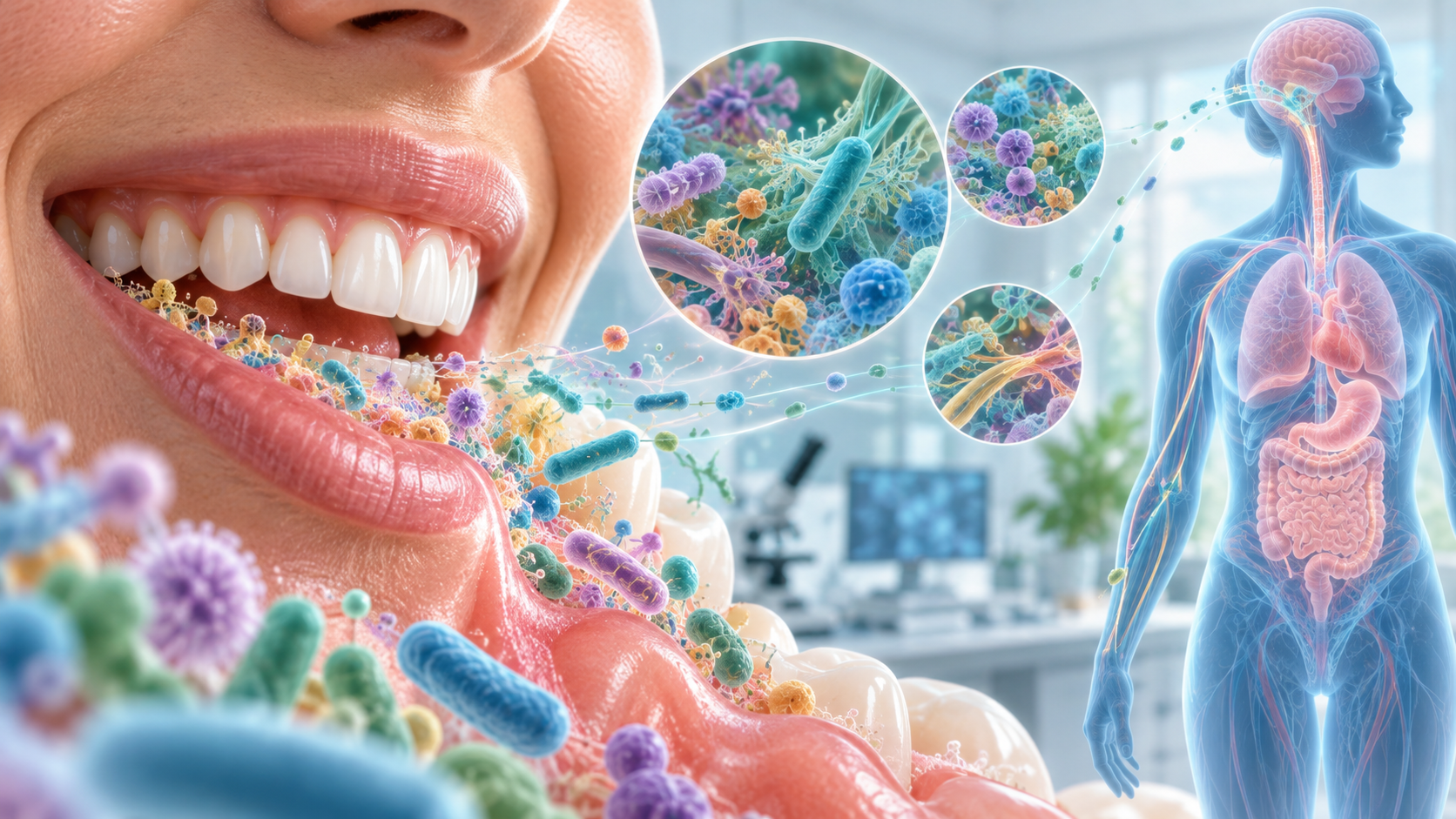
Oral Microbiome and Longevity: How Mouth Health May Shape Aging
Explore oral microbiome longevity aging links, from inflammation and immune aging to daily mouth care habits that may support long-term healthspan.
Table of Contents
DISCLAIMER
This article is for informational purposes only and does not constitute medical advice. The statements in this article have not been evaluated by the FDA. The information presented is based on published research and should not be used as a substitute for professional medical guidance. Consult your physician before starting any supplement or health protocol.
Introduction
The phrase oral microbiome longevity aging may sound like a niche research topic, but it points to a surprisingly practical question: could the microbial ecosystem in the mouth help shape how the body ages? The mouth is not isolated from the rest of the body. It is a highly vascular, immune-active environment that connects daily habits, nutrition, inflammation, and microbial exposure.
The oral microbiome includes bacteria, fungi, viruses, and other microorganisms living on the teeth, gums, tongue, cheeks, and saliva. In a balanced state, this ecosystem may help maintain oral tissue integrity, support nitrate metabolism, and contribute to immune education. When the ecosystem shifts toward dysbiosis, researchers have observed associations with gum inflammation, tooth loss, systemic inflammatory markers, frailty, cognitive aging, and mortality risk.
That does not mean mouth bacteria determine lifespan. Aging is shaped by genetics, environment, nutrition, physical activity, sleep, stress, socioeconomic factors, medical history, and many other variables. But oral health may be a modifiable signal worth taking seriously. It sits at the intersection of behavior and biology: people influence it daily, and it may influence biological systems far beyond the mouth.
For longevity science, the key question is not whether brushing alone makes people live longer. The more precise question is whether maintaining oral microbial balance may reduce one source of chronic biological stress across the lifespan. Current research suggests that possibility is plausible, though still developing.
The Science
The mouth as an immune-active ecosystem
The oral cavity is one of the body’s most densely colonized microbial habitats. Teeth provide hard, non-shedding surfaces where biofilms can form. Saliva delivers nutrients, antimicrobial peptides, enzymes, immune molecules, and minerals. The gums create a boundary between the outside world and the bloodstream, with immune cells continuously monitoring microbial activity.
This system is dynamic. Diet, salivary flow, smoking status, medications, oral hygiene, dental restorations, sleep habits, breathing patterns, systemic inflammation, and age-related immune changes can all influence microbial composition. A stable oral microbiome is not sterile. It is diverse, structured, and resilient.
Aging may change this balance in several ways. Salivary flow can decline in some older adults, especially with medication use. Manual dexterity may affect oral hygiene. Gum tissue and immune responses may become more vulnerable to chronic irritation. Tooth loss, dentures, and dietary shifts can change microbial niches. Together, these changes may encourage less favorable microbial patterns in susceptible individuals.
Inflammation and immune aging
One of the strongest biological links between oral health and aging is inflammation. Aging is often associated with low-grade chronic inflammatory signaling, sometimes described in research as inflammaging. The mouth can contribute to that burden when microbial biofilms repeatedly activate immune responses in gum tissue.
Ebersole and colleagues, writing in Periodontology 2000 in 2016, reviewed how aging, immunity, and periodontal pathology intersect. Their review emphasized that immune aging may weaken microbial control while also amplifying inflammatory signaling. This combination may make gum tissues more vulnerable to persistent immune activation.
This matters for longevity because chronic inflammatory load is associated with many aging-related processes. Inflammatory signals can influence vascular function, insulin signaling, muscle maintenance, brain aging, and tissue repair capacity. The oral microbiome may be one recurring input into that broader inflammatory network.
The practical interpretation should remain cautious. Oral inflammation is not the only source of systemic inflammation, and not every person with microbial shifts will experience the same downstream effects. Still, research suggests that the mouth may be an underappreciated contributor to whole-body inflammatory tone.
Microbial movement and systemic signaling
Oral microorganisms and microbial fragments can enter circulation, especially when gum barriers are inflamed or disrupted. Even routine chewing and brushing may allow transient microbial movement in certain contexts. The body usually clears these exposures quickly, but repeated immune activation may matter over years.
Researchers also study microbial metabolites. Some oral bacteria participate in nitrate reduction, a pathway that may influence nitric oxide biology and vascular function. Others produce compounds that can activate immune receptors. The balance between beneficial commensals and pro-inflammatory pathobionts may shape whether the oral ecosystem supports resilience or adds stress.
The oral microbiome may also interact with the gut. Saliva is swallowed throughout the day, carrying oral microbes and metabolites into the digestive tract. Most swallowed oral microbes do not permanently colonize the gut under normal conditions, but studies suggest that oral-gut microbial transfer may become more relevant when barriers, immunity, or microbial ecosystems are disrupted.
Oral health, nutrition, and resilience
Mouth health also affects aging through mechanics. Chewing ability influences food choice. Tooth loss or oral discomfort may push people toward softer, more processed foods and away from fiber-rich vegetables, nuts, legumes, and other nutrient-dense options. That dietary shift may influence metabolic health, muscle maintenance, and gut microbiome diversity.
In this sense, oral health is both biological and behavioral. It may influence what people can comfortably eat, how well they maintain social meals, and whether they can sustain a longevity-oriented dietary pattern. These pathways are harder to measure than a single blood marker, but they may be highly relevant for real-world aging.
Key Research Findings
Aging and oral microbiome patterns
A 2025 systematic review by Carbone and colleagues in Mechanisms of Ageing and Development examined human studies linking the oral microbiome with aging. The review found that available evidence remains limited, with only a small number of studies meeting inclusion criteria. Overall, the authors reported that older adults may show greater presence of periodontal-associated microbes and possible reductions in richness or alpha diversity, although findings were not fully consistent.
This review is important because it highlights both the promise and the uncertainty of the field. The oral microbiome appears to change with age, but the direction and meaning of those changes may depend on oral hygiene, dentition, smoking, diet, medication use, sex, sampling site, sequencing method, and overall health status.
For readers, the takeaway is not that there is one ideal oral microbiome profile for longevity. The more evidence-aligned view is that oral microbial balance may reflect the interaction between aging biology and daily exposures.
Frailty and oral microbial signatures
In 2024, DeClercq, Wright, Nearing, and Langille published a study in Scientific Reports examining oral microbial signatures associated with age and frailty in Canadian adults. The study included saliva samples from 1,357 participants aged 35 to 70 and compared microbial diversity and community composition with chronological age and a frailty index.
The findings suggested that age and frailty were associated with different oral microbial patterns. Several alpha diversity measures showed inverse associations with frailty, while age showed positive associations with some diversity measures. The study also found sex-specific differences in microbial composition, including changes in genera such as Veillonella, Corynebacterium, Aggregatibacter, Fusobacterium, Neisseria, Stomatobaculum, and Porphyromonas.
This does not mean specific bacteria cause frailty. The study was observational, and frailty itself reflects many biological and social influences. However, the findings suggest that saliva-based microbial patterns may eventually help researchers understand biological resilience, vulnerability, or aging-related risk states.
Periodontal health and mortality associations
Longevity research often asks whether a factor is associated with survival, not just biomarkers. A 2024 prospective cohort study by Larvin and colleagues in the Journal of Clinical Periodontology analyzed 15,030 US adults from NHANES cycles between 1999 and 2014, with mortality follow-up through December 2019.
The study reported that periodontal conditions were associated with a higher risk of all-cause mortality after adjustment for multiple demographic, lifestyle, and clinical factors. Severe periodontal findings showed stronger associations with several cause-specific mortality categories. Importantly, this type of study can identify associations but cannot prove that changing periodontal status directly changes lifespan.
Still, the results fit a broader pattern: oral health markers may carry information about systemic vulnerability. Periodontal findings may reflect inflammation, smoking history, metabolic risk, access to care, nutrition, immune function, and other factors that also shape aging trajectories.
Oral-brain axis and cognitive aging
Although not included in the frontmatter source list, a 2026 study by Li and colleagues in EBioMedicine adds another relevant layer. In a community-based cohort of 1,157 adults, the researchers examined periodontal health, salivary microbiome profiles, and cognitive performance. They found that periodontal indicators were inversely associated with cognitive measures, and certain microbial genera and functional pathways were linked to cognition.
The authors interpreted the findings as evidence that oral microbiome features may partially mediate connections between periodontal health and cognitive aging. Because the study was cross-sectional, it cannot establish directionality. Cognitive changes could influence oral hygiene, oral health could influence inflammatory signaling, or both could be shaped by shared factors. Even with that limitation, the study supports further research into the oral-brain axis.
Practical Implications
Oral care as part of a longevity lifestyle
The practical message is simple: oral health deserves a place beside exercise, sleep, nutrition, stress regulation, and metabolic monitoring in a longevity-focused lifestyle. It is not glamorous, but it is measurable, repeatable, and relevant to daily life.
Evidence-informed oral care usually begins with consistency. Brushing, interdental cleaning, routine dental evaluations, and professional cleanings when appropriate may help maintain a more stable oral environment. These habits are not longevity hacks; they are basic maintenance for a microbial ecosystem that interacts with immune and inflammatory pathways.
For adults focused on healthy aging, bleeding gums, persistent bad breath, loose teeth, gum recession, dry mouth, or discomfort while chewing should not be ignored. These signs deserve evaluation by a qualified dental professional. The goal is not self-diagnosis, but timely assessment and individualized guidance.
Diet and the oral ecosystem
Diet influences oral microbes directly. Frequent sugar exposure can favor acid-producing organisms and lower plaque pH. Highly processed, low-fiber dietary patterns may also reduce the mechanical and microbial benefits associated with whole foods. A diet rich in vegetables, legumes, whole grains, nuts, seeds, and adequate protein may support both oral and systemic health, although individual needs vary.
Nitrate-rich vegetables such as leafy greens and beets are also interesting from an oral microbiome perspective because certain oral bacteria help convert nitrate to nitrite, a step in nitric oxide-related physiology. Antiseptic overuse may disrupt this pathway, though research is still evolving. Readers should consult dental professionals before making major changes to oral products, especially if they have gum concerns or dental devices.
Hydration matters as well. Saliva helps buffer acids, deliver minerals, and regulate microbial growth. Dry mouth can occur with aging, medications, mouth breathing, or certain health conditions. Persistent dryness should be discussed with a dental or medical professional because it can affect oral comfort, microbial balance, and eating patterns.
Avoiding overinterpretation
A major risk in microbiome science is overclaiming. Commercial tests may present complex microbial data as if it provides definitive answers, but the clinical meaning of many oral microbiome patterns remains unsettled. A high or low abundance of one genus rarely tells the whole story.
For now, oral microbiome testing may be useful in research settings and may become more actionable over time. But most people will likely gain more from improving the basics: dental checkups, plaque control, smoking avoidance, a nutrient-dense diet, stable sleep, and attention to dry mouth or gum changes.
Coordination between dental and medical care
Longevity medicine often focuses on blood biomarkers, imaging, wearables, and metabolic panels. Dentistry is sometimes left out of that conversation. Current research suggests this separation may be artificial. The mouth can reflect systemic inflammation, nutritional status, glycemic patterns, and immune function.
Older adults and people with cardiometabolic risk factors may especially benefit from better coordination between dental and medical teams. This does not mean oral findings explain every systemic issue. It means oral health data may provide another useful window into whole-body resilience.
Limitations and Future Research
The oral microbiome and aging field is promising, but several limitations are important.
First, many studies are observational. They can show associations between oral microbial patterns and aging-related outcomes, but they cannot prove causality. People with poorer oral health may differ in income, access to care, smoking history, medication use, diet quality, stress exposure, sleep, and chronic conditions. Even careful statistical adjustment cannot fully remove confounding.
Second, oral microbiome sampling varies. Saliva, tongue coating, dental plaque, and gum pocket samples can produce different microbial profiles. A saliva sample may be useful and convenient, but it does not capture every niche in the mouth. This makes study comparisons difficult.
Third, aging is heterogeneous. A healthy 75-year-old and a frail 75-year-old may have very different immune, nutritional, and oral health profiles. Chronological age alone may not be the most informative variable. Future research may need to integrate oral microbiome data with biological age markers, inflammatory proteins, metabolomics, dental exams, diet data, and longitudinal outcomes.
Fourth, intervention studies are still needed. It is one thing to observe that oral microbial patterns are associated with frailty or mortality risk. It is another to show that improving oral health changes systemic biomarkers or aging-related outcomes over time. Randomized and longitudinal studies will be essential.
Future research may also clarify whether specific microbial functions matter more than specific microbes. The same genus can behave differently depending on context, strain, neighboring organisms, host immunity, and diet. Functional pathways, metabolites, and host response patterns may ultimately be more useful than simple lists of bacteria.
The Bottom Line
The oral microbiome may be one meaningful link between daily hygiene, inflammation, immune aging, nutrition, and long-term healthspan. Current evidence suggests associations with aging-related outcomes, including frailty and mortality risk, but it does not prove that any single oral habit changes lifespan.
For a longevity-focused lifestyle, mouth health is best viewed as a foundational system to maintain, not a shortcut. Consistent oral care, routine dental evaluation, nutrient-dense eating, hydration, and attention to gum changes may support healthier aging as part of a broader evidence-based strategy.
Frequently Asked Questions
Can the oral microbiome affect longevity?
How does gum health relate to aging?
What daily habits may support a healthier oral microbiome?
Sources
- Human oral microbiome in aging: A systematic review(2025)
- Oral microbial signatures associated with age and frailty in Canadian adults(2024)
- All-cause and cause-specific mortality in US adults with periodontal diseases: A prospective cohort study(2024)
- Aging, immunity and periodontal disease(2016)
- Periodontitis: from microbial immune subversion to systemic inflammation(2022)
Stay Updated on Longevity Science
Weekly research digests. No spam, unsubscribe anytime.
Related Articles

Circadian Amplitude and Healthy Aging: Why Strong Daily Rhythms Matter
Explore circadian amplitude healthy aging research and learn why stronger daily light, sleep, activity, and meal rhythms may support long-term resilience.
10 min read
Alcohol and Aging: What the Latest Research Says
A review of the latest research on alcohol's effects on aging, biological age, disease risk, and longevity, including evolving views on moderate drinking.
9 min read
Breathwork Practices That May Support Healthy Aging
Explore how breathwork techniques like box breathing, Wim Hof, and pranayama may influence stress, inflammation, and biological aging markers.
12 min read