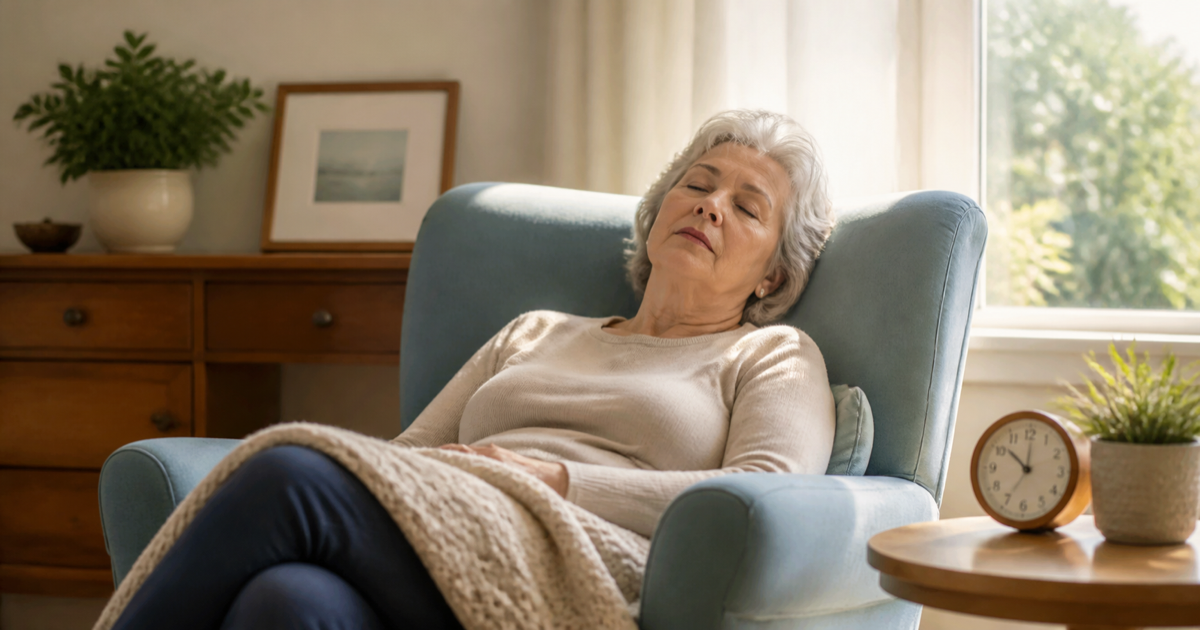
Daytime Napping and Healthy Aging: Timing, Length, and Context
A daytime nap may restore alertness or signal disrupted sleep. Learn how timing, duration, and new changes shape its meaning for healthy aging.
Table of Contents
DISCLAIMER
This article is for informational purposes only and does not constitute medical advice. The statements in this article have not been evaluated by the FDA. The information presented is based on published research and should not be used as a substitute for professional medical guidance. Consult your physician before starting any supplement or health protocol.
A nap can be either a useful pause or an important clue. After a short night, travel, caregiving, or unusual exertion, daytime sleep may restore alertness. When naps become long, frequent, or difficult to resist, they may point toward fragmented nighttime sleep, medication effects, illness, low daytime activity, or a sleep disorder.
That ambiguity explains why headlines about napping and longevity often conflict. A nap is not one uniform exposure. Timing, length, frequency, reason, and the sleeper’s health all shape what it means.
Why Napping Changes With Age
Sleep commonly becomes lighter and more fragmented with age. Earlier circadian timing may produce an afternoon dip sooner, while nighttime pain, bathroom trips, breathing problems, restless legs, or environmental disruption can reduce consolidated sleep. Retirement may also remove the schedule that once kept daytime sleep brief and predictable.
None of these changes means that heavy daytime sleepiness should be dismissed as normal aging. Falling asleep unintentionally during conversations, meals, or driving is a safety concern. A sudden increase in napping can be especially informative because it represents a change from the person’s usual pattern.
Circadian biology creates a natural reduction in alertness during the early afternoon for many people. A planned nap during that window may align better with the body clock than sleeping near evening. The closer a nap moves toward bedtime, the more likely it is to reduce the sleep pressure needed for nighttime sleep.
What Observational Research Can and Cannot Show
Population studies sometimes associate long or frequent naps with less favorable health outcomes. These findings do not prove that the nap caused the outcome. People with sleep apnea, cardiovascular disease, depression, chronic pain, limited mobility, or poor nighttime sleep may nap more because of those underlying factors.
This is a classic example of reverse causation: health changes can alter sleep behavior before the condition is recognized. Self-reported nap duration also has limits. People may misjudge light sleep, confuse quiet rest with sleep, or report an average that hides large day-to-day differences.
Experimental work suggests that short naps can improve alertness, mood, or aspects of performance in some settings. Longer naps may allow deeper sleep, which can produce more sleep inertia—the heavy, disoriented feeling after waking. Individual responses vary, and the same nap can be helpful after sleep loss but disruptive when nighttime sleep is already adequate.
The practical question is therefore not “Are naps good or bad?” It is “What role is this nap playing in this person’s complete sleep pattern?”
Build a Nap That Protects the Night
When a nap is intentional, keep it earlier rather than close to bedtime and use an alarm or another reliable endpoint. A bright room after waking, a little movement, and hydration may help clear sleep inertia. Avoid using a nap to repeatedly compensate for a schedule that does not provide enough nighttime sleep opportunity.
A simple two-week log can clarify the pattern. Record bedtime, wake time, awakenings, nap timing, estimated nap length, caffeine, alcohol, exercise, and daytime alertness. The goal is not perfect measurement. It is to see whether naps follow poor nights, whether late naps delay bedtime, and whether sleepiness is getting worse.
If removing a nap makes the afternoon unsafe or unbearable, forcing wakefulness is not the answer. That response suggests the cause of sleepiness deserves investigation. Likewise, a person who naps yet wakes refreshed and sleeps well at night may not need to eliminate a stable routine merely because a study reported an average association.
When a Nap Becomes a Health Signal
Discuss persistent daytime sleepiness with a clinician when it is new, worsening, or paired with loud snoring, witnessed gasping, morning headaches, mood change, memory problems, falls, or reduced function. Review recent medication changes because sedating effects can accumulate or interact. Driving or operating equipment while sleepy should be avoided.
Sleep apnea is not the only possible explanation. Insomnia, circadian disruption, anemia, thyroid problems, infection, mood disorders, and other conditions may affect alertness. A professional assessment can separate sleep opportunity from sleep quality and medical contributors.
Healthy aging does not require rigidly banning daytime sleep. It requires noticing patterns. A brief, planned afternoon nap can be compatible with a stable routine. A growing need to sleep through the day is information. Context turns the nap from a moralized habit into what it really is: one part of the body’s 24-hour sleep-wake system.
Frequently Asked Questions
Are naps unhealthy for older adults?
Why can a late nap make nighttime sleep harder?
When should daytime sleepiness be discussed with a clinician?
Sources
- A Good Night's Sleep(2022)
- How Sleep Works(2022)
- About Sleep(2024)
Stay Updated on Longevity Science
Weekly research digests. No spam, unsubscribe anytime.
Related Articles
Circadian Amplitude and Healthy Aging: Why Strong Daily Rhythms Matter
Explore circadian amplitude healthy aging research and learn why stronger daily light, sleep, activity, and meal rhythms may support long-term resilience.
10 min read
Alcohol and Aging: What the Latest Research Says
A review of the latest research on alcohol's effects on aging, biological age, disease risk, and longevity, including evolving views on moderate drinking.
9 min read
Blue Light and Aging: How Screen Time May Be Accelerating Your Biological Clock
Examine the evidence linking blue light exposure to accelerated aging through circadian disruption, retinal damage, and metabolic effects. Practical mitigation tips.
11 min read