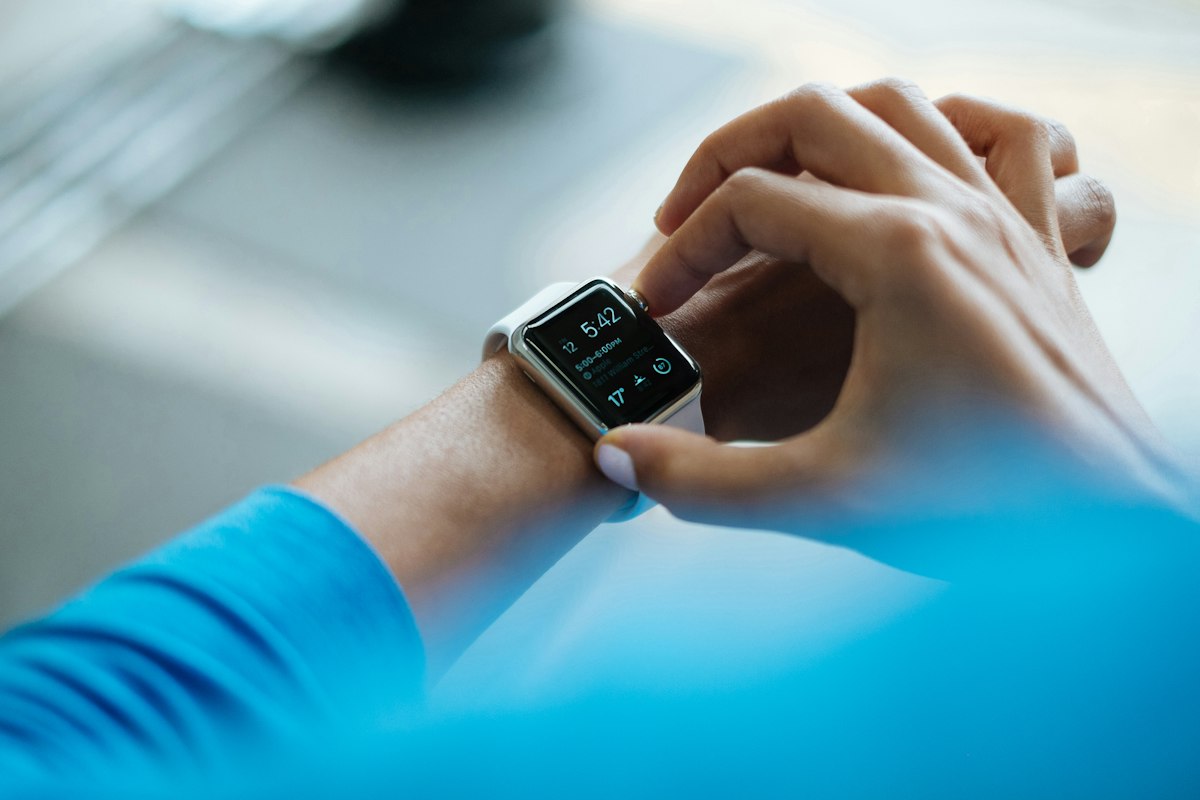
Wearable Aging Trackers: Can Your Smartwatch Measure How Fast You're Aging?
Explore how wearable devices track aging biomarkers like HRV, sleep, and activity. Learn which metrics matter most for monitoring biological age in real time.
Table of Contents
DISCLAIMER
This article is for informational purposes only and does not constitute medical advice. The statements in this article have not been evaluated by the FDA. The information presented is based on published research and should not be used as a substitute for professional medical guidance. Consult your physician before starting any supplement or health protocol.
The concept of measuring biological aging has traditionally required visits to laboratories for blood draws, DNA methylation analysis, or comprehensive biomarker panels. But a revolution in consumer wearable technology is bringing aging-relevant health monitoring to the wrist, finger, and even the chest, enabling continuous, real-time tracking of physiological metrics that correlate with biological age.
From heart rate variability to sleep architecture to daily activity patterns, modern wearable devices capture a wealth of data that, when analyzed in aggregate, may provide meaningful insights into an individual’s aging trajectory. The question is: how accurately do these consumer devices measure aging-relevant parameters, and how should the data be interpreted?
Key Wearable Metrics Related to Aging
Heart Rate Variability (HRV)
HRV, the variation in time between consecutive heartbeats, is perhaps the single most informative metric that wearable devices can measure in relation to aging (Voss et al., 2018; PMID: 29549783). HRV reflects the balance between the sympathetic (fight-or-flight) and parasympathetic (rest-and-digest) branches of the autonomic nervous system.
HRV declines with age in a well-documented pattern. Higher HRV is associated with greater physiological resilience, better cardiovascular health, and lower mortality risk. Individuals with HRV levels above average for their age group tend to have younger biological ages by other measures.
Modern devices including the Oura Ring, Apple Watch, WHOOP, and Garmin watches can measure HRV with reasonable accuracy, particularly during sleep when motion artifacts are minimized. The most useful HRV metrics for aging assessment include RMSSD (root mean square of successive differences) and SDNN (standard deviation of normal-to-normal intervals).
Resting Heart Rate
Resting heart rate (RHR) is one of the simplest aging-relevant metrics and is accurately measured by most wearable devices. RHR tends to remain stable or slightly increase with age in sedentary individuals. A lower resting heart rate is generally associated with greater cardiovascular fitness and lower mortality risk. Acute changes in RHR can signal illness, overtraining, or other physiological stress.
Sleep Metrics
Sleep quality and architecture change significantly with aging, and modern wearables can track several relevant parameters (Dunn et al., 2020; PMID: 32375400).
Total Sleep Time: Wearables can track whether individuals are meeting the 7-9 hour recommendation. Both short and long sleep are associated with accelerated aging and increased mortality.
Sleep Stages: Advanced wearables estimate time spent in light, deep, and REM sleep. Deep sleep, which is critical for physical restoration and growth hormone release, declines significantly with age. REM sleep, important for cognitive function and emotional processing, also tends to decrease.
Sleep Regularity: The consistency of sleep timing (bedtime and wake time) has emerged as an important predictor of health outcomes, independent of total sleep time. Irregular sleep patterns are associated with metabolic dysfunction and cardiovascular risk.
Activity and Movement
Daily Step Count: While simple, daily step count remains a powerful predictor of longevity. Prospective studies have found that adults who consistently achieve 7,000-10,000 steps daily have significantly lower mortality than those who are less active.
VO2 Max Estimates: Some devices estimate cardiorespiratory fitness (VO2 max) from heart rate data during exercise. VO2 max is one of the strongest predictors of longevity and declines approximately 10% per decade after age 30 in sedentary individuals.
Movement Quality: Newer devices are beginning to assess movement patterns, gait speed, and balance, which deteriorate with age and predict fall risk and disability.
Body Temperature
Basal body temperature follows circadian rhythms and may change with age. Some wearables (notably the Oura Ring) track skin temperature during sleep, providing insights into circadian rhythm regularity and potential early indicators of illness or hormonal changes.
Digital Aging Scores
Several wearable platforms now offer proprietary “biological age” or “fitness age” scores that combine multiple metrics (Pyrkov et al., 2021; PMID: 34285049).
Oura Ring’s Readiness Score integrates HRV, resting heart rate, body temperature, sleep quality, and activity to provide a daily readiness assessment. While not explicitly an aging score, consistently high readiness scores may correlate with a younger biological age.
Garmin’s Fitness Age estimates biological age based on VO2 max, resting heart rate, BMI, and activity level. It provides an easy-to-understand number that can motivate behavior change.
Apple Watch Health Metrics including cardio fitness (VO2 max estimate), walking steadiness, and respiratory rate provide aging-relevant data points that can be tracked longitudinally.
These scores should be viewed as useful trend indicators rather than precise biological age measurements. They capture different aspects of aging than laboratory-based assessments and may complement rather than replace blood-based biomarker testing.
Limitations of Wearable Aging Assessment
Despite their convenience and growing sophistication, wearable-based aging assessment has important limitations.
Accuracy: Consumer wearables are less accurate than medical-grade devices for metrics like HRV and sleep staging. This is generally acceptable for trend tracking but may lead to misleading results on individual measurements.
Incomplete Picture: Wearables measure external physiological signals but cannot assess internal processes like DNA methylation, protein expression, or metabolic profiles. They provide a surface-level view of aging that may miss important underlying changes.
Context Sensitivity: Wearable metrics can be significantly influenced by factors unrelated to aging, including caffeine intake, alcohol consumption, emotional stress, recent exercise, and environmental temperature. Interpreting any single measurement without context can be misleading.
Individual Variability: Normal ranges for metrics like HRV vary enormously between individuals. What represents a healthy HRV for one person may be abnormal for another, making population-based comparisons less useful than individual trend tracking.
Best Practices for Using Wearables to Monitor Aging
To maximize the value of wearable data for aging assessment, focus on long-term trends rather than daily fluctuations. Track your own trajectory over months and years rather than comparing to population averages. Combine wearable data with periodic laboratory-based assessments for a more complete picture. Use wearable data to monitor the effects of specific lifestyle changes on your physiological metrics. And maintain consistent wearing habits to ensure data comparability over time.
Frequently Asked Questions
Which wearable device is best for tracking aging? No single device is clearly superior for aging assessment. The Oura Ring excels at sleep and HRV tracking with minimal sleep disruption. The Apple Watch offers a broad range of health metrics including VO2 max and irregular heart rhythm detection. WHOOP focuses on recovery and strain, which are relevant to physiological resilience. Garmin devices provide excellent fitness tracking and VO2 max estimation. The best device is one you will wear consistently, as longitudinal data is far more valuable than any single measurement.
Can wearable data predict how long I will live? Wearable data captures several metrics that are statistically associated with longevity in population studies, including VO2 max, HRV, sleep quality, and daily activity levels. However, individual lifespan prediction from wearable data alone is not currently possible. These metrics are better used as indicators of current physiological health and trends, rather than as precise longevity predictors.
How accurate are wearable sleep stage measurements? Consumer wearables typically achieve 60-80% agreement with polysomnography (the gold standard for sleep measurement) for sleep stage classification. This is sufficient for general trend tracking but not for clinical diagnosis of sleep disorders. Deep sleep measurements tend to be less accurate than total sleep time estimates. The value of wearable sleep tracking lies primarily in identifying patterns and trends rather than precise nightly measurements.
Sources
Stay Updated on Longevity Science
Weekly research digests. No spam, unsubscribe anytime.
Related Articles

Best Biological Age Test in 2026: Complete Comparison
Compare the best biological age tests in 2026 including TruDiagnostic, Elysium Index, and GlycanAge. Find the right test for tracking your aging.
11 min read
Best Biological Age Apps in 2026: Track Your True Age Digitally
Compare the top biological age apps in 2026. Learn how these digital tools estimate your biological age using health data and biomarkers.
8 min read
Biological Age Blood Test Panels: What to Measure and Why
Explore the key biomarkers in biological age blood test panels and understand what to measure to gain insights into your health and longevity.
15 min read