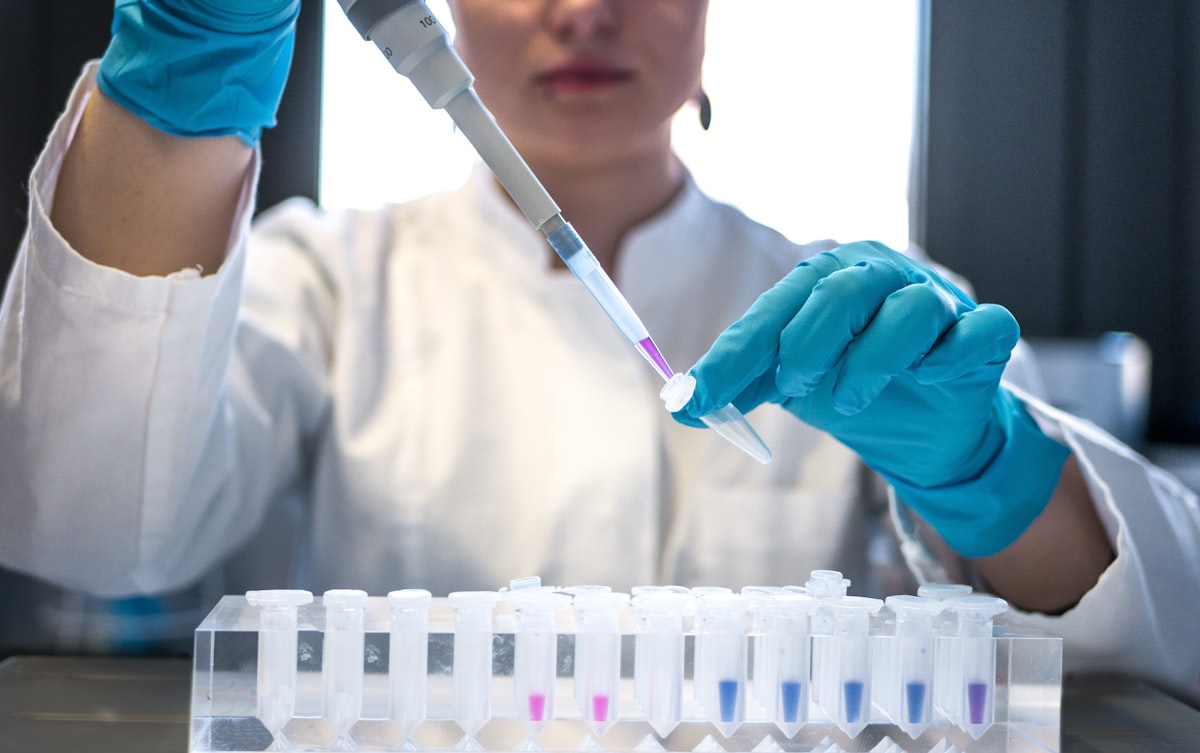
DNA Repair Mechanisms and Aging: Why Your Cells Lose the Battle Against Damage
Learn how DNA repair mechanisms decline with age and why this matters for longevity. Explore the science of genomic maintenance and aging.
Table of Contents
DISCLAIMER
This article is for informational purposes only and does not constitute medical advice. The statements in this article have not been evaluated by the FDA. The information presented is based on published research and should not be used as a substitute for professional medical guidance. Consult your physician before starting any supplement or health protocol.
An Endless Battle Within Your Cells
Every cell in your body is engaged in a constant battle against DNA damage. From the moment you are conceived until the moment you die, your genetic material is under assault from both internal and external sources. The sophisticated repair systems that protect your DNA are remarkable in their efficiency, but they are not perfect — and they become less effective with age.
The decline of DNA repair capacity is now recognized as a fundamental contributor to biological aging. Understanding how these repair systems work, why they fail, and what might be done to support them is central to modern aging science.
The Scale of DNA Damage
Daily Damage Load
The numbers are staggering. Each of the approximately 37 trillion cells in the human body experiences:
- Approximately 10,000 to 100,000 DNA lesions per day from normal metabolic processes
- Around 10 double-strand breaks per cell per day
- Thousands of oxidative modifications to DNA bases
- Hundreds of spontaneous depurination events (loss of purine bases)
- Multiple deamination events (conversion of cytosine to uracil)
Sources of Damage
DNA damage comes from both internal (endogenous) and external (exogenous) sources:
Endogenous sources:
- Reactive oxygen species from mitochondrial metabolism
- Spontaneous hydrolysis of chemical bonds
- Errors during DNA replication
- Byproducts of normal cellular chemistry
Exogenous sources:
- Ultraviolet radiation from sunlight
- Ionizing radiation
- Environmental chemicals and pollutants
- Dietary carcinogens
- Tobacco smoke
- Certain medications
The DNA Repair Arsenal
Base Excision Repair (BER)
BER is the primary repair pathway for small, non-bulky DNA lesions caused by oxidation, alkylation, and deamination. This is the most frequently used repair pathway, handling the majority of oxidative DNA damage.
The process involves:
- A DNA glycosylase recognizes and removes the damaged base
- An endonuclease cuts the DNA backbone
- A DNA polymerase fills in the gap with the correct nucleotide
- DNA ligase seals the strand
BER is particularly relevant to aging because oxidative DNA damage increases with age as mitochondrial function declines and antioxidant defenses weaken.
Nucleotide Excision Repair (NER)
NER handles bulky DNA lesions that distort the double helix, including UV-induced damage (pyrimidine dimers) and chemical adducts. NER operates in two sub-pathways:
- Global genome NER: Surveys the entire genome for distortions
- Transcription-coupled NER: Prioritizes repair of actively transcribed genes
Defects in NER cause premature aging syndromes such as xeroderma pigmentosum and Cockayne syndrome, providing direct evidence for the connection between DNA repair and aging.
Double-Strand Break Repair
Double-strand breaks (DSBs) are the most dangerous form of DNA damage because they affect both strands of the double helix. Two major pathways handle DSBs:
Homologous Recombination (HR): Uses the intact sister chromatid as a template for accurate repair. Available primarily during S and G2 phases of the cell cycle. This is the most accurate DSB repair method.
Non-Homologous End Joining (NHEJ): Joins broken ends directly, often with some loss or alteration of genetic information. Available throughout the cell cycle and is the dominant DSB repair pathway in human cells. While faster than HR, NHEJ is error-prone and can introduce mutations.
The balance between HR and NHEJ shifts with age, with cells increasingly relying on the error-prone NHEJ pathway.
Mismatch Repair (MMR)
MMR corrects errors introduced during DNA replication — incorrect base pairings that escape proofreading by DNA polymerase. Loss of MMR function with age may contribute to increased mutation rates and cancer susceptibility.
How DNA Repair Declines With Age
Reduced Repair Enzyme Expression
Research has documented age-related decreases in the expression and activity of key repair enzymes:
- OGG1 (a key BER enzyme for oxidative damage) shows reduced activity in aged tissues
- ERCC1 and XPD (NER components) decline in expression with age
- Ku proteins (NHEJ components) show altered function in aged cells
- PARP-1 (a key damage sensor) may become less efficient
NAD+ Depletion
NAD+ is essential for the function of PARP enzymes and sirtuins, both of which play critical roles in DNA repair. As NAD+ levels decline with age, the capacity for DNA repair may be compromised. Research suggests that NAD+ boosting through NMN or NR supplementation may help restore DNA repair capacity in aged cells.
Telomere Shortening Effects
Short telomeres may affect DNA repair in several ways:
- Very short telomeres can be misrecognized as DNA breaks, triggering inappropriate repair responses
- Telomere dysfunction may activate DNA damage responses that persist chronically
- Short telomeres may divert repair resources away from other types of DNA damage
Oxidative Damage to Repair Machinery
In a cruel irony, the DNA repair machinery itself is vulnerable to oxidative damage. As oxidative stress increases with age, repair enzymes and their regulatory proteins may become damaged and less functional, creating a vicious cycle of declining repair capacity and increasing damage.
Consequences of Declining DNA Repair
Mutation Accumulation
As repair efficiency declines, more mutations persist in the genome. This mutational burden may contribute to:
- Cancer development (driver mutations in oncogenes and tumor suppressors)
- Cellular dysfunction (mutations in regulatory genes)
- Clonal hematopoiesis (expansion of blood cell clones carrying mutations)
- Tissue heterogeneity (different cells accumulating different mutations)
Genomic Instability
Genomic instability — the increased tendency for alterations in the genome — is recognized as a primary hallmark of aging. Declining DNA repair is a major driver of this instability, which manifests as:
- Chromosomal rearrangements
- Copy number variations
- Microsatellite instability
- Increased transposon activity
Cellular Senescence
Persistent DNA damage, particularly unrepaired double-strand breaks, is one of the most potent triggers of cellular senescence. Cells with chronic DNA damage response activation may enter a permanent growth-arrested state, contributing to the accumulation of zombie cells that characterizes aging.
Stem Cell Dysfunction
DNA damage accumulation in stem cells may impair their ability to self-renew and differentiate properly. This contributes to stem cell exhaustion, one of the hallmarks of aging, and reduces the body’s capacity for tissue repair and regeneration.
Progeroid Syndromes: Proof of Concept
Some of the strongest evidence linking DNA repair to aging comes from progeroid syndromes — genetic disorders that cause premature aging:
- Werner Syndrome: Caused by mutations in a DNA helicase involved in repair, leading to accelerated aging beginning in the teenage years.
- Cockayne Syndrome: Caused by defects in transcription-coupled NER, resulting in growth failure, neurological degeneration, and premature aging.
- Ataxia-Telangiectasia: Caused by mutations in the ATM gene, a key DNA damage sensor, leading to premature aging of multiple organ systems.
- Hutchinson-Gilford Progeria: While primarily a nuclear envelope defect, it leads to increased DNA damage and dramatically accelerated aging.
These conditions demonstrate that when DNA repair is fundamentally compromised, aging accelerates dramatically.
Species Comparisons
Comparative biology provides additional evidence for the DNA repair-longevity connection:
- Longer-lived species generally have more efficient DNA repair mechanisms
- The naked mole rat, which lives approximately ten times longer than similarly sized rodents, has exceptionally robust DNA repair
- Cells from long-lived species repair UV damage more efficiently than cells from short-lived species
- Bowhead whales, which may live over 200 years, show enhanced DNA repair gene expression
Supporting DNA Repair
Lifestyle Approaches
Research suggests several strategies that may support DNA repair capacity:
- NAD+ support: Maintaining NAD+ levels through diet, exercise, or supplementation may support PARP and sirtuin function
- Exercise: Regular physical activity has been associated with improved DNA repair capacity
- Antioxidant-rich diet: While antioxidant supplements have shown mixed results, a diet rich in fruits, vegetables, and polyphenols may help reduce oxidative DNA damage
- Adequate sleep: DNA repair processes are particularly active during sleep
- Stress management: Chronic stress has been associated with impaired DNA repair
Reducing DNA Damage
Equally important is reducing the damage load:
- Minimize unnecessary UV exposure
- Avoid tobacco smoke and excessive alcohol
- Limit exposure to environmental toxins
- Maintain healthy body weight (obesity increases oxidative stress)
- Eat a diet low in processed and charred foods
The Bottom Line
DNA repair mechanisms represent a fundamental defense against aging, maintaining the integrity of the genetic information that cells need to function correctly. The age-related decline in repair capacity, combined with increasing DNA damage, creates a growing burden of genomic instability that drives many aspects of biological aging.
While we cannot completely prevent DNA damage or halt the decline of repair mechanisms, understanding these processes reveals practical strategies for supporting genomic maintenance. Reducing unnecessary damage exposure and supporting repair capacity through lifestyle measures may help preserve genomic integrity over the course of a lifetime.
The study of DNA repair and aging continues to advance rapidly, with potential therapeutic interventions on the horizon that may one day help restore youthful repair capacity to aging cells.
Frequently Asked Questions
How much DNA damage occurs daily?
Why does DNA repair decline with age?
Can improving DNA repair slow aging?
Sources
Stay Updated on Longevity Science
Weekly research digests. No spam, unsubscribe anytime.
Related Articles
Arterial Calcification and Vascular Aging: Reading the Risk Signals
Arterial calcification can reveal accumulated vascular risk. Learn what calcium scores mean, why calcification develops, and where testing has limits.
10 min read
Arterial Stiffness and Vascular Age: A Longevity Evidence Guide
Understand arterial stiffness vascular age longevity links, key studies, measurement limits, and evidence-based lifestyle implications for healthy aging.
11 min read
Arterial Stiffness and Vascular Aging: What the Evidence Shows
Explore arterial stiffness vascular aging, how vessels change over time, what pulse wave velocity studies show, and practical ways evidence may inform prevention.
10 min read